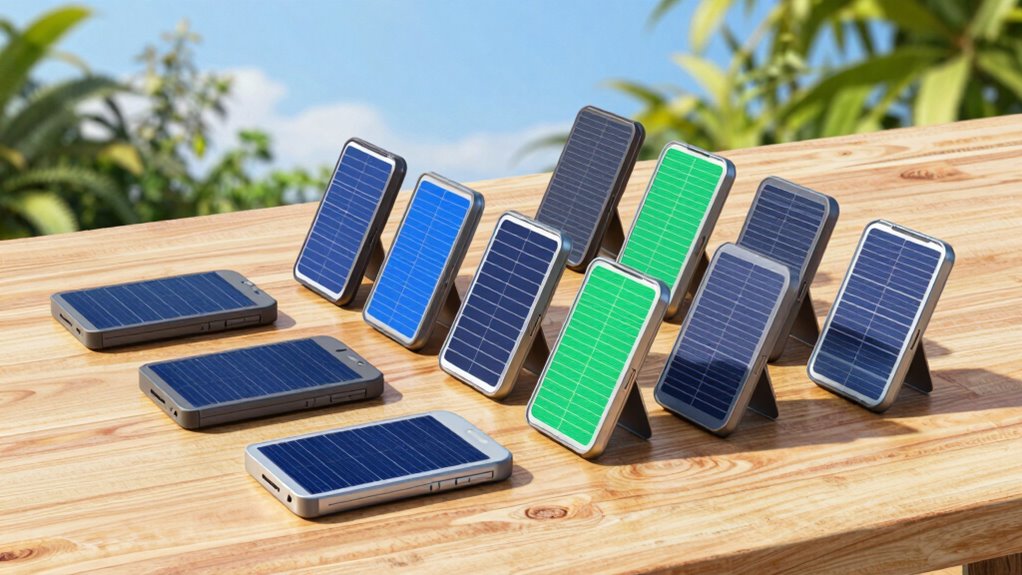

Solar phone chargers can add backup power outdoors, but most models in this roundup are better treated as power banks with a solar trickle-charge feature than as fast, sun-powered replacements for wall charging. My best overall pick is the BLAVOR 20,000mAh Solar Power Bank with Built-In Cables and Hand Crank for its mix of capacity and backup methods; the Latimeria 20,000mAh with Three Foldable Panels stands out for buyers who want more panel area, while the MINRISE 40,000mAh with 20W PD favors wired charging speed and high capacity. The main tradeoff is between carrying a larger unit with more charging options and choosing a lighter model that is easier to bring along. Wireless charging and built-in cables add convenience, but neither removes the need to check compatibility or plan around slow solar input. Read on for the full breakdown and guidance on which features matter most for your use.

Get the little things that make your day delivered free — and shop member deals
- Fast, free delivery on millions of items
- Access to Prime Big Deal Days deals on October 6–7
- Prime Video, Amazon Music and more included
Key Takeaways
- Capacity and solar input are separate advantages: the 40,000mAh-plus models hold more stored energy, while the Latimeria‘s three foldable panels give it a more solar-focused design; a large capacity label alone does not mean faster solar recharging.
- The BLAVOR 20,000mAh with hand crank and built-in cables is the most balanced emergency-style choice: it combines stored power with more than one backup method, though extra hardware adds bulk.
- For a simpler wired setup, MINRISE pairs 40,000mAh capacity with 20W PD: that makes it a stronger fit for faster compatible wired charging than models whose main draw is wireless convenience.
- Wireless charging appears across several capacity tiers: BLAVOR‘s 10,000mAh wireless model favors a smaller carry, while its 20,000mAh wireless counterpart and larger options trade portability for more stored reserve.
- Built-in cables reduce packing friction, not charging uncertainty: options from Durecopow, GOODaaa, SOARAISE, and BLASOUL can simplify connections, but buyers should still verify connector types and device support.
| BLAVOR 20,000mAh Solar Power Bank with Hand Crank and Built-In Cables |  | Best for Emergency Versatility | Capacity: 20,000mAh | Wireless charging: Up to 15W | USB-C PD output: Up to 20W | VIEW ON AMAZON | See Our Full Breakdown |
| BLAVOR 10,000mAh Solar Power Bank with Wireless Charging |  | Best Compact Pick | Battery capacity: 10,000mAh | USB-C output: 20W | Wireless charging: Qi | VIEW ON AMAZON | See Our Full Breakdown |
| FEELLE 50,000mAh Solar Power Bank with Magnetic Wireless Charging and Hand Crank |  | Best for High-Capacity Group Charging | Battery capacity: 50,000mAh | Battery cell type: Lithium polymer | Wireless charging: Up to 15W magnetic | VIEW ON AMAZON | See Our Full Breakdown |
| MINRISE 40,000mAh Solar Power Bank with 20W PD Fast Charging |  | Best for Wired Charging and Emergency Lighting | Battery capacity: 40,000mAh | USB-C output: 20W | Solar panel: 1.8W | VIEW ON AMAZON | See Our Full Breakdown |
| 49800mAh Solar Charger Power Bank with QC3.0 Fast Charging |  | Best for Multi-Device Connectivity | Capacity: 49,800mAh | Fast charging: QC 3.0 via USB-C | Wireless charging: Qi-compatible | VIEW ON AMAZON | See Our Full Breakdown |
| BLAVOR 20,000mAh Solar Power Bank with Wireless Charging |  | Best for Feature-Rich Outdoor Charging | Battery capacity: 20,000mAh | Maximum output: 20W | USB ports: 3 | VIEW ON AMAZON | See Our Full Breakdown |
| Durecopow 20,000mAh Solar Power Bank with Built-in Cables and Dual Flashlights |  | Best for Cable-Free Group Trips | Model: PS35K | Battery capacity: 20,000mAh | Connectors: USB-C, Lightning, and Micro-USB | VIEW ON AMAZON | See Our Full Breakdown |
| SOARAISE 48,000mAh Solar Power Bank with Wireless Charging and 4 Built-In Cables |  | Best for Maximum Listed Capacity | Battery capacity: 48,000mAh | Battery type: Lithium-polymer | Solar panels: 4 | VIEW ON AMAZON | See Our Full Breakdown |
| BLAVOR 10,000mAh Solar Power Bank with Wireless Charging |  | Best Compact Pick | Battery capacity: 10,000mAh | USB-C charging: USB-C input and 20W output | Wireless charging: Yes | VIEW ON AMAZON | See Our Full Breakdown |
| GOODaaa 24,000mAh Solar Power Bank with Built-In Cables |  | Best for Protected Multi-Device Charging | Battery capacity: 24,000mAh | Built-in output cables: 3: iOS and dual USB-C | Inputs: USB-A cable, USB-C, and iOS | VIEW ON AMAZON | See Our Full Breakdown |
| Latimeria 20,000mAh Solar Power Bank with Three Foldable Panels and Built-In Cables |  | Best for More Solar Surface Area | Capacity: 20,000mAh | Solar panels: 3 foldable panels | Solar output: Up to 1020mA under 25,000 lux sunlight | VIEW ON AMAZON | See Our Full Breakdown |
| 20,000mAh Solar Power Bank with Wireless Charging and Built-In Cables |  | Best for Cable-Free Convenience | Battery capacity: 20,000mAh | Charging methods: Solar, USB-C input, and Qi wireless charging | Built-in cables: Lightning, USB-C, and USB-A | VIEW ON AMAZON | See Our Full Breakdown |
| 20,000mAh Solar Power Bank with Wireless Charging |  | Best for Solid-State Battery Design | Battery capacity: 20,000mAh | Battery type: Solid-state | Wired charging: Up to 15W | VIEW ON AMAZON | See Our Full Breakdown |
| YELOMIN 38,800mAh Solar Power Bank with USB-C Fast Charging and Dual LED Flashlights |  | Best for High Capacity on a Budget of Weight | Capacity: 38,800mAh | Ports: One USB-C input/output and two USB-A outputs | USB-A output: 5V/2.4A | VIEW ON AMAZON | See Our Full Breakdown |
| BLASOUL 49,800mAh Solar Power Bank with Wireless Charging and Built-In Cables |  | Best for Maximum Stated Capacity | Capacity: 49,800mAh | Wired charging output: Up to 22.5W | Wireless charging output: Up to 15W | VIEW ON AMAZON | See Our Full Breakdown |
| solar phone charger | Battery capacity | Simultaneous charging | Wireless charging | Ports |
|---|---|---|---|---|
| BLAVOR 20,000mAh Solar Power B | — | Up to 7 devices | Up to 15W | 3: 1 USB-C, 2 USB-A |
| BLAVOR 10,000mAh Solar Power B | 10,000mAh | — | Qi | 3 |
| FEELLE 50,000mAh Solar Power B | 50,000mAh | — | Up to 15W magnetic | 3 |
| MINRISE 40,000mAh Solar Power | 40,000mAh | — | — | — |
| 49800mAh Solar Charger Power B | — | Up to 6 devices | Qi-compatible | — |
| BLAVOR 20,000mAh Solar Power B | 20,000mAh | Up to 6 devices | Qi; supports phones and Apple Watch | — |
| Durecopow 20,000mAh Solar Powe | 20,000mAh | Up to 6 devices | — | 3 |
| SOARAISE 48,000mAh Solar Power | 48,000mAh | Up to 7 devices | Yes | 2 USB-A outputs; 1 USB-C input/output |
| BLAVOR 10,000mAh Solar Power B | 10,000mAh | Up to 3 devices | Yes | — |
| GOODaaa 24,000mAh Solar Power | 24,000mAh | Up to 5 devices | — | — |
| Latimeria 20,000mAh Solar Powe | — | — | — | — |
| 20,000mAh Solar Power Bank wit | 20,000mAh | — | — | Two USB-A ports and one USB-C port |
| 20,000mAh Solar Power Bank wit | 20,000mAh | Up to 6 devices | Qi-compatible devices | Two USB-A; USB-C input/output |
| YELOMIN 38,800mAh Solar Power | — | Up to 3 devices | — | One USB-C input/output and two USB-A outputs |
| BLASOUL 49,800mAh Solar Power | — | — | — | — |
More Details on Our Top Picks
BLAVOR 20,000mAh Solar Power Bank with Hand Crank and Built-In Cables
The BLAVOR 20,000mAh stands out for combining 20W USB-C PD with unusually broad backup options: solar input, a hand crank, wireless charging, and four built-in cables. That makes it more adaptable in a group camp or emergency kit than the smaller BLAVOR 10,000mAh Solar Power Bank, which is lighter but has half the stated capacity. It can serve several devices at once, while its lantern, flashlight, compass, and thermometer add practical campsite functions. The tradeoff is that its many features do not make solar or hand-crank charging a dependable replacement for a wall outlet; both are better treated as backup methods. I’d choose it for versatility, not for a compact carry or fast off-grid recharge.
Pros:- 20W USB-C PD and up to 15W wireless charging cover wired and cable-free phone charging.
- Four built-in cables and three ports reduce the number of accessories needed for a group.
- Solar input and a hand crank provide backup options when outlets are unavailable.
- Lantern, flashlight, compass, and thermometer add useful outdoor functions.
Cons:- Solar and hand-crank charging may be slow compared with charging from an outlet.
- The multiple accessories and rugged build favor emergency use over minimal everyday carry.
Best for: Campers or emergency-kit planners who want one rugged power bank with several cable types, wireless charging, lights, and backup charging methods.
Not ideal for: Ultralight hikers and buyers relying on sunlight to refill a large battery quickly; its feature-packed design adds bulk, and solar and crank charging may be slow.
- Capacity:20,000mAh
- Wireless charging:Up to 15W
- USB-C PD output:Up to 20W
- Built-in cables:4: 2 USB-C, 1 iOS, 1 USB-A
- Ports:3: 1 USB-C, 2 USB-A
- Simultaneous charging:Up to 7 devices
- Protection:Described as waterproof, shockproof, and dustproof
- Additional features:Solar charging, hand crank, flashlight, camping lantern, compass, thermometer, carabiner, and rope
Our verdict“Choose this BLAVOR when you want a multi-function group backup, but not if fast solar recharging or a light pack is your priority.”
BLAVOR 10,000mAh Solar Power Bank with Wireless Charging
For buyers who want a solar-themed charger that is easier to carry than the high-capacity options, this 9.3-ounce BLAVOR is the most portable fit in this group. Its 10,000mAh capacity is half that of the BLAVOR 20,000mAh Solar Power Bank with Hand Crank, so it is better suited to topping up a phone than supporting several devices through an extended trip. The 20W USB-C output and Qi wireless charging give it useful everyday flexibility, while IPX5 water resistance and shock- and dust-resistant construction suit basic outdoor use. Its solar performance is not specified, and the stated seven-hour battery recharge time makes a wall charger the clearer refill plan. Pick it for manageable size, not for long off-grid stays.
Pros:- At 9.3 ounces, it is easier to pack than the higher-capacity rugged models.
- 20W USB-C output supports faster wired charging than a basic low-output backup battery.
- Qi wireless charging offers a cable-free option for compatible phones.
- IPX5 water resistance plus dust and shock resistance suit ordinary outdoor use.
Cons:- 10,000mAh capacity offers less reserve than the 20,000mAh BLAVOR and larger models.
- Solar charging performance is not specified, so sunlight should not be counted on as a predictable refill method.
- The stated battery recharge time is seven hours.
Best for: Day hikers and commuters who want a relatively light backup battery with wireless charging and basic outdoor protection.
Not ideal for: Multi-day campers or people charging several phones; its 10,000mAh capacity is modest beside the 20,000mAh and larger picks, and solar output is unspecified.
- Battery capacity:10,000mAh
- USB-C output:20W
- Wireless charging:Qi
- Ports:3
- Water resistance:IPX5
- Weight:9.3 ounces
- Dimensions:5.91 x 3.07 x 0.87 inches
- Battery recharge time:7 hours
Our verdict“Choose this model for a lighter day-trip or everyday backup, and choose a larger-capacity option for extended trips or group charging.”
FEELLE 50,000mAh Solar Power Bank with Magnetic Wireless Charging and Hand Crank
The FEELLE is the capacity-first choice here: its 50,000mAh battery is built for keeping several devices going, rather than minimizing pack weight. Four solar panels, a hand crank, built-in cables, and magnetic wireless charging give it more ways to serve a group than the more compact BLAVOR 10,000mAh Solar Power Bank. Its flashlight’s steady, SOS, and strobe modes also suit emergency use. Those backup features need realistic expectations, though: solar and crank charging depend on conditions and effort, and the listed specs do not provide a solar charging rate. Magnetic charging may also be less effective through thick phone cases. I’d favor it for capacity and shared gear, while buyers who mainly need a phone top-up should choose a smaller, simpler bank.
Pros:- 50,000mAh capacity provides substantially more stated reserve than the 10,000mAh BLAVOR.
- Magnetic wireless charging and four built-in cable types support varied charging preferences.
- Four solar panels and a hand crank add backup power options for outdoor use.
- Three-mode LED flashlight includes steady, SOS, and strobe settings.
Cons:- Solar and hand-crank charging performance depends on conditions and user effort.
- Thick phone cases may weaken magnetic attachment and reduce wireless charging efficiency.
- Its high-capacity design is less suited to buyers prioritizing a small, light phone charger.
Best for: Groups on extended camping trips who need a large shared battery, multiple connection options, and emergency lighting.
Not ideal for: Solo day hikers, weight-conscious travelers, or anyone expecting the solar panels or hand crank to quickly refill the bank.
- Battery capacity:50,000mAh
- Battery cell type:Lithium polymer
- Wireless charging:Up to 15W magnetic
- Ports:3
- Built-in cables:USB-C, phone cable, Micro-USB, USB-A
- USB-C output:Up to 3A at 5V
- Solar panels:4
- Protection and materials:Shockproof, dustproof, and water-resistant; silicone and ABS+PC
Our verdict“Choose the FEELLE for high-capacity group backup and emergency features, not for a light phone-only kit or predictable solar recharging.”
MINRISE 40,000mAh Solar Power Bank with 20W PD Fast Charging
The MINRISE pairs a substantial 40,000mAh capacity with 20W USB-C PD, making it a practical match for buyers who favor wired charging and want a strong reserve for phones and other devices. Compared with the FEELLE 50,000mAh Solar Power Bank, it has less stated capacity but gives a clear 20W PD output and lists a 1.8W solar panel. That panel is explicitly framed as emergency backup, while the manufacturer recommends an adapter for routine recharging—a sensible distinction for a bank this large. Built-in cables and dual flashlights add convenience outdoors, but its 1.1-pound weight is a real cost for hiking. I’d pick it for a car, base camp, or emergency kit rather than carrying it all day.
Pros:- 40,000mAh capacity offers a large reserve for repeated phone charging.
- 20W USB-C PD provides a defined fast wired output.
- Built-in USB-C, iOS, and Micro USB output cables reduce accessory clutter.
- Dual LED flashlights are specified for illumination up to 165 feet and operation up to 25 hours.
Cons:- The 1.8W solar panel is intended for emergency use, not routine battery refills.
- At 1.1 pounds, it is a heavy choice for long hikes.
- The stated six-hour recharge time does not specify charging conditions or adapter details.
Best for: Car campers and emergency-preparedness buyers who want a large-capacity bank, 20W wired output, built-in cables, and bright backup lights.
Not ideal for: Backpackers seeking low weight or solar-first users; it weighs 1.1 pounds and its 1.8W panel is intended for emergency backup.
- Battery capacity:40,000mAh
- USB-C output:20W
- Solar panel:1.8W
- Built-in output cables:USB-C, iOS, and Micro USB
- Connectors:Micro USB, USB-A, USB-C
- Weight:1.1 pounds
- Dimensions:6.67 x 3.35 x 1.22 inches
- Protection and lighting:Described as dustproof, waterproof, and drop-proof; 2 LED flashlights
Our verdict“Choose the MINRISE for wired charging and lighting at a campsite or in a vehicle, but skip it if low weight or meaningful solar recharging matters most.”
49800mAh Solar Charger Power Bank with QC3.0 Fast Charging
This 49,800mAh model is the connection-heavy pick: it combines four built-in output cables, two USB-A ports, and Qi wireless charging, with stated support for up to six devices at once. That is more useful for a mixed-device group than the MINRISE 40,000mAh Solar Power Bank, which emphasizes 20W USB-C PD and emergency lighting instead. The IP65 rating and dual three-mode LED flashlights suit rougher outdoor settings, while built-in electrical protections add reassurance when charging several devices. The tradeoff is less clarity around charging speed: QC 3.0 is specified, but no wattage is given, and solar charging is only described as emergency backup. No weight or dimensions are listed, either, so I’d choose it for connection flexibility rather than a known compact form.
Pros:- Can charge up to six devices using built-in cables, USB-A ports, and Qi wireless charging.
- 49,800mAh capacity offers a large stated reserve for group use.
- IP65-rated design and dual steady, SOS, and strobe flashlights suit outdoor backup.
- Listed protection covers overcharge, over-current, over-voltage, overheating, and short circuits.
Cons:- Solar charging is described as emergency backup, with no charging speed specified.
- QC 3.0 is listed without a specific output wattage.
- No dimensions or weight are provided, making packability harder to judge.
Best for: Families or small groups with a mix of cable and Qi-compatible devices who want several charging connections in one rugged backup bank.
Not ideal for: Buyers who need a stated USB-C wattage, predictable solar recharge expectations, or known dimensions and weight before packing.
- Capacity:49,800mAh
- Fast charging:QC 3.0 via USB-C
- Wireless charging:Qi-compatible
- Simultaneous charging:Up to 6 devices
- Outputs:4 built-in output cables, 2 USB-A ports, and wireless charging
- Water and dust resistance:IP65
- Flashlights:Dual LED with steady, SOS, and strobe modes
- Support:60-day money-back guarantee and 2-year service assurance
Our verdict“Choose this model when multiple people need different charging connections, but opt for a better-specified bank if output speed or pack size is a deciding factor.”
BLAVOR 20,000mAh Solar Power Bank with Wireless Charging
The BLAVOR 20,000mAh combines wireless charging, four built-in cables, and a 20W USB-C output, making it a versatile camp or travel backup when several kinds of devices need power. Compared with the smaller BLAVOR 10,000mAh Solar Power Bank, it offers more capacity and can charge up to six devices, though the larger unit is less suited to buyers prioritizing a compact carry. Its flashlight, camping light, compass, and thermometer add practical utility outdoors, while the protected shell is designed to resist water, shock, and dust. The main solar-charger caveat is that solar charging performance is not specified; I would treat sunlight as a backup input rather than count on it to refill the bank quickly. It also carries more features than a simple phone-only charger needs.
Pros:- 20,000mAh capacity and charging for up to six devices
- 20W USB-C output alongside wireless charging and four built-in cables
- Flashlight, camping light, compass, and thermometer add outdoor utility
- Water-, shock-, and dust-resistant design
Cons:- Solar charging speed or performance is not provided
- Six-device capability and extra equipment may be more than a solo phone user needs
Best for: Campers and group travelers who want multiple built-in charging options plus lighting and navigation tools in one outdoor power bank.
Not ideal for: Hikers seeking a lightweight phone-only backup or buyers who need documented solar recharge performance.
- Battery capacity:20,000mAh
- Maximum output:20W
- USB ports:3
- Built-in cables:4: 2 USB-C, 1 iOS, 1 USB-A
- Simultaneous charging:Up to 6 devices
- Wireless charging:Qi; supports phones and Apple Watch
- Construction:Flame-retardant ABS+PC shell with waterproof silicone protection
- Additional features:Flashlight, camping light, red indicator light, compass, thermometer, carabiner, and rope
Our verdict“Choose this BLAVOR for flexible group charging and outdoor tools, but not if dependable solar recharge data or minimal carry weight is your priority.”
Durecopow 20,000mAh Solar Power Bank with Built-in Cables and Dual Flashlights
The Durecopow PS35K is a practical pick for groups carrying a mix of USB-C, Lightning, and Micro-USB devices: its three built-in cables reduce the need to pack separate leads, and the listing says it can charge up to six devices at once. Unlike the BLAVOR 20,000mAh Solar Power Bank with Wireless Charging, this model focuses on wired convenience and outdoor basics rather than wireless charging or a 20W output claim. Its dual flashlights with SOS mode, compass, and carabiner suit campsites and emergency kits, while drop, dust, and water resistance help with rougher handling. The stated 5V, 2.4A output is less compelling for people seeking faster charging, and solar charging is best treated as backup: the description warns that it can be slow. Its 20,000mAh capacity also means a more substantial carry than a compact power bank.
Pros:- Three built-in cable types cover common device connectors
- Listed support for charging up to six devices simultaneously
- Dual flashlights include an SOS mode
- Drop-, dust-, and water-resistant design with compass and carabiner
Cons:- 5V, 2.4A output may not suit buyers seeking higher-speed charging
- Solar charging is described as slow and is better suited to backup use
- 20,000mAh capacity adds bulk compared with smaller power banks
Best for: Groups or families with mixed USB-C, Lightning, and Micro-USB devices who want cables and emergency lighting built into one outdoor charger.
Not ideal for: Buyers who prioritize fast USB-C charging, wireless charging, or a small, light day-hike battery.
- Model:PS35K
- Battery capacity:20,000mAh
- Connectors:USB-C, Lightning, and Micro-USB
- Ports:3
- Output:5V, 2.4A
- Simultaneous charging:Up to 6 devices
- Special features:Dual flashlight with SOS mode, compass, and carabiner
- Protection:Drop-, dust-, and water-resistant
Our verdict“Pick the Durecopow for shared wired charging and emergency features, not for rapid charging or frequent solar-only recharging.”
SOARAISE 48,000mAh Solar Power Bank with Wireless Charging and 4 Built-In Cables
With a stated 48,000mAh capacity, four solar panels, wireless charging, and four built-in cables, the SOARAISE is the capacity-first choice in this group. It claims support for up to seven devices at once, more than the six-device limit listed for the BLAVOR 20,000mAh Solar Power Bank, so it better suits travelers charging several phones and accessories together. Its USB-C output is specified at 5V/3A, giving buyers a concrete output figure, though it is not presented as a high-wattage fast-charge option. Four panels provide more solar surface than a single small panel, but solar speed still varies with conditions, and the product data gives no recharge time. The large stated capacity may mean a less convenient carry, while wireless compatibility can vary by device. I would choose it for capacity and connection options, not a compact kit.
Pros:- Highest stated capacity among these five products at 48,000mAh
- Four built-in cables plus wireless charging
- Listed support for up to seven devices simultaneously
- USB-C output specified at 5V/3A
Cons:- Solar charging speed depends on outdoor conditions, with no recharge time specified
- Wireless compatibility may vary by device
- The high stated capacity may be excessive for buyers prioritizing portability
Best for: Travelers or groups who want a high stated battery capacity, several built-in cable types, and wireless charging in one bank.
Not ideal for: Light-pack hikers or buyers who need a verified solar recharge time and confirmed compatibility with a particular wireless device.
- Battery capacity:48,000mAh
- Battery type:Lithium-polymer
- Solar panels:4
- Ports:2 USB-A outputs; 1 USB-C input/output
- Built-in cables:USB-C, Phone, USB-A, and Micro
- Wireless charging:Yes
- Simultaneous charging:Up to 7 devices
- USB-C output:5V/3A
Our verdict“Choose the SOARAISE when stated capacity and charging several device types matter more than carry size or clearly documented solar speed.”
BLAVOR 10,000mAh Solar Power Bank with Wireless Charging
The BLAVOR 10,000mAh takes a simpler, more portable approach than the 20,000mAh BLAVOR model: it keeps wireless charging, USB-C input, 20W output, and outdoor protection while reducing capacity and limiting simultaneous charging to three devices. That makes it a better fit for a solo traveler or day-hiker who wants a phone-focused backup rather than a shared camp power source. Its IPX5 water-resistance rating, dustproof and shockproof design, dual flashlights, and compass carabiner add useful outdoor touches without the larger model’s extra cables and camping light. The tradeoff is straightforward: 10,000mAh gives less reserve for repeated top-ups, and the product information does not state solar charging performance or recharge time. I would not count on the panel to replenish the bank on a short outing; this is a compact battery with solar as an unspecified supplemental source.
Pros:- 20W USB-C output and wireless charging
- Supports charging up to three devices simultaneously
- IPX5-rated with dustproof and shockproof construction
- Dual flashlights and compass carabiner add outdoor utility
Cons:- 10,000mAh capacity offers less reserve than the 20,000mAh BLAVOR model
- Solar performance and recharge time are not specified
Best for: Solo day-hikers and travelers who want wireless phone charging, a 20W USB-C output, and outdoor protection in a lower-capacity bank.
Not ideal for: Groups, multi-day trips, or users who need to recharge several devices repeatedly or rely on specified solar performance.
- Battery capacity:10,000mAh
- USB-C charging:USB-C input and 20W output
- Wireless charging:Yes
- Simultaneous charging:Up to 3 devices
- Water resistance:IPX5
- Materials:Flame-retardant ABS and PC with waterproof silicone
- Outdoor features:Dual flashlights and compass carabiner
Our verdict“Choose this BLAVOR for a more compact, feature-rich phone backup, but step up to a higher-capacity model for group or multi-day charging.”
GOODaaa 24,000mAh Solar Power Bank with Built-In Cables
The GOODaaa 24,000mAh sits between the 20,000mAh options and the 48,000mAh SOARAISE in stated capacity, while focusing on wired charging for up to five devices. Three built-in output cables—iOS and dual USB-C—make it convenient for a small group, and its impact-resistant housing, silicone corner bumpers, and covered ports are aimed at outdoor handling. Compared with the Durecopow PS35K, GOODaaa lists a higher capacity but fewer simultaneous devices; Durecopow also specifies a 5V, 2.4A output, while GOODaaa provides no charging-speed figure. Its dual LEDs offer steady, strobe, and SOS modes, with a thermometer and carabiner rounding out the camp-ready kit. The key limitation for a solar-charger buyer is that solar performance is not stated, so the panel should not be treated as a dependable recharge plan.
Pros:- 24,000mAh stated capacity with charging for up to five devices
- Three built-in output cables include iOS and dual USB-C
- Impact-resistant housing with silicone corner bumpers and covered ports
- Dual flashlights offer steady, strobe, and SOS modes
Cons:- Charging speed is not specified
- Solar charging performance is not stated
- No wireless charging is listed
Best for: Campers and small groups who want built-in iOS and USB-C leads, protective construction, and a mid-to-high stated capacity.
Not ideal for: Buyers who need wireless charging, documented fast-charge output, or evidence that solar input can refill the bank at a useful rate.
- Battery capacity:24,000mAh
- Built-in output cables:3: iOS and dual USB-C
- Inputs:USB-A cable, USB-C, and iOS
- Outputs:USB-C, USB-A, and built-in cables
- Simultaneous charging:Up to 5 devices
- Flashlight modes:Steady, strobe, and SOS
- Material:Impact-resistant ABS with silicone corner bumpers
- Protection:Drop-proof, dust-proof, and splash-resistant
Our verdict“Pick GOODaaa for protected, cable-ready group charging outdoors, but skip it if charging speed or solar recharge performance needs to be clear.”
Latimeria 20,000mAh Solar Power Bank with Three Foldable Panels and Built-In Cables
The three foldable panels give this 20,000mAh bank a more substantial solar setup than the single-panel YELOMIN, making it a better fit for buyers who want to supplement stored power during outdoor trips. Its solar output is specified at up to 1020mA under 25,000 lux, though actual charging depends heavily on light, so I would treat the panels as a backup rather than a dependable way to refill the bank quickly. Built-in USB-C and Lightning cables, plus USB-C and USB-A ports, reduce cable packing and offer more flexibility than the port-focused YELOMIN. The 20W USB-C output is useful for faster wired charging, and SOS, strobe, and warning lights add emergency utility. The tradeoff is that splash resistance has no stated rating, while the BLASOUL provides a defined IP65 rating.
Pros:- Three foldable panels provide more solar surface area than a single-panel design.
- Built-in USB-C and Lightning cables work alongside USB-C and USB-A output ports.
- USB-C output reaches 20W for faster compatible wired charging.
- SOS, strobe, and red-and-blue warning lights add emergency signaling options.
Cons:- Solar charging varies with sunlight and is not a dependable primary recharge method.
- Water resistance is described only as splash resistance, with no rating supplied.
- Its 20,000mAh capacity is lower than the larger-capacity YELOMIN and BLASOUL options.
Best for: Campers and day hikers who want a 20,000mAh reserve, built-in cables, and more panel area for opportunistic solar top-ups.
Not ideal for: Buyers who need rated waterproof protection or expect sunlight alone to recharge a power bank quickly.
- Capacity:20,000mAh
- Solar panels:3 foldable panels
- Solar output:Up to 1020mA under 25,000 lux sunlight
- Built-in cables:USB-C and Lightning
- Output ports:USB-C and USB-A
- Maximum output:20W USB-C; 18W USB-A
- Lighting:Flashlight, SOS, strobe, and red-and-blue warning lights
- Water resistance:Resists water splashes; no rating specified
Our verdict“Choose the Latimeria if extra foldable panel area and built-in cables matter more than a formal water-resistance rating.”
20,000mAh Solar Power Bank with Wireless Charging and Built-In Cables
This model’s strongest case is charging flexibility: Qi wireless charging sits alongside built-in Lightning, USB-C, and USB-A cables, plus separate ports. That combination suits groups carrying a mix of phones and accessories, with the listing specifying support for up to six devices. Compared with the Latimeria, it trades foldable solar panels and a stated solar-output figure for wireless charging and a particularly broad set of built-in connections. The 20,000mAh capacity is useful as a shared reserve, but the stated 15W output is less compelling for buyers prioritizing faster wired charging than the Latimeria’s 20W USB-C. Its compact listed dimensions and included mountaineering buckle support travel, while the three-mode flashlight adds emergency use. Solar speed and formal waterproof or shockproof ratings are not provided, so I would not choose it for predictable solar replenishment or rated protection.
Pros:- Qi wireless charging and three built-in cable types offer multiple ways to connect devices.
- The listing specifies simultaneous charging for up to six devices.
- 20,000mAh capacity provides a substantial portable reserve.
- Compact listed dimensions, a mounting buckle, and SOS flashlight mode suit travel and outdoor use.
Cons:- Maximum output is listed as 15W, below the Latimeria’s 20W USB-C output.
- Solar charging speed is not specified.
- Waterproof and shockproof ratings are not provided.
Best for: Travelers or small groups with a mix of Qi-compatible phones and cable-charging devices who value fewer loose accessories.
Not ideal for: Buyers focused on fast wired charging, a quantified solar output, or documented waterproof and shock protection.
- Battery capacity:20,000mAh
- Charging methods:Solar, USB-C input, and Qi wireless charging
- Built-in cables:Lightning, USB-C, and USB-A
- Ports:Two USB-A ports and one USB-C port
- Simultaneous devices:Up to 6
- Output:15W, 3A, 5V
- Dimensions:2.87 × 2.48 × 1.14 inches
- Flashlight:Steady, strobe, and SOS modes
- Included accessory:Mountaineering buckle
Our verdict“Pick this model for a versatile, multi-device charging kit with Qi convenience, not for fast solar recharging or documented rugged protection.”
20,000mAh Solar Power Bank with Wireless Charging
The defining distinction here is its solid-state battery, paired with 20,000mAh capacity, Qi charging, and three built-in cables. It offers a useful mix of wired and wireless options without leaning on a large-capacity claim like the YELOMIN or BLASOUL. The listing says it can charge up to six devices, and dual SOS-capable flashlights give it more emergency lighting than a basic phone bank. Its wired charging is rated at up to 15W, so it is better suited to steady everyday top-ups than to buyers chasing the Latimeria’s 20W USB-C output or the BLASOUL’s higher stated wired output. Solar is explicitly described as slow, which makes the panel a reserve option, not a practical main charging source. I would choose it for its battery type and connection variety, while accepting modest charging speed.
Pros:- Solid-state battery construction distinguishes it from the other listed 20,000mAh options.
- Qi charging, three built-in cables, and multiple ports support varied devices.
- The listed capacity supports a substantial portable reserve.
- Dual flashlights include SOS mode for emergency signaling.
Cons:- Solar charging is described as slow.
- Wired charging tops out at 15W, below the Latimeria’s stated USB-C output.
- The product data does not specify water resistance or a solar charging rate.
Best for: Outdoor users who want a solid-state battery, Qi charging, and several built-in cable options in a 20,000mAh bank.
Not ideal for: People who prioritize faster wired charging or expect the solar panel to replenish the bank quickly.
- Battery capacity:20,000mAh
- Battery type:Solid-state
- Wired charging:Up to 15W
- Ports:Two USB-A; USB-C input/output
- Wireless charging:Qi-compatible devices
- Built-in cables:USB-A, Lightning, and USB-C
- Simultaneous charging:Up to 6 devices
- Solar panel:Monocrystalline; charging described as slow
- Lighting:Dual flashlights with SOS mode
Our verdict“Choose this bank if the solid-state battery and charging-method variety matter more than faster output or meaningful solar refill speed.”
YELOMIN 38,800mAh Solar Power Bank with USB-C Fast Charging and Dual LED Flashlights
The YELOMIN stands out for putting 38,800mAh capacity into a listed 280g body, making it a strong choice for buyers who want more stored power without jumping to the BLASOUL’s much larger stated capacity. It can charge up to three devices through USB-C and two USB-A outputs, but unlike the Latimeria and the two wireless models in this batch, it does not list Qi charging or built-in cables. That means more reliance on carrying your own cables, in exchange for a simpler port arrangement. Solar is described as supplemental only; wall charging is the main way to refill it, and that uses Micro USB rather than USB-C. Dual flashlights offer SOS and strobe modes, while sealed port covers help shield connections. The missing solar-rate details and older recharge connection make it less appealing as a solar-first pick.
Pros:- 38,800mAh capacity offers more stored power than the 20,000mAh options in this batch.
- Can charge up to three devices simultaneously through USB-C and USB-A ports.
- Listed weight is 280g, with a carabiner clip for carrying.
- Dual flashlights include steady, SOS, and strobe modes; port covers help protect connections.
Cons:- Solar charging is intended only for supplemental top-ups and depends on light conditions.
- Wall recharging uses Micro USB rather than USB-C.
- No built-in cables or wireless charging are listed.
Best for: Travelers and campers who want a high-capacity reserve, three-device wired charging, and a lightweight listed build.
Not ideal for: Buyers who need Qi charging, built-in cables, USB-C wall recharging, or solar power as their primary way to refill.
- Capacity:38,800mAh
- Ports:One USB-C input/output and two USB-A outputs
- USB-A output:5V/2.4A
- Simultaneous charging:Up to 3 devices
- Recharge options:Micro USB wall charging; solar for supplemental charging
- Weight:280g
- Flashlight modes:Steady, SOS, and strobe
- Port protection:Sealed waterproof and dustproof port covers
- Carrying feature:Carabiner clip
Our verdict“Choose the YELOMIN for a lightweight, high-capacity wired reserve, but skip it if cable-free charging or dependable solar refills are priorities.”
BLASOUL 49,800mAh Solar Power Bank with Wireless Charging and Built-In Cables
With a stated 49,800mAh capacity, the BLASOUL is the clear pick here for buyers who put a large stored reserve ahead of compactness. Its combination of up to 22.5W wired output, up to 15W wireless charging, and built-in output cables covers more situations than the simpler YELOMIN, which has higher capacity than the 20,000mAh models but no listed wireless charging. The BLASOUL also has a useful protection advantage: IP65-rated water, shock, and dust resistance, unlike products in this group whose protection is unspecified or described less precisely. Solar is available, but adapter charging is the more practical refill method; its panel should not be treated as a quick way to restore such a large bank. Built-in connectors add convenience, though they may not suit every device or charging arrangement, and its capacity-focused design is a less natural choice for minimal carry.
Pros:- 49,800mAh stated capacity is the largest in this batch.
- Supports wired charging up to 22.5W and wireless charging up to 15W.
- Built-in output cables reduce the need to pack separate charging leads.
- IP65-rated water, shock, and dust resistance is more clearly specified than protection on the other options here.
Cons:- Adapter charging is more practical than solar recharging, which may be slow or inconsistent.
- Built-in cables may not fit every device or preferred charging setup.
- Its large capacity is less suited to buyers prioritizing a minimal carry.
Best for: Campers and emergency-kit planners who want a large stored reserve, wireless charging, built-in cables, and a defined IP65 rating.
Not ideal for: Light-packers or anyone expecting solar alone to quickly refill a very high-capacity power bank.
- Capacity:49,800mAh
- Wired charging output:Up to 22.5W
- Wireless charging output:Up to 15W
- Built-in output cables:iOS, Type-C, and Micro USB
- Built-in input cable:USB-A
- Type-C cable charging:Up to 20W when used alone
- Recharge methods:Adapter or solar energy
- Flashlight modes:Steady, SOS, and strobe
Our verdict“Choose the BLASOUL when a large reserve and rated rugged protection outweigh portability and reliance on solar for recharging.”

How We Picked
I compared these 15 solar phone chargers by how well their features serve real charging needs: stored capacity, wired charging capability, solar-panel design, connection options, portability, and emergency extras. Capacity figures can help indicate how much reserve a unit is designed to hold, but they do not tell the whole story; solar input, output limits, device compatibility, and the weight of a large battery all affect practical usefulness. I gave more weight to clear advantages for phone charging than to a long feature list on its own.
The order reflects distinct buyer priorities rather than treating every added feature as an upgrade. Models with a useful balance of capacity and backup options rank ahead of units that mainly add bulk, while faster wired output and foldable panels earn credit for specific needs. Wireless charging, multiple built-in cables, lights, and hand cranks can be handy, but each has tradeoffs in portability, compatibility, or reliance on stored charge. Product details supplied here do not establish measured solar output or real-world performance, so I avoid claiming charging times or verified capacity beyond the listed specifications.
| solar phone charger | Simultaneous charging |
|---|---|
| BLAVOR 20,000mAh Solar Power B | Up to 7 devices |
| BLAVOR 10,000mAh Solar Power B | — |
| FEELLE 50,000mAh Solar Power B | — |
| MINRISE 40,000mAh Solar Power | — |
| 49800mAh Solar Charger Power B | Up to 6 devices |
| BLAVOR 20,000mAh Solar Power B | Up to 6 devices |
| Durecopow 20,000mAh Solar Powe | Up to 6 devices |
| SOARAISE 48,000mAh Solar Power | Up to 7 devices |
| BLAVOR 10,000mAh Solar Power B | Up to 3 devices |
| GOODaaa 24,000mAh Solar Power | Up to 5 devices |
| Latimeria 20,000mAh Solar Powe | — |
| 20,000mAh Solar Power Bank wit | — |
| 20,000mAh Solar Power Bank wit | Up to 6 devices |
| YELOMIN 38,800mAh Solar Power | Up to 3 devices |
| BLASOUL 49,800mAh Solar Power | — |
Factors to Consider When Choosing Solar Phone Chargers
Choosing among solar phone chargers starts with deciding what job the device must do. A charger for occasional phone top-ups has different needs from a backup unit for a multi-day trip or an emergency kit. These factors can help separate useful features from specs that sound impressive but may not match your routine.
Treat Solar Panels as a Backup Input
Small panels built into power banks usually make more sense as a way to add charge over time than as a dependable primary charging source. Direct sun, panel angle, shade, temperature, and clouds all affect what the panel can contribute. If you need to refill a large battery on a schedule, check for a stated solar input rating and compare it with the capacity rather than assuming a bigger battery will refill quickly. Foldable panels can provide more surface area, but they also take up more space and need to be positioned in the sun. For reliable trip planning, treat sunlight as supplemental power and arrange a full charge from an outlet before leaving.
Match Capacity to the Trip, Not the Biggest Number
More listed capacity can mean more stored reserve, but a higher-capacity power bank is also usually heavier and may take longer to recharge. Think about how many phones you need to support, how often you can access a wall outlet, and whether you are also charging other devices. A compact 10,000mAh-class option can be easier to carry for a day out, while larger models may suit shared use or longer gaps between outlets. Battery capacity is not the same as the exact energy delivered to a phone, since conversion losses and device use affect the result. Choose enough reserve for your likely needs rather than relying on the largest label as a guarantee.
Check Wired Output and Your Phone’s Charging Standard
Wired charging is generally the more predictable way to charge a phone from a power bank. Look for the output types and supported charging standards, then confirm that they match your phone and cable. A 20W PD listing, such as the one on the MINRISE, can benefit compatible devices, but it will not make every phone charge at that rate. Multiple ports may help when sharing power, though output can be divided or limited when several devices connect at once. If charging speed matters, verify the output details for simultaneous use instead of judging by port count alone.
Choose Wireless Charging for Convenience, Not Speed
Wireless charging can cut down on cable handling, especially when a phone supports the charger’s wireless standard. It can be less convenient outdoors if the phone shifts out of alignment or if the charging surface is exposed to movement, dirt, or moisture. A case may affect the connection, and wireless charging can use stored power less efficiently than a suitable wired connection. Treat it as a convenient secondary option rather than the main reason to buy a solar charger. If you need dependable charging during a hike or emergency, check that the unit also has a wired output you can use.
Weigh Built-In Cables and Emergency Extras
Built-in cables, flashlights, and hand cranks can make an emergency kit more self-contained, but every extra feature adds parts to carry and potentially manage. Built-in cables reduce the chance of forgetting a lead, yet a fixed connector may not suit every device or may be less convenient to replace than a standard cable. Flashlights are useful for camp or outage tasks, but they draw from the same stored energy intended for charging. A hand crank is best understood as an emergency aid, not a comfortable way to generate routine phone power. Prioritize extras you expect to use, and check how they affect size, weight, and charging access.
Plan for Weather, Storage, and Recharging
A charger used outdoors needs care even when its design includes rugged-looking features. Check the maker’s stated water and dust protection rather than assuming that a solar panel or flashlight makes a unit weatherproof. Keep ports covered when they are not in use, avoid leaving the battery in excessive heat, and store it with a useful charge level according to the manufacturer’s guidance. Recharge the power bank from a dependable source before trips instead of depending on sun exposure after departure. Regular checks matter for emergency gear because a battery left unused can lose charge over time.
Frequently Asked Questions
Can a built-in solar panel recharge a large power bank in one day?
It depends on the panel’s rated input, the available sunlight, and the battery’s capacity, so the product name alone cannot answer that question. A large-capacity bank paired with a small built-in panel may take a long time to gain meaningful charge. Shade, changing sun angle, and cloud cover can reduce input further. Check the panel’s stated wattage or solar input data before treating it as a primary charging method. For this roundup, I would plan to charge the bank from an outlet first and use its panel as supplemental input.
Should I choose a 10,000mAh charger or a 20,000mAh model?
Choose based on how much reserve you need and how much weight you are willing to carry. A 10,000mAh model, such as the BLAVOR wireless option, is the more portable direction for occasional phone top-ups. A 20,000mAh model gives more listed stored capacity for longer outings or sharing, but it takes up more space and still needs recharging itself. Actual phone charges vary with the phone’s battery, charging losses, and whether you use the device while it charges. If you are unsure, estimate your likely use and favor portability unless you regularly go several days without an outlet.
Are built-in cables better than carrying my own?
Built-in cables are useful when convenience and fewer loose accessories matter, particularly for emergency kits or shared charging. They can become a limitation if the connector does not match a new device or if the cable is damaged and cannot be replaced as easily as a separate lead. Check the listed connector types against every device you plan to charge, and confirm that the bank still has a standard port for your own cable. Models such as the Durecopow and GOODaaa emphasize built-in connections, while a separate cable can give you more flexibility. The right choice depends on whether you value a simpler pack or easy cable replacement.
When is wireless charging worth choosing on a solar power bank?
Wireless charging is worth choosing when your phone supports it and you want to avoid plugging in a cable for occasional top-ups. It is less compelling when you need the fastest or most dependable charge, since a wired connection is usually easier to keep aligned and may better match the phone’s supported charging rate. Cases and movement can also interrupt wireless charging, which matters outdoors. In this lineup, wireless features appear on both smaller BLAVOR models and larger-capacity choices, so the feature alone does not tell you which size fits. Compare wireless convenience against portability, wired output, and capacity before deciding.
What should I prioritize for a multi-day trip without reliable outlets?
Start with a fully charged power bank and enough stored capacity for your expected phone use; do not count on a small integrated panel to refill it quickly. Consider how many devices need power, whether faster wired charging is useful, and whether extra weight is acceptable. Foldable panels can make more sense when you can leave them positioned in sunlight, while a compact bank may be easier to keep accessible during movement. A flashlight or hand crank can add emergency utility, but those features do not replace a sensible power plan. Check the manufacturer’s output, solar input, and weather guidance before relying on any model for a remote trip.
Conclusion
For the best overall balance, I would choose the BLAVOR 20,000mAh with Built-In Cables and Hand Crank if multiple backup methods matter more than keeping the kit minimal. For best value by feature mix, the GOODaaa 24,000mAh with Built-In Cables is a practical choice for buyers who want added capacity and fewer loose cables without centering their decision on wireless charging. The MINRISE 40,000mAh with 20W PD is my premium-style pick for those prioritizing high listed capacity and faster compatible wired charging, while the BLAVOR 10,000mAh Wireless is the easiest fit for beginners who want a simpler, more portable power bank. For buyers focused specifically on solar collection, look at the Latimeria 20,000mAh with Three Foldable Panels; for emergency extras, compare the crank-equipped BLAVOR with models that include flashlights. Whichever route you take, treat solar input as a supplement unless the maker provides panel specifications that fit your charging plan.
NFL season / tailgating Picks
team gear
As an affiliate, we earn on qualifying purchases.