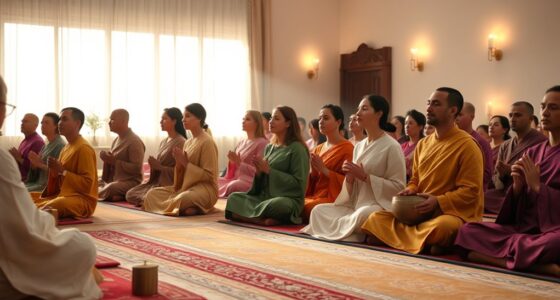

Tonglen is a Buddhist meditation practice that involves breathing in others’ suffering and breathing out relief and compassion. You focus on visualization and mindful breathing, imagining inhaling pain and exhaling healing energy. This practice deepens your empathy and emotional resilience while fostering a sense of interconnectedness. By regularly engaging in Tonglen, you can cultivate greater compassion and patience in daily life. To explore more about how to incorporate this powerful technique, continue with the next steps.
Key Takeaways
- Tonglen involves inhaling others’ suffering through visualization, feeling it deeply in the heart.
- Exhale relief and compassion, sending healing energy to those who are suffering.
- Practice often in seated meditation, focusing on mindful breathing and compassionate intention.
- Cultivates empathy, emotional resilience, and present-moment awareness by connecting with universal suffering.
- Regular practice reduces stress, enhances kindness, and deepens emotional openness.
Understanding the Roots and Philosophy of Tonglen

To truly understand the practice of Tonglen, it’s essential to explore its roots and underlying philosophy. At its core, Tonglen cultivates meditative empathy, allowing you to connect deeply with the suffering of others. This practice is rooted in Tibetan Buddhism, emphasizing compassionate mindfulness—being fully present with pain and discomfort without avoidance. This method encourages practitioners to actively engage with self-compassion and develop a non-judgmental attitude towards their own feelings. Instead of resisting suffering, you intentionally inhale it, transforming it through your breath, and exhale relief and healing. This approach fosters a profound sense of interconnectedness, reminding you that everyone’s pain is shared and that compassion can be cultivated through conscious breathing. Recognizing the importance of a supportive environment, many practitioners find that creating a calming space enhances their ability to engage deeply with the practice. Establishing a peaceful setting can help facilitate mindfulness and deepen your concentration during meditation. Understanding these principles helps you appreciate Tonglen not just as a meditation, but as a powerful act of altruism and spiritual growth. Cultivating environmental mindfulness can deepen your practice by aligning it with principles of sustainability and respect for the natural world. Additionally, integrating mindfulness techniques such as deep breathing exercises can enhance emotional stability and focus during your practice.
How to Practice Tonglen: Step-by-Step Guidance

Practicing Tonglen involves a simple yet profound sequence of steps that anyone can follow. First, find a comfortable seated position and close your eyes. Begin with a few deep breaths to center yourself. Bring to mind someone suffering or imagine their pain vividly. Use meditative visualization to picture inhaling their suffering, feeling it enter your heart. As you breathe out, visualize sending them relief, compassion, and healing energy. Maintain a compassionate intention throughout, genuinely wishing for their well-being. Repeating this cycle, focusing on your breath, visualization, and intention, cultivates compassionate awareness and deepens your connection with others. This practice fosters connection and kindness. With patience, you’ll deepen your ability to breathe in suffering and breathe out relief, transforming compassion into a lived experience. Developing consistent practice can strengthen your ability to align with emotional harmony, making this a more effective and meaningful meditation. Remember that patience and persistence are key to experiencing the full benefits of Tonglen, as regular practice enhances your capacity for empathy and inner peace.
Cultivating Compassion Through Breath and Mindfulness
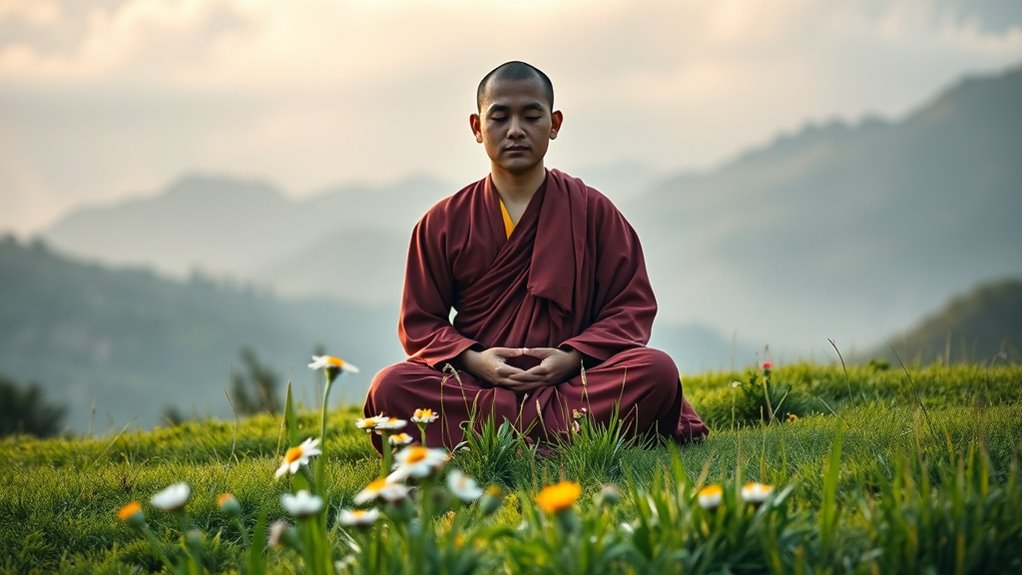
Cultivating compassion through breath and mindfulness involves intentionally anchoring your awareness in the present moment while opening your heart to others’ suffering. By practicing mindful awareness, you become more attuned to your own emotions and those of others, creating a foundation for genuine compassion cultivation. As you breathe deeply and focus on each inhalation and exhalation, you develop a sense of presence that fosters understanding and empathy. This mindful approach allows you to observe suffering without judgment, making space for compassion to grow naturally. Incorporating mindfulness techniques into your daily routine can further deepen your ability to connect with others on a compassionate level. Consistently integrating breath and mindfulness into your practice helps you deepen your connection with others, transforming your awareness into a powerful tool for kindness and emotional openness. Developing emotional awareness through these practices also enhances your capacity for empathy and compassionate responses in challenging situations.
Benefits of Incorporating Tonglen Into Daily Life

Incorporating Tonglen into your daily routine can considerably enhance your emotional resilience and sense of compassion. By practicing mindfulness routines like Tonglen regularly, you strengthen your ability to stay centered amid challenges. This habit fosters deep empathy, helping you connect with others’ suffering while cultivating relief within yourself. Consistent practice also reduces stress and encourages emotional balance. To visualize these benefits, consider the following table:
| Benefit | Description | How it Helps |
|---|---|---|
| Increased Resilience | Builds strength to face emotional hardships | Better coping skills |
| Greater Compassion | Deepens understanding of others’ pain | Strengthens relationships |
| Stress Reduction | Calms the mind during difficult moments | Promotes emotional stability |
| Mindfulness Routines | Reinforces present-moment awareness | Enhances overall well-being |
| Emotional Balance | Supports steady emotional responses | Improves mental clarity |
Overcoming Challenges and Deepening Your Practice

As you continue practicing Tonglen, challenges may arise that test your commitment and focus. You might notice your mind wandering or feelings of discomfort when facing suffering. To overcome these obstacles, deepen your mindfulness awareness by gently bringing your attention back to your breath and the intention behind each inhale and exhale. Cultivating compassion becomes essential; remind yourself that suffering is universal, and your practice fosters genuine kindness. When difficulty appears, acknowledge it without judgment, using it as an opportunity to strengthen your resolve. Consistent practice helps you navigate setbacks and deepen your understanding. Incorporating mindfulness techniques such as body scans or focused breathing can enhance your resilience during challenging moments. Developing a growth mindset encourages patience and persistence, allowing you to view setbacks as opportunities for growth. Additionally, understanding the types of headphone jacks can be useful if you’re practicing in a setting that involves audio guidance or music. Recognizing the benefits of eye patches for skin care can serve as a reminder of the importance of self-care routines that support overall well-being. Engaging in regular risk assessment for your practice environment can help identify potential distractions or hazards. Over time, these challenges become catalysts for greater compassion cultivation, enriching your ability to respond with patience and empathy in everyday life.
Frequently Asked Questions
Can Tonglen Be Practiced Without a Meditation Background?
Yes, you can practice Tonglen without a meditation foundation. It’s designed to be accessible for beginners, so you don’t need prior experience. The technique focuses on simple breathing and compassion, making it easy to incorporate into daily life. Just find a quiet space, breathe in suffering, and breathe out relief. With consistent practice, it becomes more natural, and you’ll deepen your understanding of compassion and mindfulness over time.
How Long Should Each Tonglen Meditation Session Last?
For tonglen meditation, there’s no strict rule on session length. Usually, a duration guidance of 10 to 20 minutes works well, but you can start with shorter sessions, around 5 minutes, especially if you’re new. Focus on consistency rather than duration; as you get comfortable, you can gradually extend your practice. The key is to find a session length that feels manageable and meaningful for your personal practice.
Is Tonglen Suitable for Children or Beginners?
Imagine opening a gentle door to kindness—tonglen can be that door. It’s often child-friendly and accessible for beginners, as you can adapt it with simple, calming visuals and short sessions. For children and newcomers, keep the practice light and encouraging, focusing on breathing in compassion and breathing out relief. With these adaptations, tonglen becomes an inviting, soothing journey into empathy, suitable for those just starting to explore mindfulness.
Can Tonglen Be Combined With Other Spiritual Practices?
You can absolutely combine tonglen with other spiritual practices for meditation integration and spiritual synergy. By integrating tonglen with practices like mindfulness, visualization, or loving-kindness meditation, you deepen your compassion and awareness. These combinations enhance your overall spiritual growth, allowing you to cultivate more empathy and resilience. Just make certain you maintain balance and focus, blending practices thoughtfully to create a harmonious and enriching spiritual experience.
What Are Common Misconceptions About Tonglen?
Many people have misconceptions about effectiveness and cultural misunderstandings regarding tonglen. You might think it’s just about breathing or that it won’t work for everyone, but it’s a powerful practice for cultivating compassion. Some assume it’s a quick fix, yet it requires consistent effort. Don’t let misconceptions prevent you from exploring its deep potential. Understanding its true purpose can help you approach it with an open mind and genuine intention.
Conclusion
As you embrace the practice of Tonglen, remember that “a journey of a thousand miles begins with a single step.” By breathing in suffering and breathing out relief, you cultivate compassion and transform pain into kindness. Keep practicing daily, even when it feels challenging. With patience and mindfulness, you’ll find that your heart grows lighter and more open. Consistency turns small breaths into a powerful act of healing—for yourself and others.