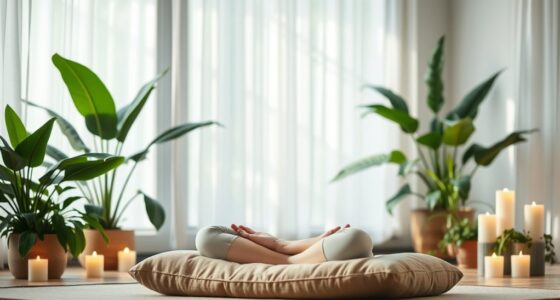

Living with less through simplicity and minimalism teaches you to focus on what truly matters. It encourages decluttering your space and mind, fostering clarity and contentment. By practicing mindful consumption, you’ll appreciate quality over quantity and find freedom from material excess. This approach nurtures inner peace and genuine connections, transforming your life into one of purpose and fulfillment. If you explore these lessons further, you’ll discover how embracing less can lead to a richer, more meaningful existence.
Key Takeaways
- Decluttering serves as a spiritual practice that fosters detachment, clarity, and contentment beyond material possessions.
- Embracing minimalism encourages mindfulness, helping individuals prioritize what truly matters for inner peace.
- Living with less cultivates gratitude and reduces attachment, nurturing genuine connection and purpose.
- Simplifying spaces and possessions creates mental and physical clarity, supporting presence and intentional living.
- Reimagining space through creative minimalism inspires innovative ways to find fulfillment beyond material wealth.

Simplicity and minimalism are more than just design trends—they’re ways to transform your life by focusing on what truly matters. When you embrace these principles, you start to see the value in mindful consumption, making deliberate choices about what you bring into your space and life. Instead of impulsively acquiring possessions, you become more aware of what you truly need and what adds genuine meaning to your days. This shift encourages you to practice decluttering habits that clear physical and mental clutter, creating space for what truly nourishes your soul.
As you begin to simplify, you notice how much mental weight is tied to excess stuff and unnecessary commitments. Decluttering becomes a form of spiritual practice, helping you detach from material possessions that no longer serve you. You learn to let go of the idea that your worth is measured by how much you own. Instead, you focus on cultivating contentment with less, which fosters a sense of freedom and clarity. Simplifying your environment and schedule allows you to be more present, more intentional, and more connected to what genuinely matters in your life.
Decluttering is a spiritual practice that fosters presence, purpose, and true connection to what matters most.
Mindful consumption plays a *paramount* role here. Before making a purchase, you pause to ask yourself if it aligns with your values and needs. This intentional approach reduces waste and prevents accumulation of things that clutter your home and mind. Over time, you develop an appreciation for quality over quantity, investing in items and experiences that bring lasting joy rather than fleeting satisfaction. This mindset also extends beyond possessions—being mindful of your time, energy, and relationships helps you prioritize what truly enriches your life.
Living with less isn’t about deprivation; it’s about liberation. You free yourself from the constant chase for more, and instead, focus on cultivating gratitude for what you already have. This shift nurtures a sense of inner peace and encourages you to find fulfillment in simplicity. As your decluttering habits become ingrained, you notice how your surroundings transform into calm, inspiring spaces that reflect your values. Ultimately, embracing minimalism guides you toward a more intentional, meaningful existence—one rooted in awareness, appreciation, and purpose. Additionally, embracing principles of creative practice can help you discover innovative ways to reimagine and utilize your space and possessions, fostering new perspectives on living with less.

Mandala Coloring Book: For Adults with Beautiful Patterns for Fun and Relaxation
As an affiliate, we earn on qualifying purchases.
Frequently Asked Questions
How Does Minimalism Affect Mental Health?
Minimalism positively impacts your mental health by encouraging mindful consumption, which helps reduce overwhelm and decision fatigue. As you declutter and focus on what truly matters, you gain emotional clarity, making it easier to manage stress and anxiety. Living with less fosters a sense of calm and contentment, allowing you to prioritize your well-being and build a more balanced, mindful life.
Can Minimalism Improve Relationships?
Yes, minimalism can improve your relationships by fostering relationship growth and deeper emotional connections. When you declutter your life, you create space for meaningful interactions and reduce distractions. This encourages you to focus on quality time and genuine communication with loved ones. As a result, you build trust and understanding, strengthening bonds and nurturing relationships in a more intentional, mindful way.
Is Minimalism Suitable for Every Lifestyle?
Minimalism isn’t suitable for every lifestyle because it challenges your habits of luxury consumption and material possessions. If you enjoy having abundant possessions or thrive in a busy, cluttered environment, adopting minimalism might feel restrictive. However, if you seek clarity, reduced stress, or a focus on meaningful experiences, minimalism can adapt to your life. It’s about finding a balance that aligns with your values and daily routines.
How Do I Start Decluttering Effectively?
Start decluttering by setting small, achievable goals—like Marie, who began by organizing one drawer at a time. Use decluttering tools such as boxes for donations and labels for sorting. Focus on your organizing habits, and regularly assess what you truly need. This steady approach helps prevent overwhelm and builds momentum, making the process more effective and sustainable. Remember, consistency is key to creating a simpler, more intentional space.
What Are Common Challenges in Adopting Minimalism?
You might struggle with overcoming attachment to possessions and managing social pressure, which can make embracing minimalism tough. It’s common to feel guilty about letting go of things or worry about how others perceive your choices. To overcome these challenges, remind yourself of your reasons for minimalism, set clear goals, and seek support from like-minded people. Focus on the benefits of living simply, and gradually build confidence in your new lifestyle.

MANDALAS ADULT COLORING BOOK Mindfulness & Relaxation: Mandala Relaxing Mandala Desings for Adults 2021
As an affiliate, we earn on qualifying purchases.
Conclusion
Embracing simplicity is like tending a quiet garden—you nurture what truly matters while letting go of the weeds. Minimalism becomes your steady lantern in the dark, guiding you to clarity and peace. When you live with less, you create space for your inner light to shine brighter. Remember, less clutter isn’t just empty space; it’s the canvas where your soul can flourish and find true contentment.

Beloved Intricate Mandalas
As an affiliate, we earn on qualifying purchases.

3Pcs Adult Coloring Book Spiral Bound, Mandala Coloring Book for Adult Relaxation, Original Design with 72 Patterns, Thick Paper One Sided Design, Hand-Drawn Design, Anxiety Relief Mindfulness Gifts
[Spiral Bound & Page One Sided Design] This set of mandala adult coloring book for women relaxation is...
As an affiliate, we earn on qualifying purchases.