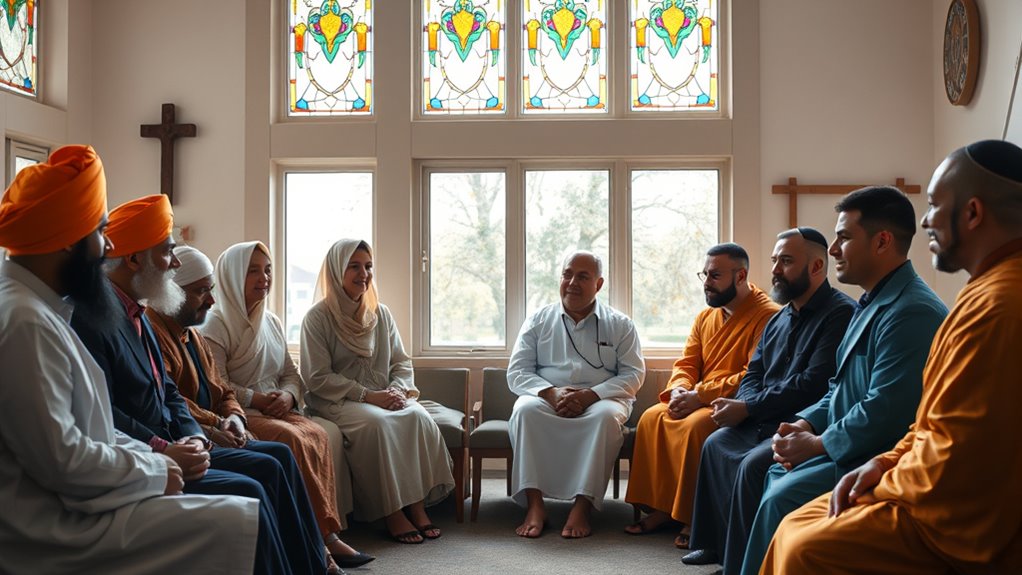

Interfaith dialogue helps you understand different spiritual traditions by highlighting shared values like compassion, justice, and humility found in texts such as the Bible, Quran, and Torah. It encourages you to see rituals and practices as expressions of faith that deepen community bonds. By listening and respecting diverse beliefs, you foster mutual empathy and reduce prejudice. Continuing to explore these connections will reveal how common spiritual goals unite us all in the pursuit of peace and understanding.
Key Takeaways
- Interfaith dialogue fosters understanding by exploring shared values and moral principles across diverse spiritual texts.
- Participating in rituals and practices from different traditions promotes appreciation and respect for varied expressions of faith.
- Listening to others’ beliefs cultivates empathy, mutual respect, and recognizes sacredness in different spiritual practices.
- Interfaith engagement helps reduce prejudice, encouraging harmony and peaceful coexistence among diverse communities.
- Learning from different traditions broadens personal spiritual perspectives and highlights common human aspirations.
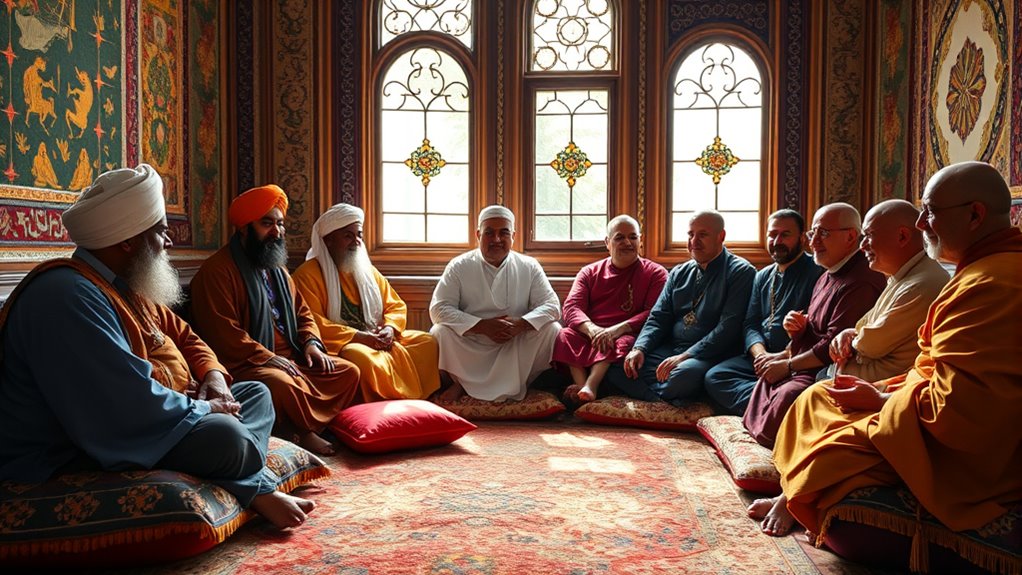
Have you ever wondered how different faiths can come together to foster understanding and peace? It’s a compelling question, especially in a world rich with diverse spiritual traditions. Interfaith dialogue serves as a bridge, allowing you to explore the common ground and unique differences among various religions. At its core, this dialogue promotes pluralism and tolerance, encouraging you to see faith not as a barrier but as a shared human experience. When you approach these conversations with an open mind, you begin to appreciate how sacred texts and rituals shape the beliefs and practices of different communities. Sacred texts like the Bible, Quran, Torah, and others contain stories, teachings, and commandments that often mirror one another in values such as compassion, justice, and humility. By studying these texts side by side, you realize that many spiritual traditions emphasize similar moral principles, even if their stories and language differ. Rituals, too, offer a window into understanding faith communities; whether it’s prayer, fasting, or ceremonies marking life’s milestones, rituals serve as expressions of devotion and identity. When you observe or participate in these rituals with respect and curiosity, you gain insight into what drives believers and how they find meaning in their practices. This mutual understanding fosters empathy, helping you see faith as a deeply personal yet universal journey. Additionally, engaging with a broad range of religious traditions can deepen your appreciation for the diversity of spiritual expressions.
Interfaith dialogue isn’t just about exchanging knowledge; it’s about listening genuinely and recognizing the sacredness in others’ beliefs. You learn to value the diversity of practices and texts without feeling threatened or compelled to convert. Instead, you see these differences as opportunities for growth and shared learning. This approach cultivates tolerance, as you come to understand that faith isn’t a zero-sum game but a spectrum of expressions rooted in the search for truth and connection with the divine. When you engage with others’ sacred texts and rituals respectfully, you also strengthen your own spiritual perspective. It’s a reciprocal process that enriches your understanding of your faith while appreciating the beliefs of others. Over time, these encounters can diminish prejudice and foster genuine respect. Ultimately, interfaith dialogue becomes a powerful tool for building peace, rooted in the recognition that, despite differences, many spiritual paths aim to elevate the human soul and foster harmony among all people.
Frequently Asked Questions
How Can Interfaith Dialogue Resolve Deep-Rooted Religious Conflicts?
You can resolve deep-rooted religious conflicts through interfaith cooperation and promoting religious tolerance. By actively engaging in respectful conversations, you foster understanding and break down stereotypes. When you listen to others’ perspectives and share your own, you build trust and find common ground. This approach encourages empathy, reduces hostility, and helps create peaceful coexistence among different faith communities, ultimately leading to lasting harmony and mutual respect.
What Are Common Misconceptions About Different Spiritual Traditions?
Think of stereotypes and biases as fog that distorts your view of different spiritual traditions. Many believe, wrongly, that all Buddhists are silent or all Muslims are strict, which oversimplifies rich, diverse cultures. Cultural misunderstandings often stem from these misconceptions, preventing genuine respect and connection. By questioning assumptions and learning directly from each tradition, you clear the fog, opening your mind to the true depth and beauty of diverse spiritual paths.
How Can Youth Be Effectively Engaged in Interfaith Discussions?
You can effectively engage youth in interfaith discussions by encouraging youth leadership and peer engagement. Create safe spaces where they feel comfortable sharing their perspectives, and involve them in planning activities. Use relatable topics and interactive formats like debates or storytelling to make discussions meaningful. Supporting youth leaders empowers them to facilitate dialogue, inspiring peers to participate actively and develop understanding across diverse spiritual traditions.
What Role Does Technology Play in Facilitating Interfaith Communication?
Technology plays a vital role in facilitating interfaith communication by providing virtual forums and social media platforms where you can connect across diverse spiritual traditions. These tools break down geographical barriers, allowing you to share ideas, ask questions, and learn from others in real-time. By engaging actively online, you can foster understanding and respect, making interfaith dialogue more accessible and inclusive for everyone involved.
How Can Interfaith Dialogue Impact Global Peace Initiatives?
You can boost global peace by fostering interfaith collaboration, which promotes cultural understanding. Studies show that communities engaging in interfaith initiatives are 30% more likely to experience reduced conflict. Your participation helps break down stereotypes, build trust, and create shared goals. When diverse traditions come together, you pave the way for peaceful coexistence, inspiring broader international efforts to resolve conflicts and promote harmony worldwide.
Conclusion
As you step back from these conversations, remember that interfaith dialogue is like weaving a vibrant tapestry from many threads. Each tradition adds its unique color and pattern, creating a richer, more beautiful picture of understanding. Embrace the differences as treasures, not barriers, and let your open heart be the guiding light. Together, you’re building bridges across waters that once seemed too vast, turning diversity into a symphony of shared humanity.