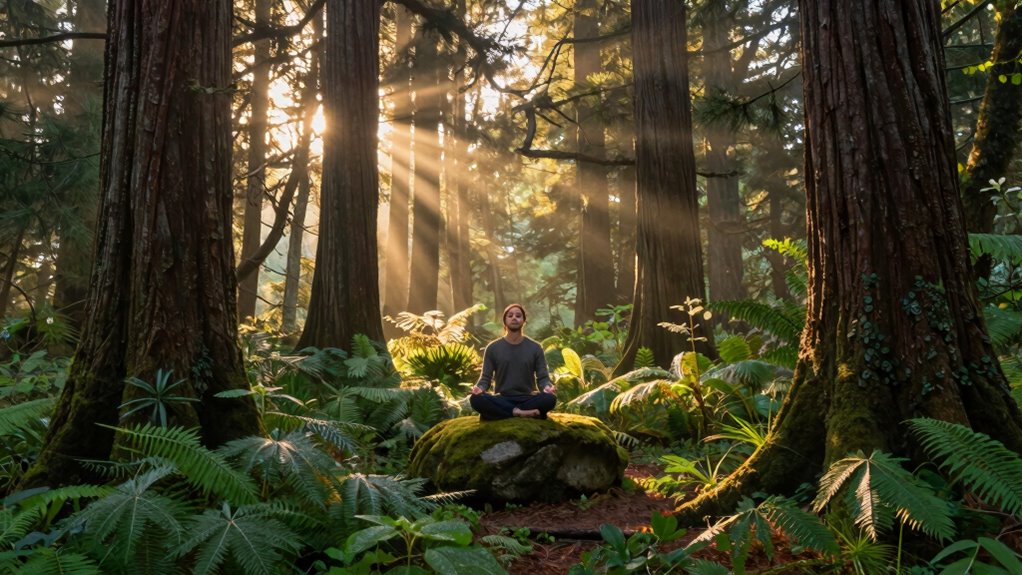

Gratitude acts as a foundation for spiritual resilience by shifting your focus to positive aspects even during tough times. It helps you see setbacks as growth opportunities and anchors you amidst chaos, fostering emotional healing. Practicing mindfulness enhances your awareness of these moments, deepening your gratitude and sense of calm. Over time, this outlook strengthens your inner strength, making you more adaptable and resilient. Keep exploring, and you’ll discover how gratitude can truly transform your ability to navigate life’s challenges.
Key Takeaways
- Gratitude fosters spiritual resilience by shifting focus to positive aspects during adversity, promoting emotional healing.
- Practicing gratitude enhances mindfulness, helping individuals recognize unnoticed blessings that strengthen spiritual endurance.
- Recognizing interconnectedness with nature deepens gratitude, reinforcing resilience through a sense of universal support.
- Gratitude cultivates a hopeful outlook, enabling spiritual growth and adaptability amid life’s challenges.
- Engaging in gratitude practices anchors the spirit, promoting calmness and stability in turbulent times.

Although gratitude is often seen as a simple act of thankfulness, it actually plays a crucial role in building spiritual resilience—that inner strength that helps you withstand life’s challenges. When you cultivate gratitude, you’re not just expressing appreciation; you’re training your mind to focus on positive aspects, even during difficult times. This shift in perspective enhances your ability to cope with adversity and recover from setbacks. Incorporating mindfulness practices into your daily routine can deepen this process. By being fully present and aware of your thoughts and feelings, you learn to recognize moments of gratitude that might otherwise go unnoticed. These moments serve as anchors, grounding you amid chaos and helping you develop emotional healing. When you intentionally pause to acknowledge what you’re thankful for, you’re engaging in a form of emotional healing that strengthens your resilience over time. This practice allows you to process negative emotions more effectively, reducing their power over you and fostering a sense of calm and control. As you become more mindful, you notice how gratitude shifts your emotional landscape, making it easier to navigate stress and uncertainty. It’s not about denying difficulties but about choosing to focus on what remains valuable and meaningful despite them. This attitude nurtures your inner strength, allowing you to face challenges with a more balanced and hopeful outlook. Over time, gratitude becomes a foundation upon which you build greater emotional stability. When setbacks occur, you’re more likely to see opportunities for growth rather than only pain or loss. This resilience isn’t just about bouncing back but about evolving through adversity. You start to view struggles as part of a larger narrative of growth and learning, reinforcing your spiritual resilience. Practicing gratitude in this way transforms your relationship with life’s hardships, making you more adaptable and emotionally resilient. It’s a continuous process of nurturing your inner resources, ensuring that you remain centered even when external circumstances are turbulent. Recognizing the importance of biodiversity, which supports a healthy environment, can also inspire a deeper appreciation for interconnectedness and resilience in nature and ourselves. Developing an awareness of ecosystem health can further strengthen your understanding of resilience on a broader scale. Understanding the interconnectedness of all creation reminds us that our resilience is linked to the health of the whole. Cultivating a sense of environmental awareness can empower you to see how personal resilience is interconnected with the health of the planet. Additionally, recognizing the impact of climate change can motivate a more proactive attitude towards environmental stewardship. Ultimately, the more you integrate gratitude and mindfulness practices into your life, the stronger your spiritual resilience becomes. You develop a resilient mindset that doesn’t ignore pain but rather appreciates the lessons it brings. This mindset empowers you to handle life’s unpredictable nature with grace and strength, fostering emotional healing and deepening your spiritual growth. The connection between gratitude and resilience is profound, and by actively cultivating both, you equip yourself with a powerful tool to face whatever challenges come your way.

The Original Gratitude Journal – 5 Minute Gratitude Practice with Inspiring Prompts & Quotes for Mindfulness, Reflection & Personal Growth 2026 – Wellness Journal for Men & Women
Boost Your Happiness in Just Minutes – Our gratitude journal for women is designed to elevate your mood…
As an affiliate, we earn on qualifying purchases.
As an affiliate, we earn on qualifying purchases.
Frequently Asked Questions
How Does Gratitude Influence Mental Health?
Gratitude boosts your mental health by fostering mindfulness benefits, helping you focus on positive aspects of life. When you practice gratitude, you reduce feelings of depression and increase emotional resilience. This shift in perspective encourages appreciation, diminishes negative thoughts, and promotes a sense of well-being. By regularly cultivating gratitude, you strengthen your mental resilience, making it easier to navigate life’s challenges with a more optimistic and balanced mindset.
Can Gratitude Practices Replace Traditional Therapy?
Imagine a medieval monk scribbling gratitude in a leather-bound journal—gratitude practices can’t fully replace therapy, but they can complement it. While gratitude and mindfulness boost emotional resilience, they shouldn’t replace professional help. Different traditions emphasize gratitude uniquely, enriching your understanding. Use gratitude practices as a tool to build resilience, but recognize that therapy addresses complex issues that gratitude alone might not resolve.
What Are Simple Daily Gratitude Exercises?
You can start with simple daily gratitude exercises like daily journaling, where you write down three things you’re thankful for each morning. Practice mindful appreciation by pausing during your day to notice and savor positive moments, like a warm cup of coffee or a kind word. These small habits help you cultivate a grateful mindset, boosting your emotional resilience and overall well-being.
How Does Spiritual Resilience Differ From Emotional Resilience?
Have you ever wondered how spiritual resilience differs from emotional resilience? Spiritual resilience involves drawing strength from your faith or beliefs, fostering resilience growth even in tough times. It helps you stay connected to a higher purpose, providing deeper emotional stability. While emotional resilience focuses on managing feelings and stress, spiritual strength offers a foundation for inner peace and purpose, guiding you through life’s challenges with a sense of hope and resilience.
Are There Cultural Differences in Expressing Gratitude?
Yes, there are cultural differences in expressing gratitude. Cultural expressions influence how openly you show appreciation, and gratitude norms vary widely across societies. In some cultures, you might express thanks through gestures or indirect words, while others emphasize direct verbal appreciation. Understanding these differences helps you connect more authentically with others, respecting their unique ways of showing gratitude, which deepens relationships and fosters mutual respect.

hunnidspace Meditation Zafu Cushion Set with Buckwheat Hulls & Memory Foam – Ergonomic Support for Yoga & Sitting – Removable Machine-Washable Luxury Velvet Cover – for Adults and Kids (Blue)
🌟 SAY GOODBYE TO KNEE & LEG PAIN Experience cloud-like support with our dual-layer system: Premium shredded memory…
As an affiliate, we earn on qualifying purchases.
As an affiliate, we earn on qualifying purchases.
Conclusion
By embracing gratitude, you strengthen your spiritual resilience, helping you bounce back from life’s challenges with greater ease. Research shows that grateful individuals are 25% more likely to report higher levels of well-being and resilience. So, next time life gets tough, focus on what you’re thankful for. This simple shift not only boosts your mood but also fortifies your spirit, empowering you to navigate difficulties with a resilient heart and mind.

DPEHAKMK Emotional Healing Oracle Deck, 56 Oracle Cards for Beginners, Mindfulness, and Spiritual Growth, Affirmation and Reflection Deck
Healing Oracle Cards: Each card explores a specific emotion—from love, joy, and gratitude to fear, shame, and loneliness—offering…
As an affiliate, we earn on qualifying purchases.
As an affiliate, we earn on qualifying purchases.
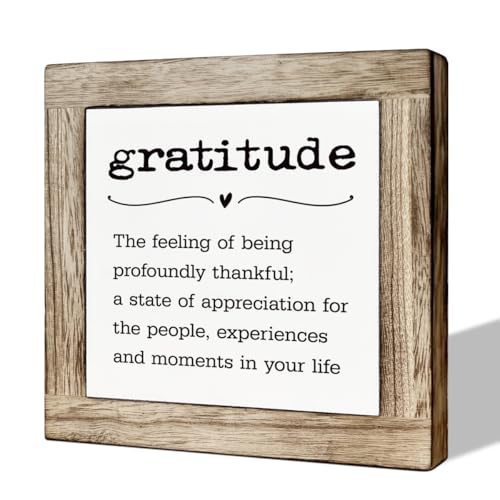
Gratitude Wood Sign, Inspirational Desk Decor, Farmhouse Wood Plaque Sign, Rustic Office Decor, Thank You Gifts for Women Men Coworkers Teachers Friends, Definition of Gratitude Signs
Dimensions: 5.9×5.9×0.7inch, proper size for you to decorate, won't take up too much space.
As an affiliate, we earn on qualifying purchases.
As an affiliate, we earn on qualifying purchases.