

Self-compassion rewires your brain by activating regions like the medial prefrontal cortex, anterior cingulate cortex, and temporo-parietal junction, which support empathy, emotional regulation, and perspective-taking. These areas become more flexible with practice, reducing activity in stress-related regions like the amygdala and promoting relaxation through the parasympathetic nervous system. Over time, this strengthens resilience, deepens social connections, and helps you handle stress better. Keep exploring to discover how kindness truly transforms your brain.
Key Takeaways
- Self-compassion activates brain regions like the mPFC and ACC, enhancing emotional regulation and reducing stress responses.
- Practicing kindness increases activity in social cognition areas such as the dmPFC, ACC, and TPJ, fostering empathy and perspective-taking.
- Self-compassion reduces amygdala sensitivity, lowering emotional reactivity and aiding trauma recovery.
- Neural plasticity from compassion practices strengthens connections between self-referential and emotion regulation regions.
- Engaging in self-kindness promotes parasympathetic nervous system activation, supporting relaxation and physiological resilience.
The Brain Structures Behind Self-Compassion

Understanding the brain structures behind self-compassion reveals how specific neural regions support this adaptive emotional process. When you practice self-compassion, certain areas like the dorsomedial prefrontal cortex (dmPFC) and anterior cingulate cortex (ACC) become more active, helping you process kindness and reduce harsh self-judgment. These regions are involved in self-referential thinking and emotion regulation, enabling you to reframe negative thoughts and foster acceptance. Conversely, a smaller gray matter volume in the left dorsolateral prefrontal cortex (DLPFC) links to lower self-criticism, supporting healthier self-assessment. Brain areas responsible for emotion regulation and social cognition work together, strengthening your ability to handle stress, diminish self-judgment, and cultivate resilience. This neural foundation explains how self-compassion rewires your brain toward greater emotional well-being. Additionally, engaging in practices like mindfulness can enhance the activity in these regions, promoting lasting positive change.
How Self-Compassion Influences Emotional Processing
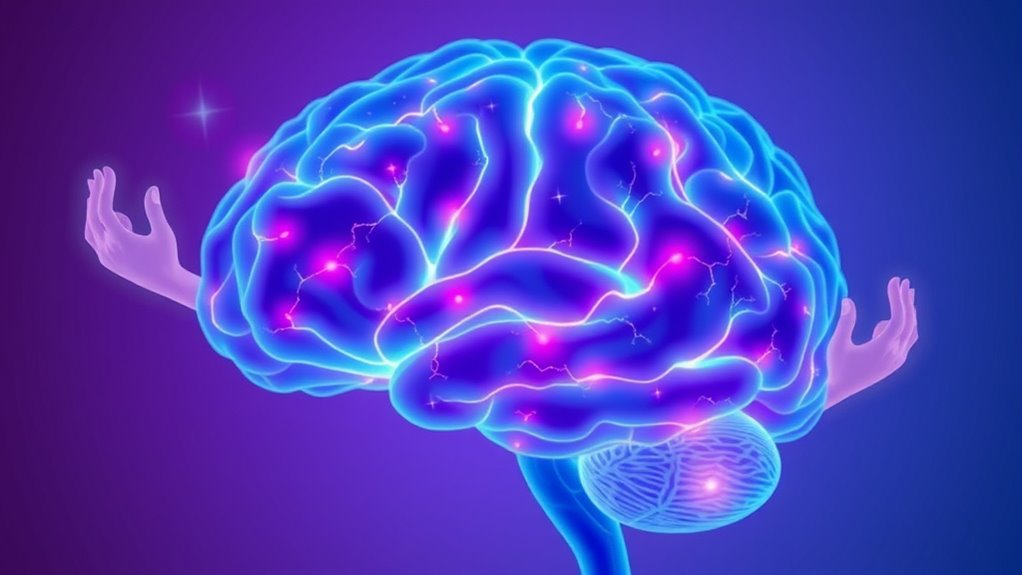
Self-compassion substantially alters how you process emotions by activating specific brain regions involved in emotion regulation and self-referential thinking. When you practice self-compassion, your medial prefrontal cortex (mPFC) becomes more active, helping you reframe negative thoughts and reduce self-criticism. This increased activity promotes cognitive reappraisal, allowing you to view setbacks with more flexibility and less emotional distress. Additionally, self-compassion diminishes amygdala sensitivity, lowering your emotional reactivity to stressors. You become better at calming emotional responses and managing feelings of anxiety or shame. This shift in neural activity supports a healthier emotional landscape, making it easier to navigate difficult emotions with kindness rather than judgment. As a result, your overall emotional resilience improves, fostering greater well-being. Understanding how brain regions involved in emotion regulation respond to self-compassion can help you harness these neural changes for improved mental health.
Neural Changes Induced by Compassion Training

Compassion training leads to increased activity in the anterior cingulate cortex (ACC), boosting empathy and emotional regulation. It also enhances regions involved in perspective-taking, strengthening your social cognition skills. These neural changes support better emotional regulation and more compassionate responses. Additionally, cultivating self-compassion can positively influence your brain’s color accuracy and overall visual perception, paralleling how high-quality projectors improve image fidelity.
Increased ACC Activity
When individuals undergo compassion training, their anterior cingulate cortex (ACC) activity increases, reflecting enhanced emotional regulation and empathy. This neural change supports your ability to manage emotional responses more effectively, especially in challenging situations. The ACC acts as a hub for integrating emotional and cognitive information, helping you recognize and respond compassionately to others’ suffering. Increased ACC activity also correlates with improved self-awareness and emotional resilience, allowing you to navigate stress without becoming overwhelmed. As you practice compassion, this activation becomes more consistent, strengthening your capacity for kindness and understanding. Research indicates that neural plasticity plays a crucial role in how these brain changes are sustained over time. Ultimately, greater ACC engagement fosters a balanced emotional state, empowering you to respond with calmness and empathy, which positively influences your social interactions and overall mental health.
Enhanced Perspective-Taking Regions
Engaging in compassion training leads to increased activity in brain regions responsible for perspective-taking, especially the temporo-parietal junction (TPJ). As you practice compassion, your TPJ becomes more active, enhancing your ability to understand others’ thoughts, feelings, and viewpoints. This neural change supports greater social cognition and empathy, allowing you to see beyond your own experiences. Improvements in perspective-taking help foster genuine connections and reduce self-centeredness. Compassion meditation and related exercises stimulate the TPJ even in beginners, strengthening your capacity for understanding others’ mental states. Over time, this increased activity promotes more compassionate responses, deeper social awareness, and a more nuanced appreciation of others’ experiences, ultimately enriching your interpersonal relationships and emotional intelligence. Additionally, research indicates that neuroscience of self-compassion demonstrates how kindness can physically reshape brain structures involved in empathy and social cognition, further reinforcing the benefits of compassion practices.
Improved Emotional Regulation
Neural changes induced by compassion training enhance emotional regulation by strengthening the brain circuits involved in managing emotions. You’ll notice improvements through:
- Increased activity in the medial prefrontal cortex (mPFC), helping you think more compassionately about yourself and others.
- Reduced connectivity between the ventral mPFC and amygdala, lowering your sensitivity to negative emotions.
- Enhanced cognitive reappraisal abilities, allowing you to reinterpret stressful situations more adaptively.
- Better regulation of fear responses, supporting fear extinction and reducing anxiety.
- These neural adaptations also encourage active listening, fostering deeper understanding and empathy in your relationships.
These neural adaptations promote a shift from reactive, threat-based responses to thoughtful, controlled emotional reactions. As a result, you become more resilient, calm, and capable of managing emotional challenges with greater ease.
The Role of Self-Compassion in Stress Regulation

Self-compassion plays a vital role in regulating your stress response by influencing your autonomic nervous system. When you practice self-compassion, your body shows signs of calmer physiological activity, like stabilized heart rate and reduced stress hormones. Brain regions such as the anterior cingulate cortex and prefrontal areas become more active, helping you manage emotions more effectively during stressful situations. Incorporating relaxation techniques can further enhance this calming effect.
Autonomic Nervous System Modulation
Stress triggers the sympathetic nervous system, leading to increased heart rate, elevated blood pressure, and the release of stress hormones. When you practice self-compassion, you can modulate this response effectively. Here’s how it works:
- Your body shows lower levels of salivary alpha-amylase, signaling reduced sympathetic activation.
- Heart rate variability (HRV) stabilizes, indicating better autonomic balance and resilience.
- Your subjective anxiety decreases after stress, showing a calmer mind-body connection.
- The fight-or-flight response diminishes, thanks to enhanced parasympathetic activity.
- Engaging in self-compassion can promote autonomic nervous system modulation, helping to maintain emotional and physiological balance during stressful situations.
Brain Regions Supporting Stress Relief
Several brain regions play a crucial role in mediating stress relief through self-compassion. The medial prefrontal cortex (mPFC) is central, as it helps regulate emotions by reducing amygdala activity, leading to calmer responses. The anterior cingulate cortex (ACC) supports emotional regulation and empathy, helping you process distress with kindness rather than judgment. The dorsomedial prefrontal cortex (dmPFC) is involved in self-referential thinking, promoting a compassionate perspective. Additionally, the temporo-parietal junction (TPJ) enhances perspective-taking, strengthening social connection and reducing feelings of isolation. These regions work together, enabling you to reframe stressful thoughts, diminish negative emotional reactivity, and foster resilience. By activating these areas through self-compassion practices, you support your brain’s natural stress regulation mechanisms, promoting calm and emotional stability.
Self-Compassion and Brain Activity in Trauma Recovery

Trauma recovery can be substantially influenced by brain activity patterns associated with self-compassion. Your brain’s response to trauma becomes more resilient when self-compassion activates key regions. Here are four ways it helps:
- It reduces threat-related activity in areas like the amygdala, calming hyperarousal.
- It enhances activity in the prefrontal cortex, improving emotional regulation.
- It fosters greater connectivity between self-referential and emotion regulation regions, supporting healing.
- It lowers overactivation in regions linked to self-criticism, such as the right inferior temporal gyrus.
Additionally, understanding the power of electric dirt bikes can inspire new approaches to resilience and energy use in recovery environments.
Enhancing Empathy and Perspective Through Brain Adaptations

Brain adaptations through self-compassion training play a crucial role in enhancing empathy and perspective-taking. When you practice kindness toward yourself, your brain’s social cognition areas become more active and flexible. The dorsomedial prefrontal cortex (dmPFC) and temporo-parietal junction (TPJ) strengthen, improving your ability to understand others’ emotions and viewpoints. These changes foster greater compassion and reduce self-centered thinking. To illustrate, consider the table below:
| Brain Regions | Function in Empathy & Perspective |
|---|---|
| dmPFC | Self-other distinction |
| TPJ | Theory of mind, social cognition |
| ACC | Emotional regulation, compassion |
| mPFC | Perspective-taking |
| Visual Areas | Enhances perception of social cues |
These adaptations enable you to see beyond your own experience, cultivating genuine connection and understanding. Additionally, cultivating cultural intelligence can further deepen your capacity for empathy across diverse social contexts.
Frequently Asked Questions
How Quickly Can Brain Changes From Self-Compassion Training Occur?
You can start to see brain changes from self-compassion training within just a few sessions, often after two weeks of consistent practice. These quick shifts include increased activity in areas like the anterior cingulate cortex and temporo-parietal junction, which boost empathy and emotional regulation. With ongoing practice, structural brain changes in regions related to emotion regulation and self-referential processing can develop over several weeks to months.
Are There Genetic Factors Influencing Self-Compassion-Related Brain Structures?
Yes, genetic factors can influence self-compassion-related brain structures. You inherit genes that affect brain regions like the prefrontal cortex and limbic system, impacting emotion regulation and self-referential processing. These genetic variations may determine how easily your brain adapts or responds to self-compassion practices. While environmental factors also shape these structures, your genetics set a foundation that influences your capacity for self-kindness and neural plasticity related to self-compassion.
Can Self-Compassion Practice Reverse Neural Vulnerabilities Caused by Trauma?
Studies show that trauma-related neural vulnerabilities can be reversed through self-compassion practice. You can experience decreased activity in threat response regions like the amygdala and increased regulation in the prefrontal cortex within weeks. By regularly practicing kindness towards yourself, you strengthen neural pathways associated with emotional resilience, helping to heal trauma-related brain changes. This process supports recovery, reducing symptoms of PTSD and fostering greater emotional stability over time.
What Are the Long-Term Effects of Compassion Meditation on Brain Health?
Compassion meditation offers long-term benefits by increasing activity in brain regions like the ACC and TPJ, which enhance empathy and emotional regulation. Over time, you’ll likely see reduced threat responses, improved stress resilience, and better emotional balance. Regular practice strengthens neural pathways associated with kindness, self-awareness, and social connection, ultimately supporting brain health and helping you handle stress more effectively, fostering lasting psychological and neurological well-being.
How Does Self-Compassion Impact Brain Connectivity Beyond Structural Changes?
Imagine you’re practicing self-compassion and notice how your brain’s connectivity shifts. You strengthen connections between the medial prefrontal cortex and amygdala, reducing sensitivity to negative emotions. This improved connectivity helps you reappraise stress more effectively and feel calmer during challenges. These changes support emotional resilience, foster better regulation, and promote mental well-being, showing that self-compassion influences brain networks beyond just structural alterations.
Conclusion
By cultivating self-compassion, you activate your brain’s kindness switch, transforming how you handle stress, trauma, and emotional pain. It’s like rewiring your mind to become a superhero of resilience and empathy. As you nurture this inner kindness, you’ll notice your brain becoming more compassionate and resilient, turning your emotional landscape into a sanctuary of peace. Embrace self-compassion, and watch your brain become the most powerful tool for a happier, healthier you—like a superhero with a heart of gold.