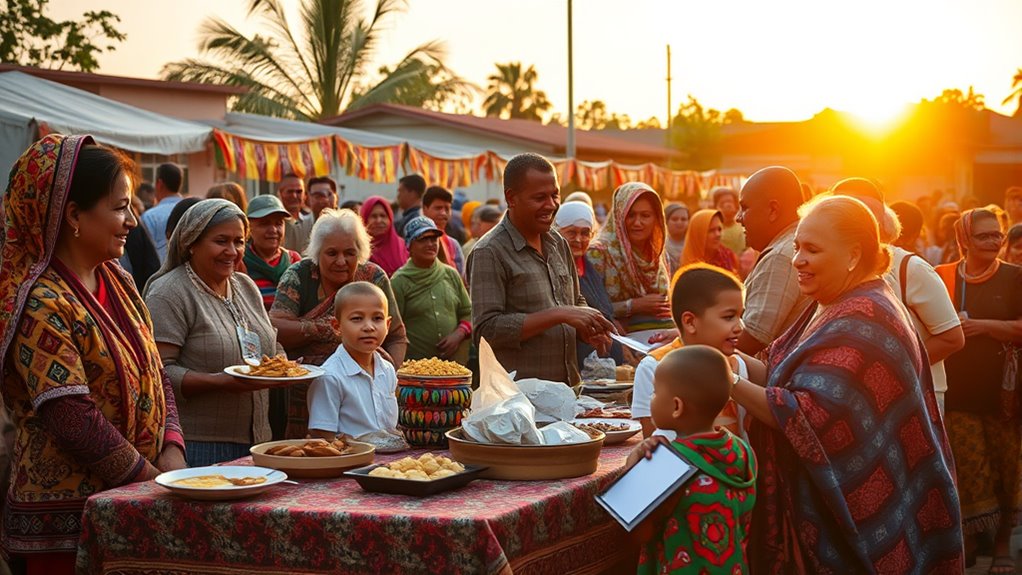

Across different communities, you’ll find philanthropy shaped by cultural values, religious beliefs, and social norms. In some cultures, giving is a shared responsibility rooted in traditions, rituals, and storytelling, fostering community bonds. Others emphasize discreet acts of charity to maintain humility. Support mechanisms like mutual aid and communal funds reflect trust and reciprocity. To discover how diverse communities organize and express their generosity, keep exploring these unique approaches and their underlying cultural influences.
Key Takeaways
- Cultural values and social norms influence giving practices, emphasizing community support over individual acts.
- Indigenous traditions often link giving to storytelling, ancestral practices, and maintaining social cohesion.
- Religious beliefs frame philanthropy as a moral or spiritual duty, shaping community support initiatives.
- Social status and humility affect how communities organize and display acts of charity.
- Community support mechanisms, such as mutual aid and savings groups, foster resilience through trust and shared customs.

Philanthropy takes many forms around the world, shaped by cultural values, religious beliefs, and social norms. When you look at different communities, you’ll notice that giving isn’t just about financial donations; it’s deeply embedded in cultural giving traditions that reflect shared identities and histories. In some societies, giving is a communal act, where supporting others is seen as a collective responsibility rather than an individual choice. These traditions often involve rituals, ceremonies, or specific practices that reinforce bonds within the community. For example, in many indigenous cultures, giving is tied to storytelling and ancestral practices, emphasizing the importance of maintaining social cohesion and honoring traditions. Such cultural giving traditions serve as a foundation for community support mechanisms, which are the informal or formal systems that help distribute resources and aid within the community. These mechanisms can include communal savings groups, local charitable events, or mutual aid networks that operate based on trust and reciprocity. You might find that in some regions, community members regularly pool resources to help those facing hardships, whether through shared labor, collective financial contributions, or coordinated efforts during crises. These support mechanisms often extend beyond monetary aid, encompassing time, skills, and emotional support, making them resilient and deeply rooted in local customs. In societies where religion plays a central role, giving takes on spiritual significance, with acts of charity seen as moral duties or spiritual obligations. This religious influence can shape community support mechanisms, encouraging participation in organized charity events or faith-based initiatives that serve broader social needs. You’ll notice that in many cultures, giving is also connected to social status or honor, where the act of helping others elevates personal or family reputation within the community. Conversely, in some places, giving may be more discreet, emphasizing humility and avoiding public recognition. Additionally, cultural variations in giving can influence how communities organize and prioritize their philanthropic efforts, reflecting diverse social structures and values. Regardless of the form it takes, these community support mechanisms ensure that help is accessible and sustained, especially during times of crisis or economic hardship. They foster a sense of shared responsibility and uphold cultural values that prioritize collective well-being over individual gain. By understanding these diverse approaches to philanthropy, you gain insight into how communities maintain social harmony and resilience, shaping a world where giving is an intrinsic part of cultural identity. Whether through traditional rituals, religious practices, or community-led initiatives, giving remains a crucial thread that binds people together across different societies.
Frequently Asked Questions
How Do Cultural Values Influence Giving Practices Globally?
Cultural values shape how you give by emphasizing certain practices like rituals and community bonds. You might participate in cultural rituals that highlight collective support, making giving a shared experience. These values strengthen community bonds, encouraging generosity rooted in tradition rather than obligation. Your giving practices, consequently, reflect deeply held beliefs, fostering trust and solidarity within your community. By understanding these cultural influences, you can appreciate diverse ways people support one another around the world.
Are There Universal Principles of Philanthropy Across Cultures?
Yes, there are universal giving principles that guide cross-cultural generosity. You’ll find that compassion, a sense of community, and a desire to improve others’ lives consistently motivate philanthropy worldwide. These universal principles emphasize kindness and social responsibility, regardless of cultural differences. By recognizing these shared values, you can foster cross-cultural collaborations that promote effective and meaningful philanthropy, highlighting that the core of giving transcends cultural boundaries.
How Does Language Affect Charitable Communication in Different Communities?
Language is the bridge you build to connect hearts in giving. You’ll find that linguistic nuances act like secret codes, revealing cultural values and empathy. But communication barriers can turn that bridge into a chasm, making your message lost in translation. To truly inspire generosity, you must navigate these linguistic waters with sensitivity, ensuring your words resonate deeply. When you do, your charitable efforts become a harmonious melody across diverse communities.
What Role Does Religion Play in Philanthropic Activities Worldwide?
Religion plays a significant role in philanthropic activities worldwide by inspiring religious motivations that drive people to give. Faith-based charities often mobilize communities around shared beliefs, encouraging acts of charity and service. You might find that religious teachings motivate you or others to donate, volunteer, or support causes aligned with faith. These organizations foster a sense of moral duty, creating a powerful influence on charitable giving across diverse cultures and societies.
How Do Emerging Economies Impact Traditional Giving Customs?
You might think emerging economies disrupt traditional giving, but they also transform it. Urban modernization fuels new ways to give, like digital fundraising, which reaches more people efficiently. These economies blend old customs with innovation, making philanthropy more inclusive and dynamic. By embracing digital platforms, communities preserve their cultural giving while expanding their impact, proving that tradition and progress can go hand in hand in shaping modern philanthropy.
Conclusion
As you reflect on these diverse giving traditions, remember that each act of generosity is a ripple in a vast ocean, shaping communities beyond borders. Your own kindness is a seed, ready to grow into a mighty tree that shelters and sustains others. No matter where you come from, your willingness to give creates a tapestry woven with hope, resilience, and unity. Embrace these symbols of connection—your compassion is the light guiding us all forward.