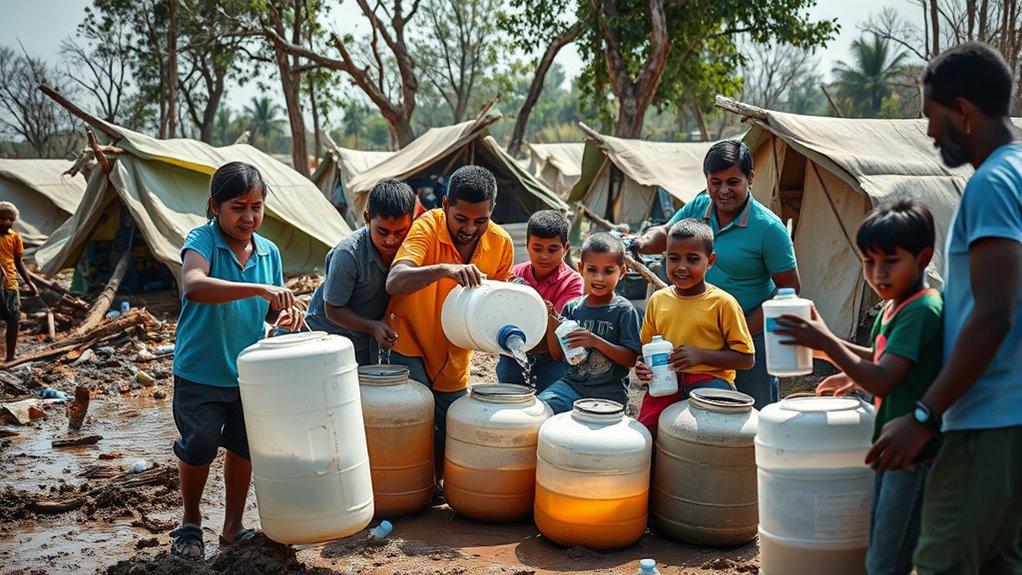

To support communities after a crisis effectively, combine physical assistance with mental health resources. Address survivors’ emotional needs through counseling, safe spaces, and psychological first aid. Organize volunteers with clear roles and provide training to guarantee efficient aid delivery. This balanced approach boosts recovery, resilience, and long-term well-being. By focusing on both physical and emotional healing, you can make a real difference. Keep exploring to discover key strategies that make disaster relief truly impactful.
Key Takeaways
- Integrate mental health services like counseling and safe spaces to support emotional recovery alongside physical aid.
- Use best practices and structured planning to ensure efficient, organized, and effective relief efforts.
- Coordinate volunteers with clear roles, communication, and training to maximize impact and prevent burnout.
- Prioritize holistic community recovery by addressing both physical needs and long-term psychological well-being.
- Regularly evaluate and adapt strategies to enhance community resilience and ensure sustainable disaster response.

When disaster strikes, swift and effective relief support can make all the difference in saving lives and rebuilding communities. One of the most critical aspects of this support is addressing mental health needs. Traumatic events can leave survivors overwhelmed, anxious, and vulnerable to long-term psychological issues. Your role in providing mental health resources is essential; offering counseling, psychological first aid, and a safe space for affected individuals helps them process their experiences and regain a sense of stability. Recognizing that mental health is just as important as physical aid ensures communities recover holistically.
Addressing mental health in disaster relief saves lives and fosters holistic community recovery.
Additionally, incorporating best practices in relief efforts helps maximize the positive impact on affected populations. Equally important is volunteer coordination. During a crisis, volunteers are often the backbone of relief efforts. But without proper organization, their efforts can become chaotic and less effective. You need to establish a clear structure that assigns roles based on skills and availability. Effective volunteer coordination involves logistical planning—ensuring volunteers know where to go, what to do, and how to communicate. This not only maximizes the impact of their efforts but also prevents burnout and frustration. When volunteers are well-managed, they can deliver aid more efficiently, whether it’s distributing supplies, assisting in shelters, or offering emotional support.
To facilitate this, you should set up a centralized system for volunteer sign-ups, schedules, and task assignments. Regular briefings and debriefings help keep everyone on the same page and allow for quick adjustments as needs evolve. Training volunteers beforehand on mental health awareness and basic psychological support makes a significant difference. It prepares them to recognize signs of distress and respond appropriately, which reinforces the overall mental health support network.
Moreover, effective volunteer coordination fosters a sense of community and shared purpose among helpers. It encourages teamwork, boosts morale, and ensures that resources—whether human or material—are utilized efficiently. When volunteers feel valued and organized, they’re more likely to stay committed and provide compassionate assistance to those affected.
In essence, supporting mental health and coordinating volunteers are intertwined efforts that strengthen disaster relief. Your active involvement in these areas helps create a resilient response that addresses immediate needs and lays the groundwork for long-term recovery. By prioritizing mental health and managing volunteers effectively, you help communities heal faster, rebuild stronger, and emerge from crises with a renewed sense of hope and unity.

FLASHFORGE Adventurer 5M 3D Printer with Fully Auto Leveling, Max 600mm/s High Speed Printing, 280°C Direct Extruder with 3S Detachable Nozzle, CoreXY All Metal Structure, Print Size 220x220x220mm
One-Click Automatic Printing: Experience hassle-free 3D printing with the Adventurer 5M Series. Enjoy automatic bed leveling for flawless...
As an affiliate, we earn on qualifying purchases.
Frequently Asked Questions
How Do Organizations Prioritize Aid Distribution During a Crisis?
During a crisis, you prioritize aid distribution by evaluating urgent needs and implementing effective resource allocation. You coordinate strategies with local agencies, government bodies, and volunteers to ensure aid reaches the most affected communities quickly. You focus on areas with the greatest impact, using real-time data to adjust distribution plans. This proactive approach helps maximize aid effectiveness, minimize delays, and ensures resources are used efficiently to support recovery efforts.
What Training Do Volunteers Receive Before Disaster Relief Efforts?
You’re like a skilled gardener, tending fragile blooms with care. Before disaster relief efforts, you receive thorough disaster response training, equipping you with essential skills. Your volunteer preparedness includes learning safety protocols, first aid, and effective communication, ensuring you’re ready to act swiftly and confidently. This training sharpens your ability to respond efficiently, helping communities heal faster, and turning chaos into order with calm, capable hands.
How Is Long-Term Recovery Funding Secured After Initial Aid?
You secure long-term recovery funding through effective fundraising strategies like grants, donor campaigns, and community events. Policy advocacy plays a vital role, as you work with policymakers to access government aid and support. Building strong relationships with donors and stakeholders helps sustain funding over time. By combining these approaches, you guarantee resources remain available to support communities well beyond the initial disaster response.
What Role Do Local Communities Play in Relief Planning?
You play a crucial role in relief planning through community engagement, sharing insights about local needs and priorities. Your involvement guarantees that relief efforts respect cultural considerations, making aid more effective and accepted. By actively participating, you help shape strategies that reflect your community’s unique context, fostering trust and collaboration. Your input guides decision-makers, ensuring relief is tailored, sustainable, and truly supports your community’s long-term recovery.
How Is the Effectiveness of Disaster Relief Programs Measured?
You gauge the success of disaster relief programs like a skilled conductor, listening to the harmony of impact assessment and resource allocation. You track tangible outcomes—homes rebuilt, lives restored—and analyze data to see if resources hit their mark. Feedback from the community acts as your compass, guiding adjustments. When relief efforts flow smoothly and communities thrive again, you know your program’s effectiveness is standing strong like a steady beat in a resilient rhythm.

AOSEED 3D Printer for Kids, AI-Powered Fully Assembled 3D Printer with Up to 400mm/s Speed, Auto Leveling, 1500+ Models & 16+ Modules, Includes 8 PLA Filaments for Home and School Use, X-MAKER JOY AI+
AI-Powered Creativity Made Easy: The AOSEED X-MAKER JOY AI+ is an AI 3D printer that helps kids bring...
As an affiliate, we earn on qualifying purchases.
Conclusion
When you step in to support communities after a disaster, you’re like a guiding light in the darkness, helping them find their way back. Your efforts, no matter how small, can spark hope and foster resilience. Just as a single drop can fill a bucket, your compassion and action make a big difference. Together, we can rebuild stronger, ensuring communities not only recover but thrive beyond the crisis.

Rachio WiFi Smart Sprinkler Controller (16-Zone Irrigation Remote Control) – App-Based Scheduling, Local Weather Intelligence, Rain Skips, Easy DIY Install
DITCH THE DIAL – Upgrade to smart irrigation with the free Rachio app for precise, easy control.
As an affiliate, we earn on qualifying purchases.

Smart Sprinklers Controller WiFi, Irrigation Controller Easy Use App Enabled, 6 Zone + 16 Plans, Save Water Auto Skip Rain, Freeze & Wind, 10 Minutes Install
5 Year Care, Great Quality Build.
As an affiliate, we earn on qualifying purchases.