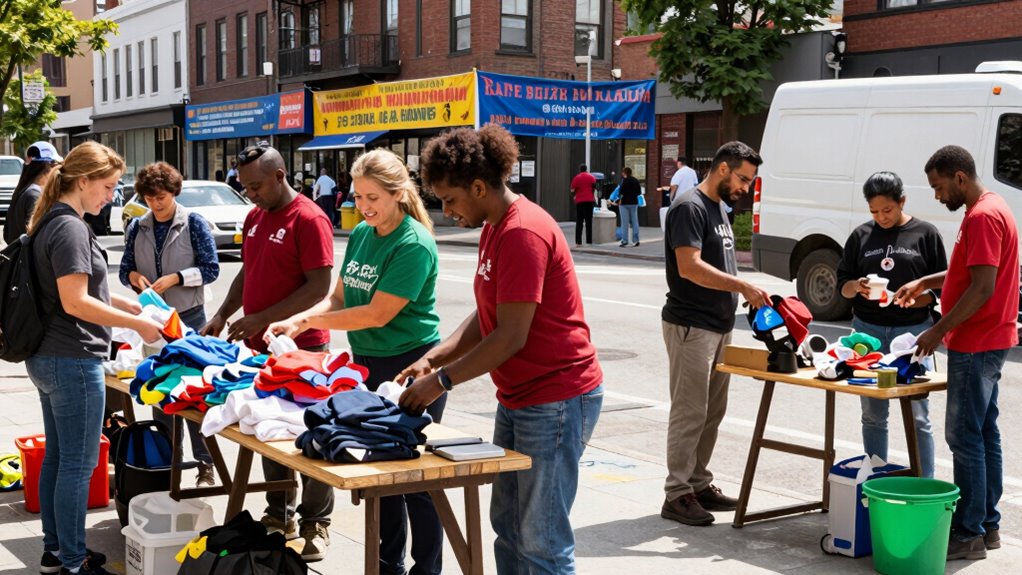

The main difference between charity and mutual aid is how they approach helping communities. Charity relies on top-down support from resources like donations, often creating dependency and addressing only immediate needs. Mutual aid, on the other hand, involves community members actively working together, sharing resources, and building resilience. It promotes equality, empowerment, and long-term change. To understand how these methods shape community support and impact, explore the differences further.

Get the little things that make your day delivered free with Prime
- Fast, free delivery on millions of items
- Prime Video, Amazon Music and more included
- Member-only deals all year
Key Takeaways
- Charity often relies on external resources and top-down support, while mutual aid emphasizes community-led, collective resource sharing.
- Charity addresses immediate needs with limited community involvement; mutual aid fosters ongoing participation and collective problem-solving.
- Charity can reinforce social hierarchies; mutual aid promotes horizontal relationships and shared responsibility among community members.
- Funding for charity typically comes from large institutions; mutual aid relies on local, flexible community pooling of resources.
- Charity provides temporary relief; mutual aid aims for long-term resilience and systemic community change.

Understanding the difference between charity and mutual aid is, therefore, crucial for recognizing how each approach impacts community empowerment and systemic change. When you look closely, you’ll notice that charity often depends on a top-down approach, where organizations or individuals with resources provide support to recipients. This setup is typically funded through donations, grants, or endowments, creating a funding structure that relies on external generosity. The focus here is usually on addressing immediate needs—food, clothing, shelter—without necessarily tackling the root causes of hardship. Community engagement in charity work tends to be limited to donations and volunteer efforts, which, while valuable, sometimes reinforce a sense of dependency rather than empowerment.
In contrast, mutual aid prioritizes collective action and shared responsibility. It’s rooted in the idea that community members collaborate directly to meet each other’s needs, often without relying on large institutions or external funding. Instead of donations flowing from the top down, funding structures in mutual aid are built on local support, pooling resources from community members who understand their specific context. This approach fosters a sense of ownership and agency, encouraging everyone to participate in problem-solving rather than just receiving aid. Community engagement in mutual aid is active and ongoing; people work side by side, sharing skills, resources, and knowledge to build resilience within their community. This active participation helps break down barriers of dependency and creates a stronger, more connected community.
While charity can sometimes inadvertently reinforce social hierarchies—where those with resources decide what others need—mutual aid emphasizes horizontal relationships, recognizing everyone as both a giver and a receiver. This shift in perspective encourages everyone to contribute what they can, whether that’s time, skills, or resources, fostering a sense of shared purpose. Funding structures in mutual aid are often more flexible and adaptive, relying on local networks rather than large-scale institutional grants, which means the support can be more responsive to community needs. Additionally, funding structures in mutual aid tend to be more participatory and transparent, ensuring that community members have a voice in how resources are allocated. Recognizing the importance of community-led initiatives is essential because they tend to be more sustainable and rooted in local realities. Furthermore, understanding the funding mechanisms involved can help communities build more resilient and autonomous support systems. Community participation is a vital aspect of mutual aid, as it enhances social cohesion and collective resilience. Ultimately, understanding these differences helps you see how mutual aid can build long-term community resilience, rather than just providing temporary relief. It’s not just about charity’s good intentions; it’s about creating a system of support rooted in collective action, local knowledge, and mutual respect.
mutual aid community resource sharing kits
As an affiliate, we earn on qualifying purchases.
As an affiliate, we earn on qualifying purchases.
Frequently Asked Questions
How Do Charity and Mutual Aid Impact Community Empowerment Differently?
Charity often provides immediate relief but may overlook root causes, limiting community empowerment. Mutual aid, on the other hand, fosters community engagement and encourages collective action, strengthening empowerment strategies. By actively involving community members in decision-making and resource sharing, mutual aid builds resilience and long-term capacity. You feel more connected and empowered when participating in mutual aid, whereas charity can sometimes create dependency rather than sustainable growth.
Can Mutual Aid Replace Traditional Charity Organizations Entirely?
Mutual aid could considerably shift community support, but it can’t fully replace traditional charity organizations yet. About 65% of charity funding comes from government grants or large donors, highlighting reliance on formal funding models. Mutual aid‘s decentralized organizational structure fosters local engagement and resilience, but it often lacks the resources and infrastructure of charities. So, while mutual aid complements traditional charity, replacing them entirely isn’t feasible at this stage.
What Historical Movements Shaped the Concepts of Charity and Mutual Aid?
You see, historical roots and philosophical differences shaped charity and mutual aid over time. Charity’s roots trace back to religious acts of giving, emphasizing compassion and hierarchy. In contrast, mutual aid emerged from revolutionary movements, emphasizing collective action and equality. These movements, like the socialist and labor movements, fostered ideas that shaped mutual aid’s focus on community-led support, contrasting charity’s top-down approach. Understanding these roots helps clarify their ongoing philosophical divide today.
How Do Funding Sources Differ Between Charity and Mutual Aid Initiatives?
Charity initiatives typically rely on funding models driven by individual donors, foundations, or government grants, which can influence priorities and project scope. In contrast, mutual aid initiatives often depend on community-based funding, collective contributions, or mutual support networks, reducing external donor influence. This difference means charity programs may prioritize donor interests, while mutual aid efforts focus on community needs, fostering greater autonomy and shared ownership among participants.
Are There Legal Distinctions Between Charity and Mutual Aid Activities?
Think of legal distinctions like a map guiding your actions—charity activities are often regulated under specific legal frameworks, making them easier to tax-deduct. Mutual aid, however, operates more informally, often outside strict legal boundaries, which can impact tax implications. While charities must adhere to strict rules, mutual aid groups enjoy more flexibility but face less legal oversight. Understanding these differences helps you navigate the legal landscape effectively.
As an affiliate, we earn on qualifying purchases.
Conclusion
Understanding the difference between charity and mutual aid can transform how you see your role in community support. Did you know that nearly 40% of Americans struggle to meet basic needs? By embracing mutual aid, you’re not just handing out aid—you’re building relationships and empowering others to take collective action. Together, you can create a more equitable society where help is reciprocal, not just one-sided. Your involvement truly makes a difference.
As an affiliate, we earn on qualifying purchases.
community resilience building tools
As an affiliate, we earn on qualifying purchases.
As an affiliate, we earn on qualifying purchases.
Fall Picks
fall essentials
As an affiliate, we earn on qualifying purchases.