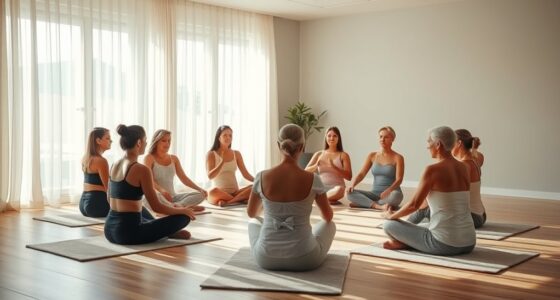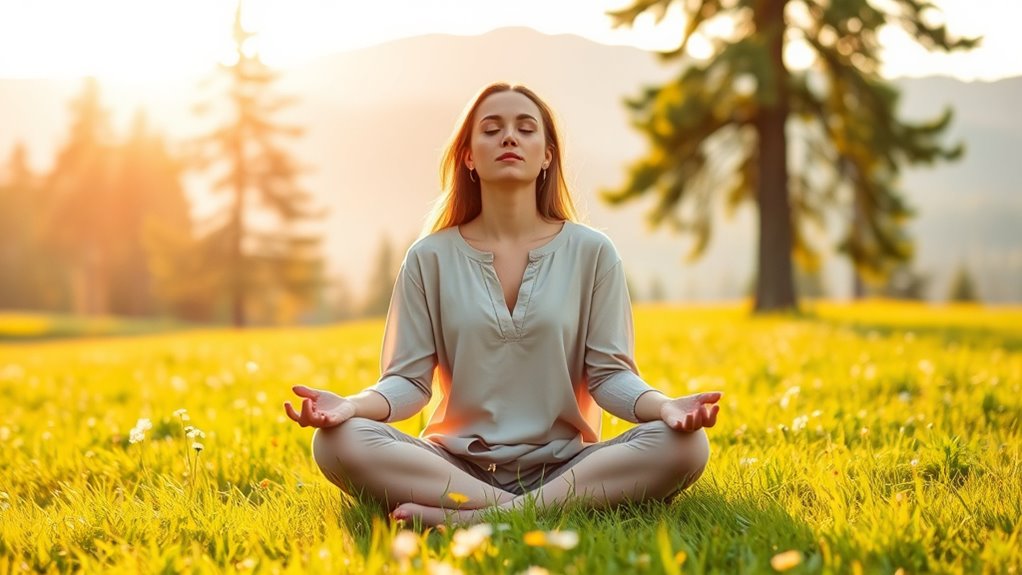

To manage anxiety and stress, try mindfulness meditation by focusing on your breath and becoming aware of your body. Sit comfortably, take slow, deep breaths, and notice sensations like air filling your lungs or tension in your muscles. Gently bring your attention back if your mind wanders. Regular practice helps you recognize stress signs early and promotes relaxation over time. Keep exploring to discover more techniques that can support your mental well-being.
Key Takeaways
- Mindfulness meditation enhances stress management by promoting awareness of breath and body, creating a calming mental pause.
- Breathing techniques focus on slow, deep inhalations and exhalations to activate the relaxation response and reduce anxiety.
- Body scan exercises help release physical tension and reconnect with the present moment, alleviating stress symptoms.
- Regular practice of mindfulness cultivates emotional regulation and improves resilience to anxiety triggers over time.
- Incorporating mindfulness into daily routines supports ongoing stress relief and mental well-being.

Have you ever wondered how to find a moment of calm amidst life’s chaos? When stress and anxiety seem overwhelming, mindfulness meditation offers a simple yet powerful way to regain your sense of peace. By focusing on your breath and becoming more aware of your body, you can create a mental pause that helps you feel grounded and centered. One effective method is practicing breathing techniques. These involve paying close attention to each inhale and exhale, allowing you to slow your breathing and calm your nervous system. To do this, sit comfortably, close your eyes if you like, and take slow, deep breaths. Notice the sensation of the air filling your lungs and then flowing out. If your mind wanders, gently bring your focus back to your breath without judgment. This practice helps interrupt the cycle of anxious thoughts and creates a sense of control over your emotional state. Incorporating mindfulness practices into your daily routine can further enhance your ability to manage stress effectively.
Another valuable tool in mindfulness meditation is body scan exercises. These involve systematically bringing awareness to different parts of your body, from your toes to your head. Start by taking a few deep breaths, then shift your focus to your toes. Notice any sensations—warmth, tingling, tension, or perhaps nothing at all. Slowly move your attention upward, pausing at your ankles, calves, knees, thighs, and so on, until you reach your head. This process helps you reconnect with your physical presence and release built-up tension. It’s especially effective when combined with breathing techniques, as it anchors your attention and promotes relaxation. As you become more familiar with body scan exercises, you’ll find it easier to notice signs of stress and gently ease them away. Practicing these techniques regularly can create lasting benefits for your mental and physical health.
Frequently Asked Questions
Can Mindfulness Meditation Replace Medication for Anxiety?
Mindfulness meditation can’t fully replace medication for anxiety, especially if your symptoms are severe. While meditation efficacy as an alternative treatment is promising and can considerably reduce stress, it often works best alongside medication or therapy. You should consult your healthcare provider to develop a thorough plan tailored to your needs. Combining mindfulness with other treatments can enhance overall relief, but don’t stop prescribed medication without professional guidance.
How Long Does It Take to See Benefits From Mindfulness Meditation?
Most people notice benefits from mindfulness meditation within 4 to 8 weeks. A study shows consistent practice increases emotional regulation and reduces anxiety by up to 30%. To see these results, you need to practice consistency and set realistic expectations. Keep at it daily or several times a week, and you’ll gradually experience improved calmness, focus, and stress management. Patience and persistence are key to releasing meditation’s full benefits.
Is Mindfulness Meditation Suitable for Children and Teenagers?
Yes, mindfulness meditation can be suitable for children and teenagers when adapted with child-friendly practices and teen mindfulness programs. You should guarantee the activities are engaging and age-appropriate, incorporating simple breathing exercises and guided imagery. When introduced thoughtfully, mindfulness helps young people develop emotional regulation, focus, and stress management skills. Always supervise initial sessions and tailor practices to their developmental needs to ensure a positive experience.
Can Mindfulness Meditation Help With Panic Attacks?
Sure, because nothing screams “panic attack management” like sitting quietly and breathing deeply, right? You can definitely use mindfulness meditation techniques to help manage panic attacks. These techniques calm your mind, reduce anxiety, and teach you to stay present during overwhelming moments. While it might not erase every attack overnight, practicing regularly can build resilience and offer a peaceful anchor when panic strikes unexpectedly.
Are There Any Risks or Side Effects of Mindfulness Meditation?
You might experience some emotional risks, like increased anxiety or upsetting memories, especially at the start. Physical risks are rare but can include discomfort from sitting too long or muscle strain. To reduce these risks, start slowly, listen to your body, and seek guidance if needed. Mindfulness meditation is generally safe, but being aware of potential emotional and physical responses helps you practice it more effectively.
Conclusion
Practicing mindfulness meditation can considerably ease your anxiety and stress. Think of your mind as a busy city; mindfulness acts like a calm park amidst the chaos, giving you space to breathe and reset. As you regularly meditate, you’ll start noticing how your thoughts settle, much like traffic slowing down at a peaceful intersection. Embrace this practice, and over time, you’ll see your stress diminish, revealing a clearer, more centered you—proof that calm is within your reach.