

To build a coping plan before stress hits, start by identifying your main triggers and emotional signals that warn you of overwhelm. Choose strategies like mindfulness, deep breathing, or self-care activities that work for you, and develop a clear action plan with specific steps to follow during tough times. Establish a support network you’re comfortable turning to, and practice your plan regularly to build confidence. Keep your approach flexible and updated to stay prepared for whatever comes next.
Key Takeaways
- Identify personal stress triggers and emotional signs to anticipate challenges early.
- Develop tailored strategies like mindfulness, self-care, and calming techniques for proactive use.
- Create a clear, actionable stress response plan with specific steps and resources.
- Build awareness of support networks and practice open communication for timely assistance.
- Regularly rehearse and refine your coping plan to increase confidence and automatic response readiness.
Why You Need a Coping Plan Before Stress Hits

Have you ever wondered why it’s so much easier to handle stress when you’re prepared? When you develop a coping plan in advance, you can rely on tools like mindfulness exercises and self-care routines to stay grounded. Knowing what steps to take helps you avoid feeling overwhelmed when stress hits unexpectedly. A well-crafted plan gives you clarity and confidence, making it easier to manage your emotions and reactions. Incorporating mindfulness exercises, such as deep breathing or meditation, can calm your mind quickly. Self-care routines—like regular exercise, healthy eating, and sufficient sleep—strengthen your resilience. Preparing these strategies ahead of time ensures you’re not scrambling for solutions during stressful moments. Additionally, understanding stress management techniques can further enhance your ability to stay composed under pressure. Developing a coping strategy in advance allows you to respond more effectively when challenges arise. Recognizing the importance of emotional resilience can help you bounce back faster from setbacks and maintain a positive outlook. Building your mental preparedness ensures you’re better equipped to face unexpected difficulties with confidence. Practicing anticipatory planning can further reduce the impact of stress by familiarizing you with potential scenarios before they happen. Instead, you’re ready to face challenges calmly and effectively.
Figuring Out Your Stress Triggers and Risks

Understanding what triggers your stress is the foundation for building an effective coping plan. Developing emotional awareness helps you recognize early signs of stress and identify specific stressors in your life. Start by paying attention to your feelings and physical reactions in different situations. Ask yourself what events or circumstances tend to increase your anxiety or tension. Stress identification involves pinpointing both external triggers, like deadlines or conflicts, and internal triggers, such as negative self-talk or perfectionism. Keep a journal if needed, noting when you feel overwhelmed and what preceded those feelings. By clarifying your stress triggers and risks, you gain insight into your unique patterns and can prepare tailored strategies to manage stress before it escalates. Recognizing your personality traits can also help you understand how your inherent tendencies influence your stress response. Additionally, understanding your stress response patterns can facilitate more effective coping strategies tailored to your emotional style. Incorporating mindfulness techniques into your routine can further enhance your ability to stay aware of stress signals early on. Practicing self-awareness regularly can improve your capacity to detect and address stressors proactively. Moreover, understanding the role of Glycolic Acid in skincare can teach you about the importance of gentle, consistent approaches in managing your stress levels.
Choosing Strategies That Work for You
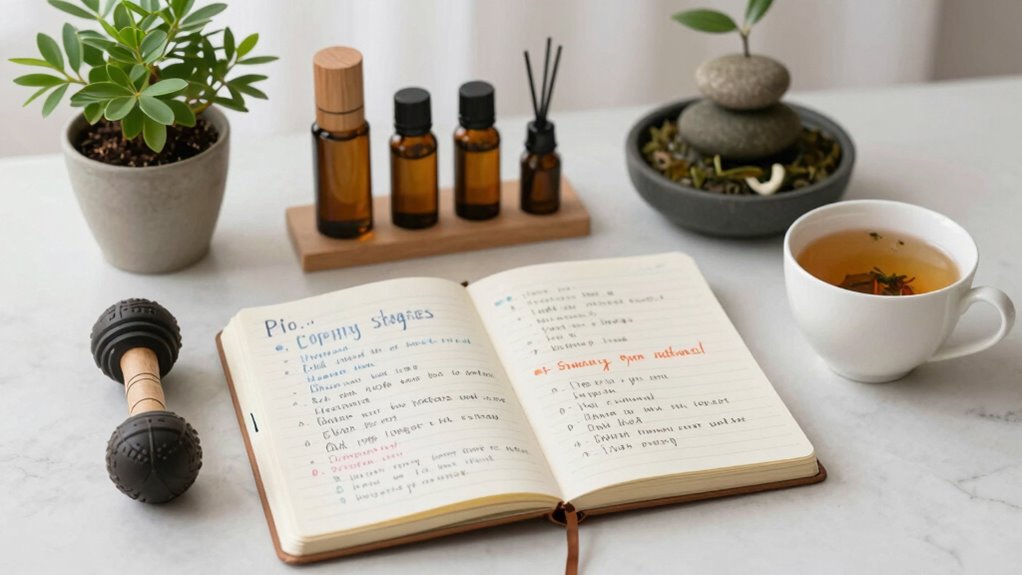
To choose strategies that suit you, start by identifying your personal triggers clearly. Then, try exploring different coping methods to see what feels most effective and sustainable. This approach helps you build a tailored plan that genuinely supports your well-being. Incorporating essential oils for stress relief as a natural aid can also serve as a healthy outlet during stressful times.
Identify Personal Triggers Clearly
Identifying your personal triggers is a crucial step in developing an effective coping plan. By increasing your personal awareness, you can recognize the specific situations, people, or feelings that set off your stress or emotional reactions. Developing emotional insight helps you understand why these triggers affect you so deeply. Take note of recurring patterns or moments when your coping strategies falter. Reflection and honest self-assessment are key. Once you clearly identify what triggers your stress, you can prepare targeted responses. This clarity gives you control and confidence, making it easier to manage challenging situations before they escalate. Understanding your triggers isn’t about judgment; it’s about gaining insight to better navigate your emotional landscape. Incorporating energy-efficient cloud servers into your digital environment can support your efforts by providing reliable, sustainable infrastructure that reduces stress related to technical issues. Additionally, being aware of external factors like seasonal changes or local events can help you anticipate potential stressors and adjust your coping strategies accordingly. Recognizing mental health resources and support networks can further empower you to seek help when needed and build resilience over time. Recognizing personal strengths and coping skills can also enhance your confidence in managing stress effectively.
Explore Different Coping Methods
Finding coping methods that truly resonate with you involves exploring a variety of strategies and observing how they impact your stress levels. Try different mindfulness techniques, such as deep breathing, meditation, or grounding exercises, to see which help calm your mind best. Additionally, consider engaging in creative outlets like drawing, writing, or playing music—these activities can provide emotional release and distraction from stressors. Don’t hesitate to experiment with several approaches; what works for someone else might not work for you. Keep track of how each method makes you feel afterward. Incorporating diverse coping strategies can enhance your resilience and preparedness. Exploring different self-care activities can also support your overall well-being. Understanding the role of stress mitigation techniques can help you select the most effective methods. Developing personalized coping plans tailored to your unique needs can significantly improve your ability to manage stress. Recognizing the importance of emotional regulation can further strengthen your stress management toolkit. Over time, you’ll identify the coping strategies that effectively reduce your stress and bring you comfort, making it easier to turn to these techniques when stress strikes.
Developing Your Stress Response Action Plan

Creating a stress response action plan is a essential step in managing your reactions effectively. To build resilience, focus on developing clear strategies you can rely on during stressful moments. Incorporate mindfulness techniques to stay grounded and prevent overwhelm. Consider these key elements:
Develop a personalized plan with mindfulness and quick calming strategies to manage stress effectively.
- Identify your personal stress triggers and plan specific responses.
- Practice mindfulness techniques regularly to strengthen emotional resilience.
- Prepare quick, actionable steps to calm yourself, like deep breathing or grounding exercises.
Having these steps ready helps you respond calmly and intentionally. When stress hits, your plan guides you to stay present, manage your emotions, and avoid reactive behaviors. By practicing and refining your plan, you’ll build stronger resilience, making stressful situations more manageable over time.
Building Support and Knowing When to Ask for Help
Recognizing signals from your support network helps you understand when you need help. Establishing open communication makes it easier to reach out before stress becomes overwhelming. Knowing when to ask for help guarantees you get the support you need at the right time.
Recognize Support Network Signals
Understanding the signals from your support network is essential for knowing when to reach out for help. Recognizing support signals and communication cues helps you gauge when someone might need your assistance or when they’re offering support. Pay attention to:
- Changes in tone or language that suggest distress or discomfort
- Reduced responsiveness or withdrawal from conversations
- Increased expressions of stress or frustration
These cues can indicate someone is struggling or may need encouragement to seek help. By staying alert to these signals, you’re better equipped to respond proactively. Remember, support signals aren’t always explicit; sometimes, subtle shifts reveal a lot. Trust your intuition and observe patterns over time to strengthen your support network and offer help before problems escalate.
Establish Open Communication Channels
Establishing open communication channels is essential for building a strong support system and knowing when to ask for help. When you share your feelings honestly, you create trust and understanding. Talk about therapy options or relaxation techniques with trusted friends or family, so they know how best to support you. Use clear language and be specific about your needs. Here’s a simple way to think about it:
| Support Source | How They Help | When to Reach Out |
|---|---|---|
| Friends | Listen and comfort | When feeling overwhelmed |
| Family | Offer practical help | During stressful times |
| Professionals | Provide guidance | When self-help isn’t enough |
Having these channels open means you’re more prepared to seek help early and confidently.
Know When to Seek Help
Knowing when to seek help is essential for managing your mental health effectively. Being emotionally aware helps you recognize when your feelings become overwhelming or persistent. Pay attention to signs such as increased anxiety, hopelessness, or difficulty maintaining your self-care routines. If you notice these changes, it’s time to reach out. Consider these indicators:
- You’re feeling overwhelmed beyond your usual coping strategies
- Your self-care routines are slipping or neglected
- Negative thoughts persist or intensify
Understanding these cues allows you to take action early, preventing issues from worsening. Remember, seeking help isn’t a sign of weakness; it’s a proactive step toward maintaining your well-being. Building this awareness into your coping plan ensures you know exactly when to ask for support.
Practicing and Reinforcing Your Coping Plan

Practicing and reinforcing your coping plan is essential to making it effective during stressful situations. Regularly engaging in role-playing exercises helps you simulate real-life scenarios, boosting confidence and preparedness. Incorporate mindfulness techniques like deep breathing or grounding exercises to stay present and reduce anxiety. Consistent practice solidifies these skills, making them automatic when stress hits. To evoke emotion, imagine how these strategies can bring relief and a sense of control:
| Feeling Before Practice | Feeling After Practice |
|---|---|
| Overwhelmed and anxious | Calm and confident |
| Uncertain and vulnerable | Empowered and ready |
| Frustration and doubt | Resilient and composed |
| Fear of failure | Trust in your coping skills |
Keeping Your Coping Strategy Flexible and Up-to-Date
As you reinforce your coping skills through regular practice, it’s important to remember that stressors and personal circumstances can change over time. To maintain effectiveness, focus on adaptive flexibility and make ongoing updates to your plan. This means periodically reviewing what works and adjusting strategies as needed. Consider these ways to stay adaptable:
- Incorporate new techniques that better suit your evolving needs
- Remove strategies that no longer provide relief
- Set reminders to review and update your plan regularly
Using Your Plan to Stay Confident and Resilient

Using your coping plan effectively can boost your confidence and help you bounce back from setbacks more quickly. By practicing mindfulness techniques regularly, you stay grounded and focused, which strengthens your emotional resilience. When challenges arise, your plan serves as a reminder that you have tools to manage stress and stay calm. This sense of preparedness fosters confidence, making it easier to face difficulties head-on. Remember to revisit and refine your plan, ensuring it remains practical and relevant. Incorporating mindfulness techniques into daily routines enhances your emotional resilience, enabling you to recover faster from setbacks. Ultimately, a well-used coping plan empowers you to stay confident, resilient, and in control, no matter what life throws your way.
Frequently Asked Questions
How Often Should I Review or Update My Coping Plan?
You should review and update your coping plan at least once every three to six months to support your mental health and resilience building. Life changes, new stressors, or improved coping skills may require adjustments. Regular reviews help you stay prepared for challenges, ensuring your plan remains effective. Keep an eye on your mental health, and don’t hesitate to revise your plan whenever you notice it’s not fully meeting your needs.
Can My Coping Strategies Change Over Time?
Yes, your coping strategies can change over time. As you experience new challenges and adapt to different situations, you’ll find that flexibility importance becomes clear. Incorporate adaptive strategies that evolve with your needs, allowing you to respond effectively to stress. Regularly reviewing your coping plan helps you stay aligned with your current circumstances, ensuring your strategies remain practical and supportive as your life changes.
What if My Coping Plan Doesn’T Work During an Actual Crisis?
If your coping plan doesn’t work during a crisis, don’t panic. Instead, try alternative strategies you’ve prepared, such as deep breathing, grounding techniques, or reaching out to a friend. Remember, emergency preparedness includes flexibility—you can adapt your plan as needed. Keep practicing different methods regularly so you’re ready to switch tactics and stay resilient when it matters most. Your adaptability is key to managing unexpected situations effectively.
How Do I Customize My Plan for Different Types of Stress?
Did you know that 75% of people experience different reactions to various stressors? To customize your coping plan, identify your personal triggers—like work or relationship issues—and tailor specific coping techniques for each. Use calming exercises for anxiety and problem-solving skills for challenges. This way, your plan becomes flexible and effective, ensuring you’re prepared for different types of stress, no matter the situation.
Should I Involve Others in Developing My Personal Coping Plan?
Yes, involving others in developing your coping plan can be really helpful. Peer support offers understanding and encouragement, making it easier to stick to your plan. Additionally, seeking professional guidance guarantees your strategies are effective and tailored to your needs. Collaborating with trusted friends or mental health professionals gives you extra support, accountability, and confidence, making it more likely you’ll follow through when stress hits.
Conclusion
Having a coping plan gives you confidence when stress strikes, acting as your shield against chaos. But remember, no plan is perfect—life’s unpredictability means you’ll need to adapt. While you hold your strategies close, stay flexible and open to change. Because in the end, resilience isn’t just about sticking to a plan; it’s about knowing when to let go of control and trust yourself to navigate the unknown.