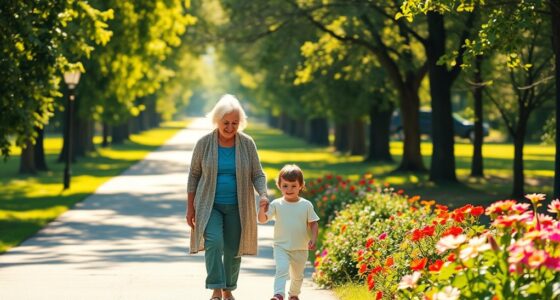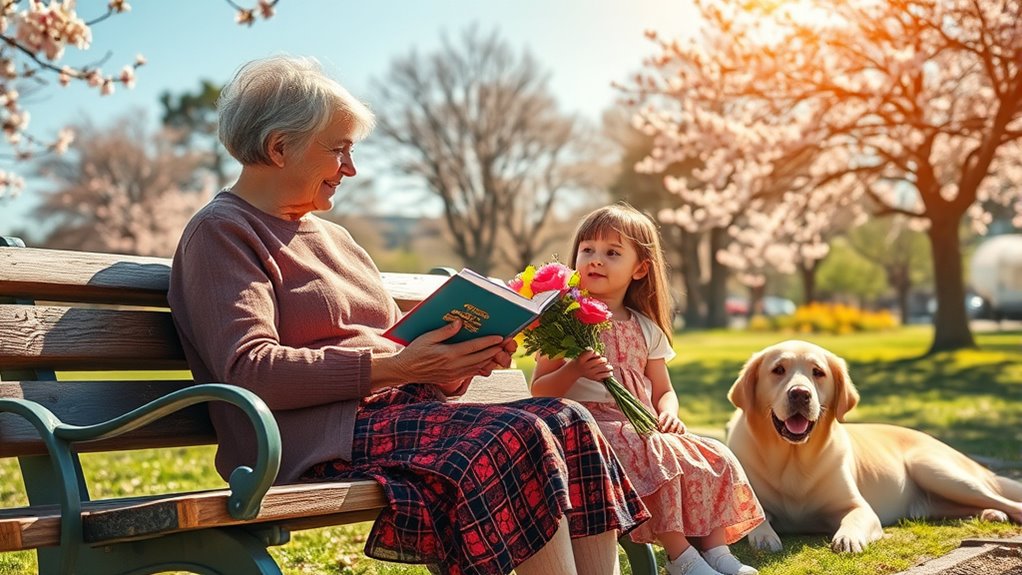

You can learn a lot about kindness from your elders by engaging in meaningful conversations and respecting traditions they cherish. These interactions help you understand different perspectives, foster empathy, and build strong bonds. Honoring their wisdom through shared rituals celebrates community values and creates continuity. Such exchanges promote compassion that crosses generations, enriching your life and community. If you look closer, you’ll discover even deeper lessons about kindness that span across time and experience.
Key Takeaways
- Elders teach us the importance of empathy and understanding through their stories and perspectives.
- Honoring traditions fosters respect and preserves valued morals across generations.
- Genuine intergenerational interactions create space for authentic sharing and mutual growth.
- Participating in cultural practices demonstrates appreciation and reinforces community bonds.
- Listening and learning from elders cultivate kindness that transcends age and time.
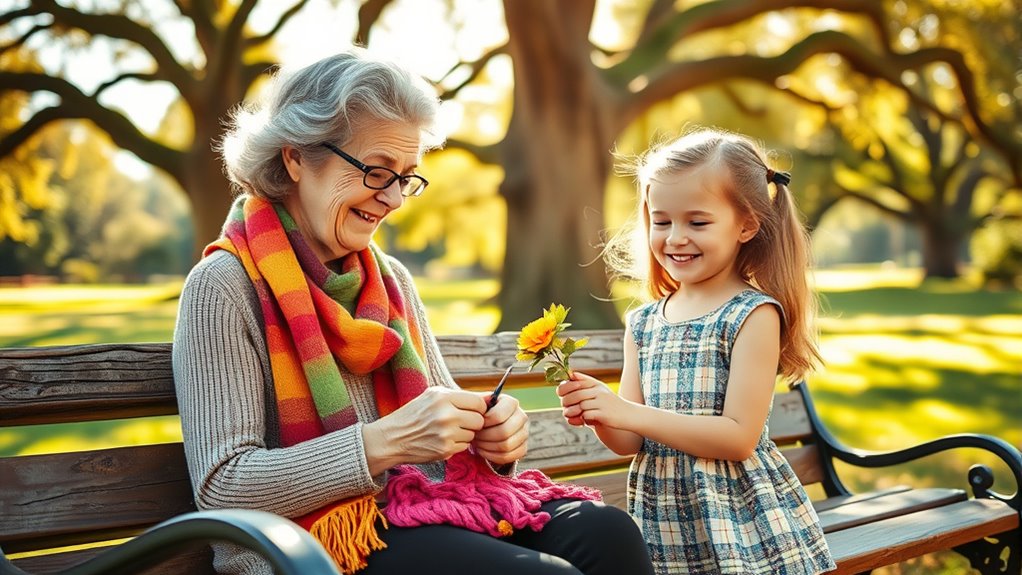
Have you ever wondered how kindness flows between generations and shapes our communities? It’s a delicate, powerful force that connects us across age gaps and life experiences. One of the key ways this happens is through intergenerational communication, where conversations bridge the gap between young and old. When you engage openly with elders, you not only gain wisdom but also foster understanding and respect. Listening attentively to their stories and perspectives allows you to see the world through different lenses, building empathy and strengthening bonds. These exchanges often reveal shared values, and in doing so, you learn how kindness is rooted in genuine connection.
Intergenerational communication builds understanding, empathy, and kindness through shared stories and respect across ages.
Honoring traditions plays a vital role in this process. When you participate in family rituals and cultural practices, you’re actively acknowledging the legacy of those who came before you. It’s an act of kindness that shows appreciation for their efforts and sacrifices. By upholding these traditions, you keep alive the stories, morals, and values that have shaped your community. This respect for the past creates a sense of continuity, reminding everyone that kindness isn’t just a fleeting gesture but a thread woven into the fabric of your identity. You don’t have to be old to honor traditions; in fact, your willingness to learn and preserve them demonstrates respect and appreciation for your elders’ experiences.
Developing intentional intergenerational communication can also involve space for meaningful interaction, which provides opportunities for honest sharing and mutual understanding. Sharing meals, participating in community events, or simply sitting together and reminiscing can deepen your understanding of each other. These interactions serve as opportunities to exchange kindness in its most authentic form—listening, sharing, and caring. When you consciously honor traditions, you send a message that you value the foundation laid by those who came before you. This act of reverence encourages elders to open up and continue passing down their wisdom, creating a cycle of kindness that benefits everyone.
Ultimately, fostering strong intergenerational communication and honoring traditions are powerful ways to nurture kindness across age groups. You become a bridge—connecting past and present, young and old—helping your community thrive with compassion and respect. This ongoing exchange enriches your life and the lives of others, proving that kindness transcends age and time when we choose to listen, learn, and honor.
Top picks for "kindnes acros generation"
Open Amazon search results for this keyword.
As an affiliate, we earn on qualifying purchases.
Frequently Asked Questions
How Does Kindness Vary Across Different Cultures and Generations?
You’ll notice that kindness varies across cultures and generations through different expressions and values. Cultural expressions shape how people show kindness, whether through gestures, words, or actions. Generational values influence how kindness is perceived and practiced; older generations might emphasize respect and duty, while younger ones focus on inclusivity and empathy. Recognizing these differences helps you appreciate diverse ways kindness is demonstrated worldwide and across age groups.
What Are Practical Ways to Learn Kindness From Elders?
To learn kindness from elders, start by engaging in intergenerational mentoring, where you can share experiences and listen actively. Volunteer at community centers or senior homes to observe and practice compassion firsthand. Ask questions about their life lessons, showing genuine interest. These interactions foster understanding and patience, helping you embody the kindness they’ve cultivated over years, and creating meaningful connections that benefit both you and the community.
Can Practicing Kindness Improve Mental Health in Older Adults?
Practicing kindness can be a balm for your mental health, especially for older adults. It boosts emotional resilience and strengthens social support, creating a safety net against loneliness and depression. When you extend kindness, you nurture meaningful connections that uplift your spirit. Like planting seeds, these acts grow into a garden of well-being, helping you stay resilient and emotionally balanced as you age.
How Do Elders Perceive Modern Society’s Approach to Kindness?
You might find that elders perceive modern society’s approach to kindness as somewhat lacking in intergenerational empathy, often valuing traditional values more. They may feel that today’s fast-paced world overlooks the importance of genuine connections and respect. While some appreciate the progress, many wish younger generations would embrace more compassion and patience, recognizing how these qualities strengthen community bonds and honor their own life experiences.
What Role Does Technology Play in Fostering Intergenerational Kindness?
They say, “A little kindness goes a long way,” and technology helps you do just that. Digital communication and virtual gestures allow you to connect instantly, crossing generational gaps. You can share warm messages, send virtual hugs, or participate in online activities that foster understanding. By embracing these tools, you actively promote intergenerational kindness, showing elders that even in a digital age, compassion remains timeless and essential.
Conclusion
So, next time you meet someone older, remember their stories and acts of kindness. What if you took a moment to learn from their wisdom and compassion? By embracing the kindness of our elders, we not only honor their legacy but also create stronger, more caring communities. Could small acts of kindness across generations be the key to a more understanding world? The choice is yours—will you lead with kindness today?