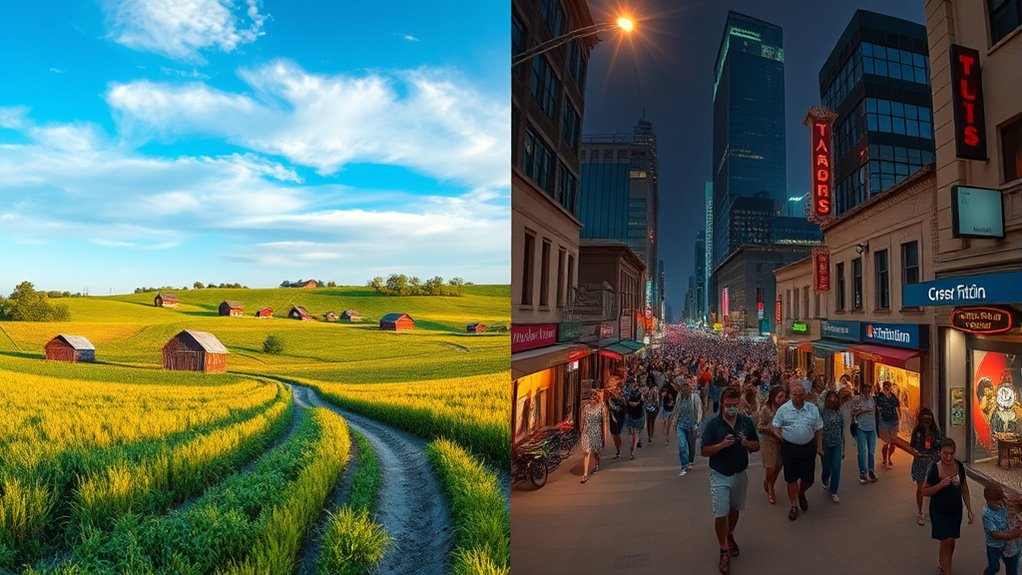

In rural communities, you face challenges like limited healthcare access and fewer transportation options, making daily routines more planning-intensive. Urban areas offer convenient access to hospitals, public transit, and services, but come with higher costs and congestion. Despite these differences, both communities share bonds through local resilience and community spirit. Understanding these unique hurdles and shared strengths helps reveal how each environment shapes your daily life—continue exploring to discover more about these contrasting yet connected worlds.
Key Takeaways
- Urban communities typically have better healthcare access due to dense facilities and transportation options, unlike rural areas with dispersed services.
- Rural residents often rely on personal vehicles and face transportation barriers, whereas urban dwellers benefit from public transit networks.
- Both community types value social bonds, but rural areas may foster stronger neighborly ties due to smaller populations.
- Urban environments offer quicker access to services and employment, while rural areas provide quieter lifestyles and natural surroundings.
- Despite different infrastructure challenges, both communities share goals of improving quality of life and social cohesion.
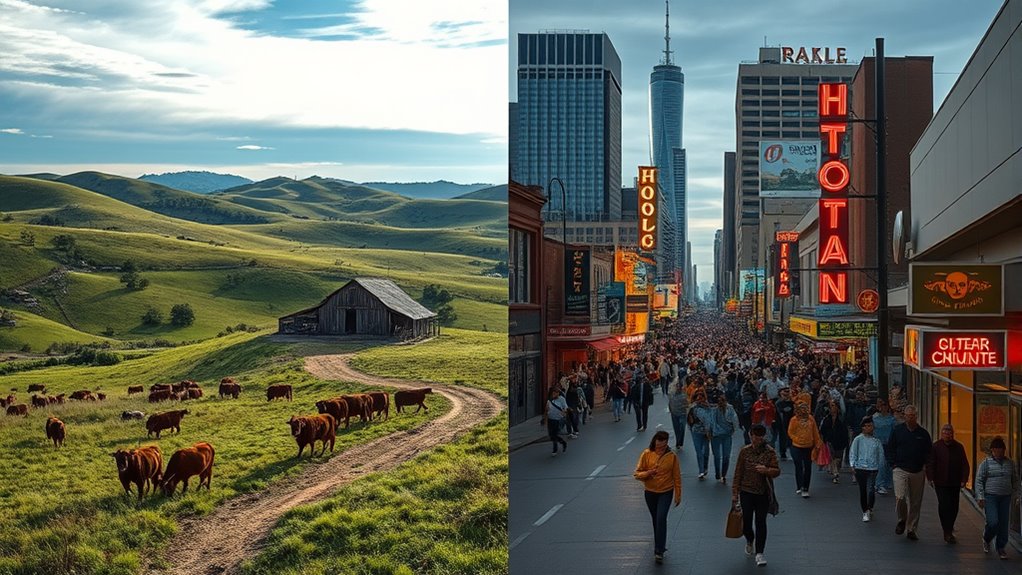
Have you ever wondered how rural and urban communities differ in daily life? The differences are often striking, especially when it comes to access to healthcare and transportation infrastructure. In urban areas, you typically find a dense network of hospitals, clinics, and specialists nearby, making healthcare accessible and convenient. You can usually walk to a doctor’s office or hop on public transportation to get to a medical appointment quickly. Conversely, in rural communities, healthcare access can be a major challenge. Hospitals and clinics are spread out over larger distances, meaning you might have to travel significant miles to see a healthcare professional. This limited access can delay treatment and complicate ongoing care, especially for those with chronic conditions or emergencies. Transportation infrastructure further accentuates this divide. Cities boast extensive public transit systems—buses, subways, and trains—that help residents get around efficiently without a car. This not only eases daily commutes but also ensures that essential services are within reach. In contrast, rural areas often lack thorough public transportation options. Many residents rely heavily on personal vehicles to reach work, grocery stores, or healthcare facilities. If you don’t own a car or if the roads are poorly maintained, getting around can become a real hurdle. This situation impacts more than just convenience; it affects your ability to access crucial services and maintain employment. The lack of transportation infrastructure in rural communities can foster feelings of isolation, especially for seniors or individuals with disabilities who may find it difficult to travel long distances. Meanwhile, urban areas tend to experience traffic congestion, which can slow commutes and create stress, but the availability of multiple transit options generally offsets this issue. Both environments also face unique challenges related to transportation and healthcare, but the core difference lies in how infrastructure supports or hampers daily life. As someone living in or considering moving to either setting, these factors influence your quality of life, your ability to access essential services, and your overall well-being. Urban living often offers more immediate access to healthcare and efficient transportation but can come with higher costs and congestion. Rural living, on the other hand, promotes a quieter, more spacious lifestyle but demands greater reliance on personal transportation and planning for healthcare access. The high costs associated with urban living can be a barrier for some, impacting overall access to services. Understanding these differences helps you appreciate the distinct challenges and advantages each community offers, shaping your choices and expectations about daily life in either setting.
Frequently Asked Questions
How Do Healthcare Access Issues Differ Between Rural and Urban Areas?
You’ll find that healthcare access differs mainly due to transportation barriers in rural areas, making it harder to reach clinics. Telehealth expansion helps bridge this gap by providing remote consultations, but limited internet access can still be a hurdle. In urban areas, you typically have more healthcare facilities and transportation options, making access easier. Still, both communities benefit from ongoing efforts to improve healthcare availability and reduce disparities.
What Role Does Technology Play in Bridging Community Gaps?
Technology plays a vital role in bridging community gaps by reducing the digital divide and enhancing social connectivity. You can access healthcare, education, and essential services more easily through internet-based solutions, regardless of your location. By connecting people virtually, technology fosters stronger social bonds and shared knowledge, helping rural and urban communities work together, support each other, and overcome challenges more effectively.
How Do Educational Opportunities Vary Across Rural and Urban Settings?
You notice that educational opportunities differ markedly between rural and urban areas. Rural education disparities often mean limited resources and fewer extracurricular options, while urban school funding generally provides better facilities and programs. This gap can feel like an uneven playing field, but it also highlights the importance of targeted investments and innovative solutions to guarantee all students, regardless of location, have access to quality education and equal opportunities to succeed.
What Strategies Successfully Promote Community Engagement in Both Areas?
You can boost community engagement by organizing volunteer programs that involve residents in local projects, fostering a sense of ownership and connection. Hosting cultural festivals also encourages participation, celebrates diversity, and builds bonds across different groups. Whether in rural or urban settings, these strategies create opportunities for people to come together, share experiences, and strengthen community ties. Consistent communication and inclusive activities are key to sustaining this engagement over time.
How Do Employment Prospects Influence Community Development?
A flourishing rural job market can markedly bolster community development by encouraging local investment and reducing outmigration. Conversely, urban employment growth often attracts diverse talent, fostering innovation and economic vibrancy. When employment prospects improve, you’ll see stronger community ties, increased civic participation, and shared prosperity. By focusing on expanding opportunities, you help sustain resilient communities, whether rural or urban, creating a foundation for long-term social and economic well-being.
Conclusion
No matter where you live, rural or urban, you’re part of a community that faces unique challenges but shares common bonds. Did you know that over 80% of the world’s population now lives in cities? Yet, rural areas often have tighter-knit relationships and strong traditions. Embracing both environments’ strengths can help us build a more connected, supportive society. So, whether you’re in a bustling city or a quiet countryside, you’re always part of something bigger.