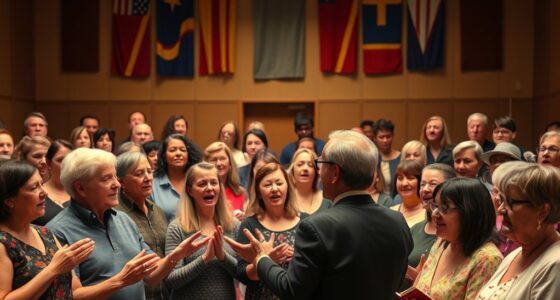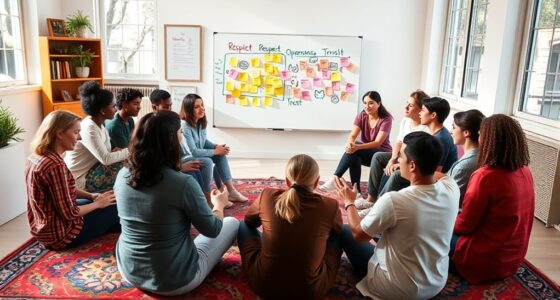

Libraries are now vibrant community hubs that go beyond just lending books. They serve as dynamic spaces for learning, connecting, and cultural exchange. You’ll find programs like coding clubs, language classes, and cultural events that bring people together. They also provide free access to digital tools and skills training, helping bridge the digital divide. If you’re curious about how libraries are shaping neighborhoods today, there’s plenty more to discover.
Key Takeaways
- Libraries serve as vibrant community centers offering diverse programs beyond book lending, such as cultural events and skill workshops.
- They provide safe, resource-rich spaces for learning, digital literacy, and community engagement for all age groups.
- Libraries foster connections through events like author readings, language classes, and local cultural celebrations.
- They facilitate access to technology, bridging the digital divide with free Wi-Fi, computers, and digital training sessions.
- Modern libraries support lifelong learning and community growth by adapting spaces for collaboration, innovation, and cultural exchange.
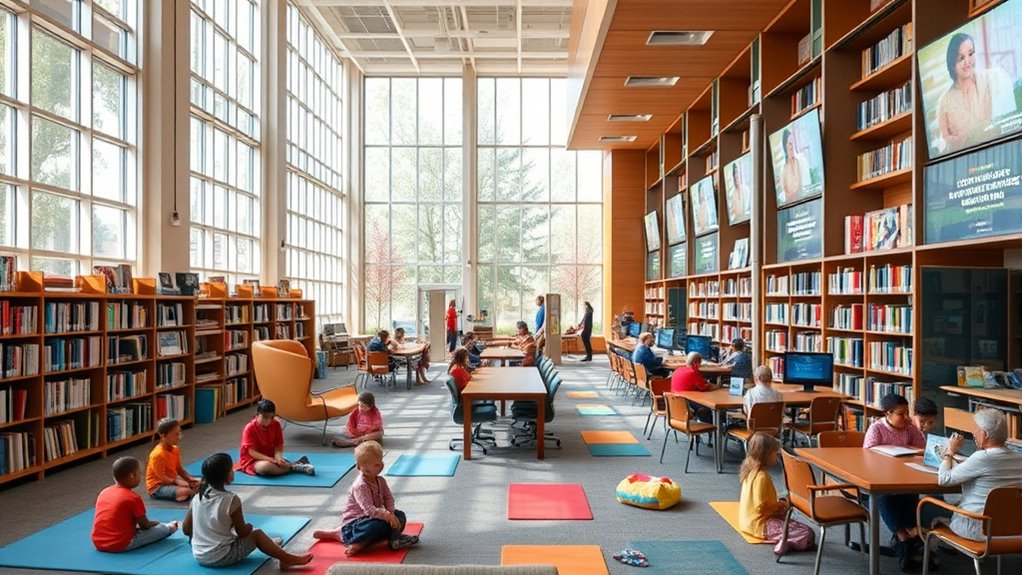
Libraries have long been places of quiet study and book lending, but today they serve a much broader purpose as vibrant community hubs. You might think of them as simply repositories of knowledge, but they’re increasingly becoming dynamic spaces where people of all ages come together to learn, connect, and grow. One way they’re expanding their role is through specialized programs that cater to teens. Teen programs in libraries are designed to engage young people in meaningful activities, from coding clubs to creative writing workshops. These initiatives help teens develop essential skills and foster a sense of belonging, all within a supportive environment. By offering such programs, libraries recognize that teens need a safe, resource-rich space to explore their interests and build confidence.
Another integral aspect of modern libraries as community hubs is their focus on digital literacy. In today’s tech-driven world, being digitally literate is indispensable for personal and professional success. Libraries play a key role in bridging the digital divide by providing free access to computers, Wi-Fi, and digital resources. They also offer training sessions that teach patrons how to navigate the internet safely, use productivity tools, and understand online privacy. When you attend these workshops, you gain practical skills that help you participate fully in the digital age. Libraries understand that digital literacy isn’t just about knowing how to operate devices; it’s about empowering you to be a confident, informed user of technology. Incorporating digital literacy initiatives ensures that everyone has the opportunity to develop these vital skills.
The transformation of libraries into community hubs isn’t limited to technology. They also host events that celebrate local culture, support small businesses, and promote lifelong learning. From author readings to language classes, these activities bring diverse groups together, fostering a sense of community and shared purpose. As a visitor, you get to participate in a range of programs that go beyond traditional book lending, making the library a place where your interests can flourish. Whether you’re seeking after-school help, digital skills, or a space to collaborate, modern libraries adapt to meet your needs.
In essence, libraries today are about more than just books; they’re about creating an inclusive, resource-rich environment that supports personal growth and community development. They’re spaces where you can enhance your digital literacy, engage with your peers through teen programs, and connect with the wider world. As community hubs, libraries are fundamental parts of the fabric that keeps neighborhoods vibrant, informed, and engaged in the digital age.
Frequently Asked Questions
How Do Libraries Fund Community Programs Beyond Book Collections?
You can fund community programs at libraries through private grants and fundraising events. By applying for grants from local businesses, foundations, and government agencies, you bring in crucial funds. Hosting events like book sales, charity runs, or community dinners also encourages donations and raises awareness. These efforts help libraries expand their services, offer workshops, and support community initiatives, making them essential hubs beyond just books.
What Types of Partnerships Do Libraries Establish With Local Organizations?
Partnership strategies propel libraries into powerful public partnerships with local organizations like schools, nonprofits, and businesses. You’ll find collaborative programs such as literacy initiatives, tech training, and cultural celebrations. These dynamic alliances drive community development, diversify offerings, and deepen engagement. By building bridges with diverse organizations, you help foster a fertile environment where shared resources, ideas, and efforts flourish, ultimately transforming libraries into lively, learning, and loving community centers.
How Do Libraries Measure the Impact of Their Community Services?
You measure the impact of your community services through program evaluation and community feedback. By analyzing participation rates, tracking outcomes, and gathering surveys or testimonials, you get a clear picture of what works and what needs improvement. This approach helps you understand how your programs benefit the community, ensuring you adapt and enhance services to meet local needs effectively.
Are Libraries Accessible to People With Disabilities and Special Needs?
Think of a library as a bridge connecting everyone. You’ll find assistive technology and accessible design that make it easier for people with disabilities and special needs to use the space. From braille catalogs to ramps and audiobooks, these features guarantee no one is left on the sidelines. Libraries actively work to be inclusive, so everyone has equal access to knowledge and community resources.
How Can Community Members Get Involved in Library Initiatives?
You can get involved in library initiatives by volunteering for various activities or programs. Participating in events like book clubs, workshops, or community outreach programs allows you to support and shape the library’s role as a community hub. Reach out to library staff to learn about current volunteering opportunities and event participation. Your involvement helps strengthen the community and makes the library an even more welcoming space for everyone.
Conclusion
As you see, libraries are more than just places to borrow books; they’re vibrant community hubs. Like a heartbeat, they pulse with opportunities for connection, learning, and growth. By embracing this role, you help turn libraries into welcoming spaces where everyone feels they belong. So next time you visit, remember—your local library is a bridge to community, a place where lives come together and thrive beyond the pages.