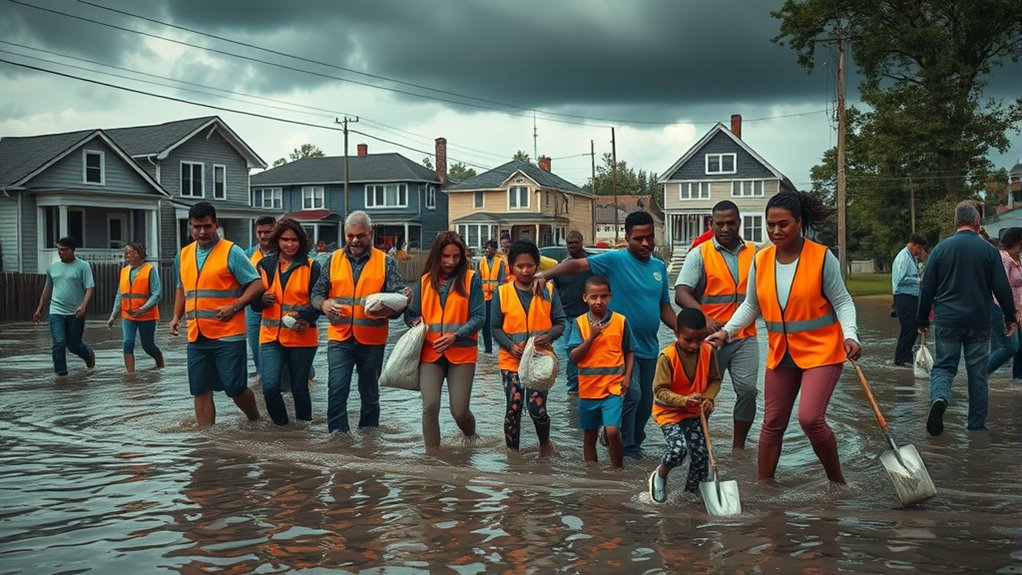

When disaster strikes, your community’s resilience depends on how well neighbors organize help and support each other. Mutual aid is key, with residents sharing resources, transportation, and emotional support to create a safety net. Local leaders and trusted volunteers coordinate efforts, ensuring aid reaches those most in need. Building strong relationships and effective communication tools make your community more adaptable and prepared. Keep exploring to discover how you can strengthen these efforts and foster lasting resilience.
Key Takeaways
- Establish strong local leadership to coordinate resources, prioritize needs, and communicate effectively during disasters.
- Promote mutual aid networks where neighbors share supplies, skills, and emotional support immediately after crises.
- Foster community collaboration through ongoing relationships, training, and communication tools to enhance preparedness and response.
- Encourage active resident participation to build trust, strengthen bonds, and ensure aid reaches those most in need.
- Develop a culture of resilience by integrating community-driven initiatives and empowering local volunteers for sustained recovery.
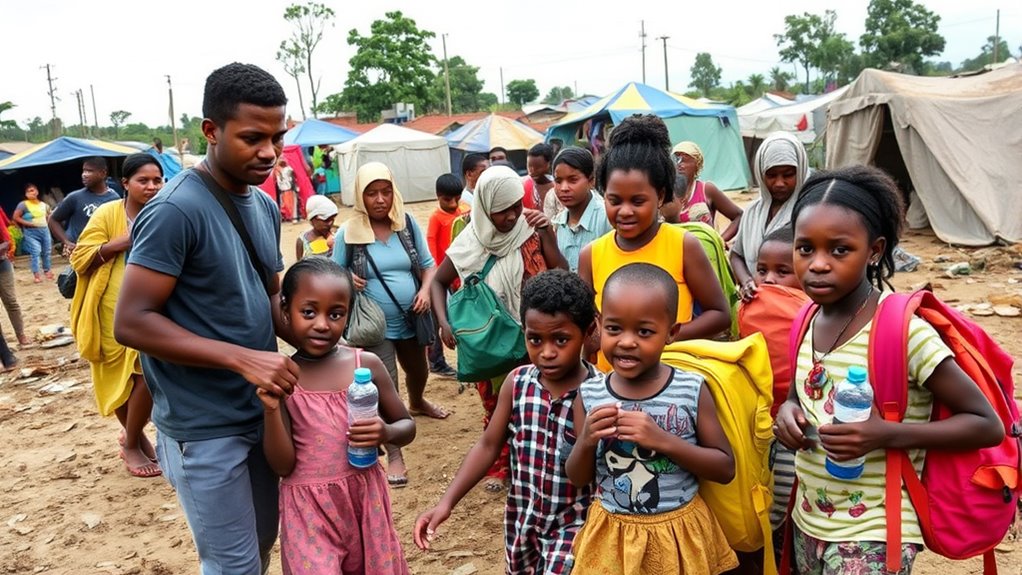
Community resilience refers to a community’s ability to recover quickly from challenges like natural disasters, economic downturns, or social upheavals. When a crisis hits, your community’s strength lies in how well its members come together to support each other and restore stability. Central to this process is the concept of mutual aid—a system where neighbors and local organizations lend a hand without waiting for outside help. Mutual aid isn’t just about providing immediate relief; it’s about fostering a sense of collective responsibility that empowers everyone to contribute what they can, whether that’s sharing supplies, offering transportation, or providing emotional support. This network of mutual aid creates a safety net that helps individuals and families weather the storm, ultimately strengthening the entire community’s resilience.
Community resilience thrives on mutual aid and collective responsibility to support recovery and strengthen bonds during crises.
However, mutual aid alone isn’t enough. Effective community recovery depends heavily on strong local leadership. When disaster strikes, it’s essential to have individuals who can coordinate efforts, make informed decisions, and communicate clearly with residents. Local leaders—whether elected officials, community organizers, or trusted volunteers—play a crucial role in organizing resources, prioritizing needs, and mobilizing volunteers. Their presence helps prevent chaos and ensures that aid reaches those who need it most. Good local leadership also builds trust, which encourages more community members to participate in relief efforts and feel confident in the recovery process.
By fostering collaboration between community members and local leaders, you create an environment where mutual aid flourishes. This synergy makes your community more adaptable and better prepared for future crises. It’s important to recognize that community resilience isn’t just about responding to disasters—it’s about building ongoing relationships and structures that support recovery and growth. Training residents in disaster preparedness, establishing communication networks, and encouraging local leadership development all contribute to this effort. When everyone understands their role and feels empowered to act, your community becomes a formidable force capable of overcoming adversity.
Ultimately, community resilience depends on your ability to cultivate a culture of mutual aid supported by strong local leadership. These elements create a foundation where residents are not passive victims but active participants in their collective recovery. By working together, sharing resources, and trusting local leaders, you reinforce the bonds that hold your community together through even the toughest times. This proactive approach ensures that, no matter what challenges come your way, your community can bounce back faster and emerge more united than ever. Building a resilient community also involves understanding the importance of projector technology, which can be used to facilitate communication and community engagement during crises.

Zooz 800 Series Z-Wave Long Range Smart Plug ZEN04 800LR | Hub Required | Works with the Z-Box Hub, Home Assistant, and Hubitat
Z-WAVE CONTROL: Add Z-Wave to your lamps or small appliances and enjoy the convenience of scheduling and smart...
As an affiliate, we earn on qualifying purchases.
Frequently Asked Questions
How Can Individuals Prepare for Unexpected Disasters?
To prepare for unexpected disasters, focus on individual preparedness by creating an emergency plan. Know your community’s evacuation routes, assemble a supply kit with essentials, and stay informed through alerts. Practice your plan regularly and keep important documents safe. Being proactive with emergency planning guarantees you’re ready to respond quickly, reducing panic and increasing safety for yourself and those around you when disaster hits.
What Roles Do Local Governments Play in Community Resilience?
Local governments play a vital role in community resilience by developing local policy and emergency planning strategies. They coordinate resources, establish communication channels, and set priorities for disaster response. You can actively support these efforts by staying informed about local policies, participating in community emergency preparedness programs, and understanding evacuation plans. This collaboration ensures a quicker, more effective response, helping your community recover faster when disaster strikes.
How Do Cultural Differences Impact Disaster Response Strategies?
You recognize that cultural differences shape disaster responses through cultural sensitivities and communication barriers. You adapt strategies by respecting diverse traditions, languages, and values, ensuring inclusivity. You foster trust by overcoming communication barriers, using interpreters or culturally relevant messages. You listen actively, learn from community members, and tailor your approach to meet their unique needs. This way, you build effective, respectful, and resilient disaster response efforts that unite diverse communities.
What Funding Sources Support Community Resilience Initiatives?
You can secure funding grants and other financial support from government agencies, non-profit organizations, and private foundations to bolster your community resilience initiatives. These sources often prioritize projects that improve disaster preparedness, response, and recovery. By applying for relevant grants and demonstrating the impact of your efforts, you increase your chances of obtaining the necessary resources to strengthen your community’s resilience and effectively organize help when disaster strikes.
How Can Technology Improve Disaster Response Coordination?
Think of technology as a GPS guiding your disaster response. Satellite mapping provides a bird’s-eye view, helping you assess damage quickly. Real-time alerts keep you informed, so you can act swiftly and coordinate resources efficiently. By harnessing these tools, you improve communication, reduce chaos, and guarantee help reaches those in need faster. Embracing tech transforms chaos into a coordinated effort, making resilience a tangible reality.

NEO Z-Wave Plus Smart Mini Plug, Compact Z-Wave Outlet for Home Automation, Works with Smartthings, Basic On/Off Function, 500 S2
Easy Setup with Basic On/Off Control: This Z-Wave outlet is designed for quick and easy installation. Simply connect...
As an affiliate, we earn on qualifying purchases.
Conclusion
When disaster hits, your community’s strength truly shines. By organizing help quickly and working together, you can turn chaos into recovery. Some experts believe that communities with strong social ties bounce back faster because everyone supports each other. So, stay connected, lend a hand, and trust that your collective resilience can overcome even the toughest challenges. Together, you prove that unity isn’t just a theory—it’s the most powerful tool in any disaster.

Minoston 800 Zwave Plug Smart Outlet Switch LR, Z-Wave hub Required, Bult in Zwave Repeater, Compatible with SmartThings, Hubitat, Wink, Compatible with Alexa Google Assistant, White, 2 Pack (MP31Z)
[Updated 800 Series Z-Wave Chip] This 800 series zwave plug has better signal coverage than ever, and faster...
As an affiliate, we earn on qualifying purchases.

Minoston Smart Plug, 15A Mini Z-Wave 800 Series Plug-in Socket with Built-in Repeater andRange Extender, Z-Wave Hub Required, Compatible with SmartThings, Wink, FCC and ETLListed, MP21Z
[Reliable Z-Wave 800 Series] This z wave plug has built-in a 800 series chip. This 800 series zwave...
As an affiliate, we earn on qualifying purchases.