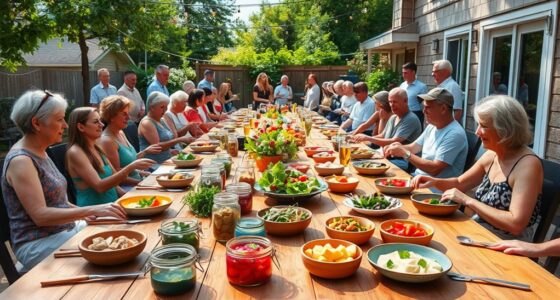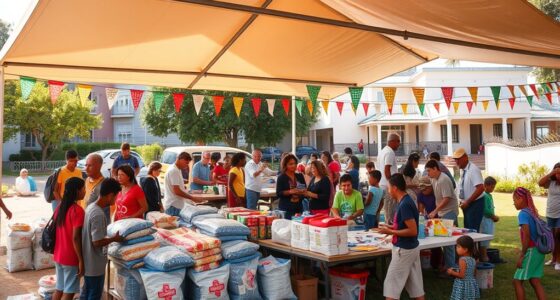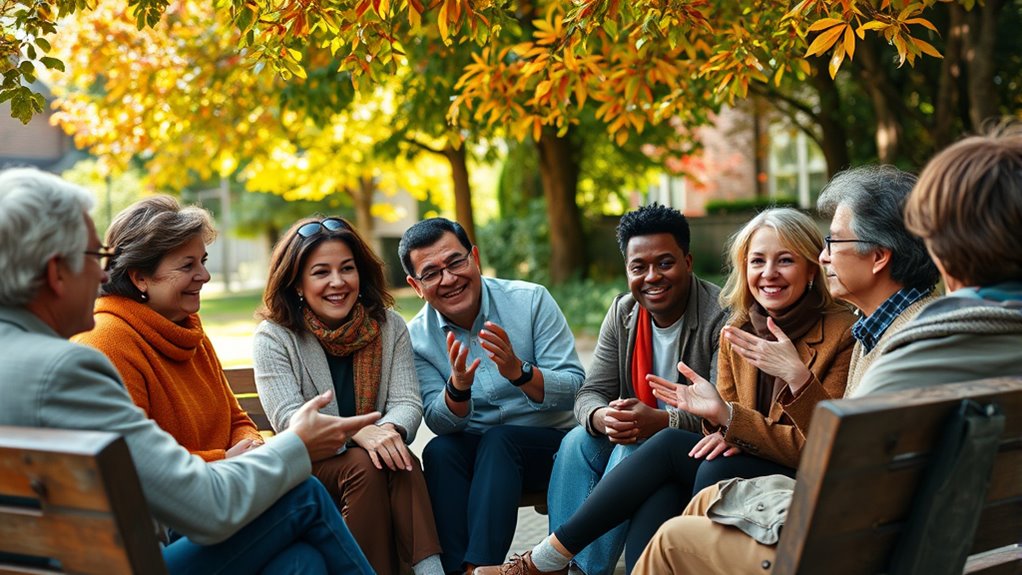

To bridge political divides locally, focus on engaging with your community through events, volunteering, or local boards. Building genuine relationships, listening respectfully, and showing empathy can help break down stereotypes and foster trust. Leading by example with kindness and patience encourages others to do the same. Sustaining these efforts creates lasting connections and shared understanding, proving that divisions can be softened. If you keep exploring, you’ll discover even more effective ways to promote meaningful dialogue close to home.
Key Takeaways
- Engage in community activities and neighborhood events to build relationships beyond political labels.
- Practice respectful listening by asking questions and showing genuine curiosity about others’ perspectives.
- Lead by example with kindness, patience, and focusing on shared values to inspire constructive dialogue.
- Foster ongoing connections through volunteering and local initiatives to create trust and mutual understanding.
- Commit to continuous effort, recognizing that sustained community engagement helps dissolve barriers and promotes unity.
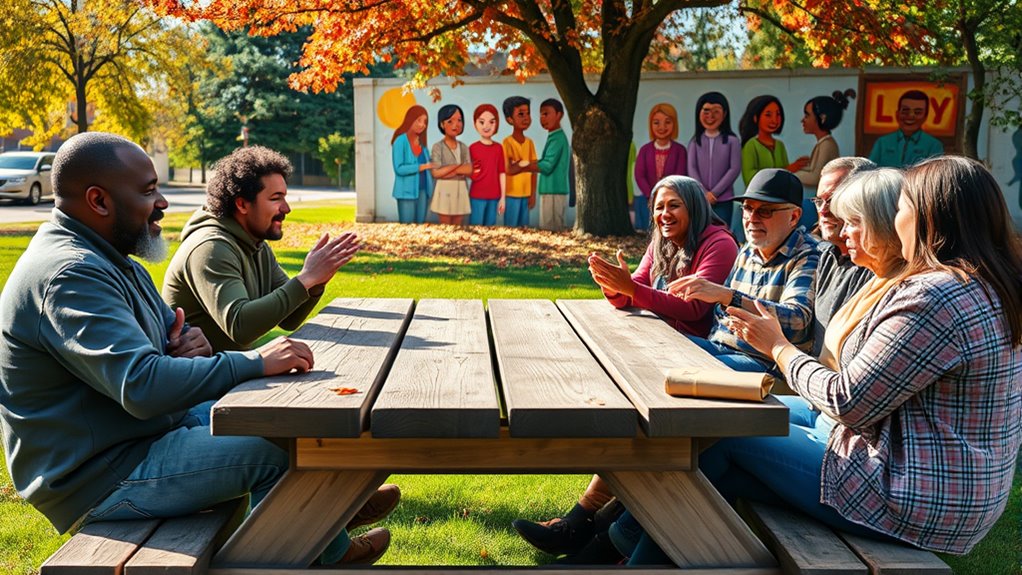
Political divides can feel insurmountable, but local communities have the power to bring people together. You might wonder how to bridge these gaps, especially when conversations often turn heated or polarized. The key lies in fostering genuine community engagement and practicing respectful listening. When you actively involve yourself in local initiatives, you create opportunities to connect with others beyond political labels. Community engagement isn’t just about attending meetings or voting; it’s about building relationships, understanding different perspectives, and working toward common goals. By participating in neighborhood events, volunteering, or joining local boards, you demonstrate that your commitment goes beyond partisan lines. These actions help break down stereotypes and encourage others to see you as a person, not just a political opponent.
Engage locally to build relationships, break stereotypes, and connect beyond political labels.
Respectful listening plays a crucial role in transforming divisive conversations into opportunities for understanding. When you approach discussions with an open mind and genuine curiosity, you signal that you value others’ viewpoints, even if they differ from your own. This doesn’t mean you have to agree with everyone, but it does require patience and a willingness to listen without immediately judging or rebutting. Respectful listening involves asking thoughtful questions, clarifying misunderstandings, and showing empathy. By doing so, you foster an environment where people feel heard and respected, which can soften hostility and pave the way for constructive dialogue. It encourages others to reciprocate, creating a cycle of respectful exchange that can slowly bridge divides. Additionally, understanding the importance of community engagement can help sustain these efforts over time.
You can also promote civil dialogue by setting an example in your community. When you engage in conversations with kindness and patience, you inspire others to do the same. Avoiding inflammatory language and focusing on shared values helps shift the tone from confrontation to cooperation. Remember, it’s not about changing minds overnight but about creating a space where honest dialogue can flourish. Small acts—listening attentively, acknowledging different opinions, and seeking common ground—add up to meaningful progress.
Building bridges requires ongoing effort, but it starts with your willingness to be present and respectful. By prioritizing community engagement and practicing respectful listening, you create opportunities for connection and understanding. These efforts help dismantle barriers, foster trust, and ultimately bring diverse voices together. In your local community, your actions can ripple outward, demonstrating that political divides are not fixed and that unity is possible when people choose understanding over judgment. With patience and dedication, you can contribute to a more civil, connected community where differences are respected and shared goals are within reach.
Frequently Asked Questions
How Can Schools Promote Civil Political Discussions?
You can promote civil political discussions in schools by incorporating inclusive curricula that represent diverse perspectives. Encourage students to practice respectful listening, which helps them understand differing viewpoints. Facilitate structured debates and discussions where everyone feels safe sharing opinions. Teachers should model civility and empathy, creating an environment where students learn to disagree respectfully. These strategies help foster constructive dialogue and develop critical thinking skills essential for healthy civic engagement.
What Role Do Local Leaders Play in Bridging Divides?
Ever wonder how local leaders can truly unite their communities? You play a crucial role by fostering community engagement and encouraging leadership development. By actively listening to diverse voices and facilitating open conversations, you help bridge divides. Your leadership inspires trust and understanding, creating a space where differing opinions are respected. Through your efforts, you turn divides into dialogue, making your community stronger and more cohesive.
How Can Social Media Be Used Positively in Dialogue?
You can use social media positively by promoting online civics and practicing digital empathy. Share thoughtful, respectful content that encourages understanding rather than division. Engage in conversations with an open mind, listen actively, and avoid inflammatory language. By fostering a culture of online civics, you help build bridges across divides. Digital empathy allows you to see different perspectives, making dialogue more constructive and helping communities grow closer despite their differences.
What Are Effective Ways to Handle Heated Debates?
When handling heated debates, you should focus on active listening and applying emotional intelligence. Pay close attention to the other person’s perspective, showing genuine interest and understanding. Stay calm, avoid personal attacks, and manage your emotions effectively. By demonstrating empathy and patience, you foster respectful dialogue and de-escalate tension. This approach helps create a constructive environment where differing opinions can be discussed openly, promoting mutual understanding and reducing conflict.
How Do Cultural Differences Impact Local Political Conversations?
Cultural differences considerably shape local political conversations by influencing how people express opinions and interpret others’ words. Your cultural awareness helps you recognize diverse perspectives, fostering understanding. Language barriers might cause misunderstandings, so you should speak clearly and listen actively. By respecting different backgrounds, you create a more inclusive dialogue. This approach encourages respectful exchanges, reduces conflicts, and strengthens community bonds despite cultural differences impacting conversations.
Conclusion
By embracing respectful conversations and seeking common ground, you can gently weave unity into your community fabric. Remember, patience and understanding act as subtle bridges, allowing differing perspectives to blend harmoniously. Instead of focusing on differences, choose to foster connections that nurture trust and empathy. Small, considerate efforts in dialogue can softly transform divisions into opportunities for growth. Together, you hold the power to create a more harmonious, interconnected neighborhood where everyone’s voice is valued and heard.