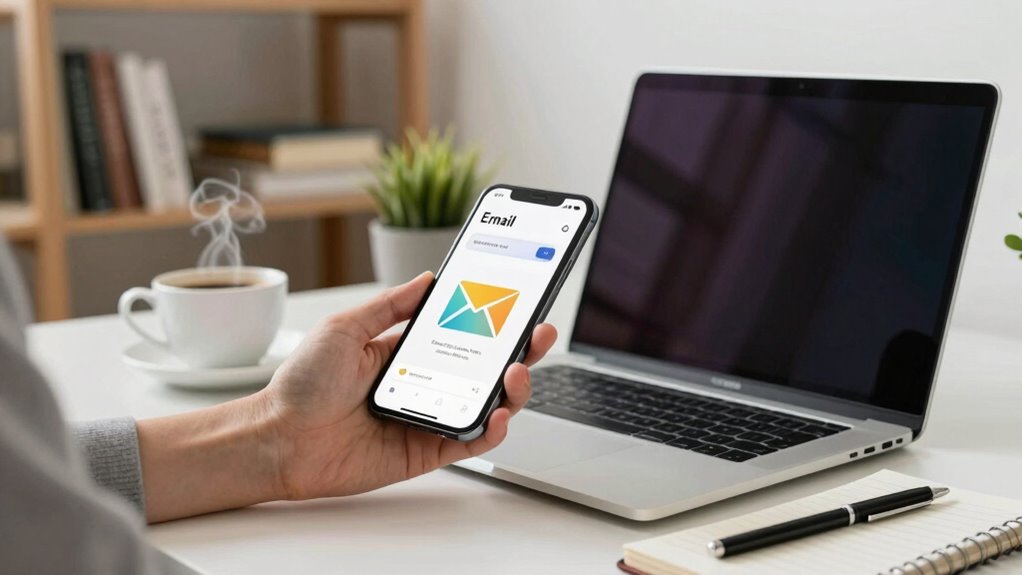

The key to saving time with email is adopting disciplined habits like checking messages only at scheduled times and using filters to automatically organize incoming mail. Keep your responses concise and avoid unnecessary exchanges. Create folders for different projects or priorities, and unsubscribe from non-essential newsletters. Using these tools and routines reduces clutter and distractions, freeing up hours each week. Stick with these practices, and you’ll discover more ways to streamline your email habits effectively.

Get the little things that make your day delivered free with Prime
- Fast, free delivery on millions of items
- Prime Video, Amazon Music and more included
- Member-only deals all year
Key Takeaways
- Set designated times for checking emails to minimize constant interruptions.
- Use clear, concise responses with bullet points to reduce back-and-forth exchanges.
- Automate email sorting with filters and rules to prioritize urgent messages.
- Unsubscribe from irrelevant mailing lists to decrease inbox clutter.
- Regularly archive or delete processed emails to maintain an organized and efficient inbox.
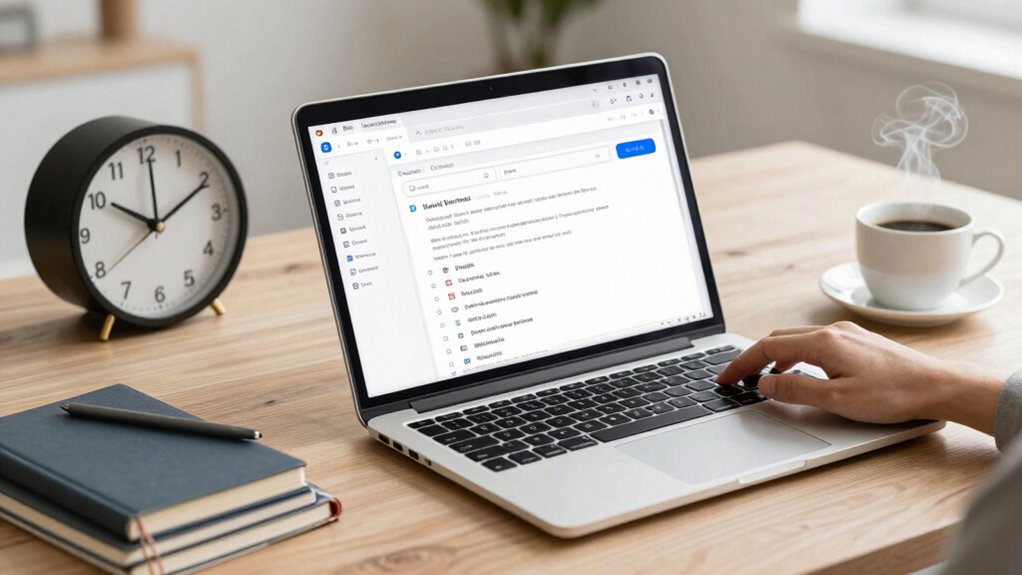
Email can quickly become a time sink, but adopting a simple habit can help you manage it more efficiently. The key lies in establishing a routine that emphasizes good email etiquette and keeps your inbox organized. When you handle emails with purpose and discipline, you save yourself from endless scrolling and unnecessary interruptions. Start by setting specific times during the day to check and respond to emails rather than constantly monitoring your inbox. This approach prevents distraction and restores focus to your core tasks.
Practicing proper email etiquette not only makes your messages clearer but also reduces back-and-forth exchanges that waste time. Be concise and direct in your responses, and avoid unnecessary greetings or lengthy explanations. When you communicate clearly, recipients understand your message faster, and you save everyone’s time. Use bullet points or numbered lists when covering multiple points, making your email easier to scan and respond to. Also, always include a clear call to action or next step, so recipients know exactly what’s expected of them.
Be clear, concise, and organized to streamline communication and save everyone’s time.
To further streamline your workflow, focus on inbox organization. Keep your inbox tidy by creating folders or labels for different projects or priorities. When an email arrives, decide immediately whether to respond, archive, or delete it. Archiving messages you’ve addressed keeps your inbox clutter-free, so you can focus on new and urgent items. Delete unnecessary emails promptly to prevent accumulating digital clutter. This habit helps you locate important messages quickly and reduces the stress of a overflowing inbox. Understanding how email systems work can help you customize your settings for optimal efficiency.
Another effective tip is to use filters and rules to automatically sort incoming emails. For example, you can direct newsletters or less urgent messages into specific folders. This way, your main inbox stays reserved for high-priority correspondence. Also, unsubscribe from unnecessary mailing lists that no longer add value to your work or personal life. The fewer emails you receive, the less time you’ll spend sorting through irrelevant messages. Incorporating digital tools can further enhance your email management process, making your routine even more effective. Additionally, understanding how email management features work helps you take full advantage of your email platform’s capabilities.
Over time, these habits become second nature, transforming your email management from a stressful task into a streamlined part of your daily routine.
email management filters and rules
As an affiliate, we earn on qualifying purchases.
As an affiliate, we earn on qualifying purchases.
Frequently Asked Questions
How Quickly Should I Respond to Emails?
You should aim to respond to emails within 24 hours to follow good email etiquette and maintain professional communication. Prompt responses show respect and help keep projects moving smoothly. For urgent emails, reply within a few hours if possible. If you can’t give a detailed answer right away, send a quick acknowledgment, then follow up with a full response later. Prioritizing timely replies exhibits your professionalism and ensures effective collaboration.
What’s the Ideal Email Length for Quick Reading?
Think of your email as a lighthouse guiding ships safely—brevity and clarity are your beams. Keep your message concise, around 3-4 short paragraphs, so it’s quick to read. Use clear email formatting and a precise subject line to help recipients navigate swiftly. This way, your email becomes a beacon of efficiency, making sure your message is understood immediately without overwhelming the reader.
Should I Use Email Templates for Common Responses?
Yes, using email templates for common responses can save you time, but make sure your email tone remains friendly and professional. Personalize each message slightly to maintain sincerity and avoid sounding robotic. Templates help streamline communication, especially for routine inquiries, but adjusting the message for context keeps your responses genuine. This balance improves efficiency while maintaining a positive impression, making your communication more effective and appreciated.
How Can I Reduce Email Backlog Efficiently?
You can reduce your email backlog efficiently by practicing email prioritization and keeping your inbox organized. Start by sorting emails into categories like urgent, follow-up, and informational. Respond to high-priority messages first, and delete or archive the rest. Use folders or labels to keep your inbox tidy, making it easier to see what needs immediate attention. Regularly schedule time for email review to prevent backlog from building up again.
Is It Better to Reply to All or Only Relevant Recipients?
Imagine you’re part of a team project where only key members need updates. When replying, prioritize recipient relevance, practicing good email etiquette by only including those who truly need the info. This saves everyone time and keeps inboxes manageable. Always consider recipient prioritization before hitting “Reply All”—it’s more efficient and respectful, preventing unnecessary clutter and ensuring your message reaches only those who can act on it.
email organization folders and labels
As an affiliate, we earn on qualifying purchases.
As an affiliate, we earn on qualifying purchases.
Conclusion
By adopting this simple email habit, you turn chaotic inboxes into calm seas. Instead of drowning in endless messages, you navigate efficiently, saving time and reducing stress. Imagine your inbox as a well-organized garden, each email a neatly trimmed plant, instead of a wild jungle. This small change transforms your workday from frantic to focused, showing that with just a few mindful tweaks, you can create order out of email chaos and reclaim your precious time.
As an affiliate, we earn on qualifying purchases.
As an affiliate, we earn on qualifying purchases.
Halloween Picks
halloween
As an affiliate, we earn on qualifying purchases.