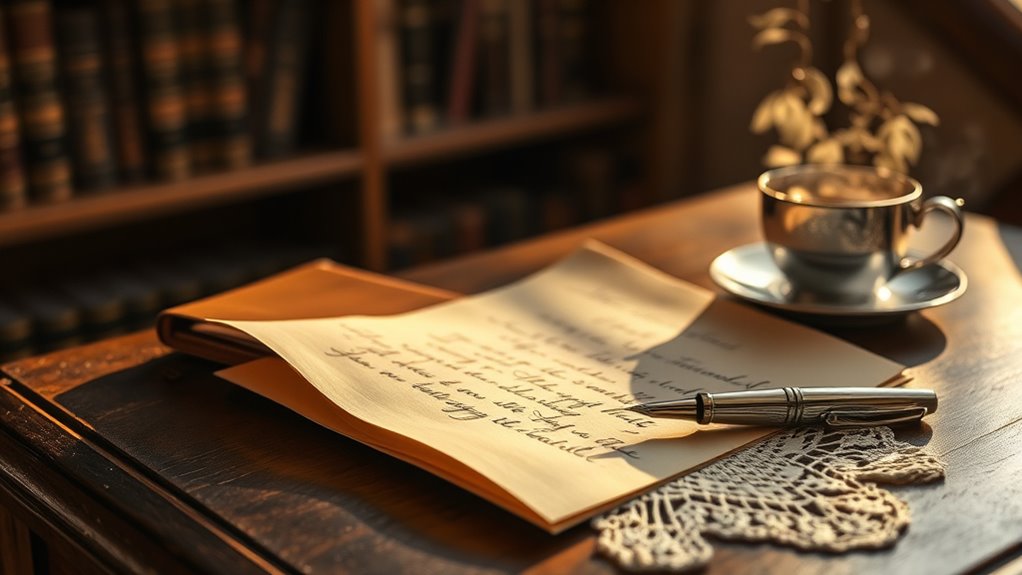

Handwritten notes help you build genuine connections by showing sincere effort and personal touch that digital messages often lack. When you take the time to write by hand, you express authenticity, thoughtfulness, and emotion that resonate deeply with the recipient. This personal effort strengthens bonds and creates lasting memories. The physicality of paper and ink adds a layer of intimacy, making your message more meaningful. Keep exploring to discover how this timeless gesture can deepen your relationships even further.
Key Takeaways
- Handwritten notes convey genuine emotion and personality, fostering deeper personal connections than digital messages.
- The deliberate process of writing encourages reflection, making messages more thoughtful and meaningful.
- Physical handwritten letters serve as lasting keepsakes, strengthening emotional bonds over time.
- Personal effort in handwriting demonstrates care, building trust and enhancing mutual understanding.
- The timeless nature of handwritten notes evokes nostalgia and emotional closeness, reinforcing meaningful relationships.
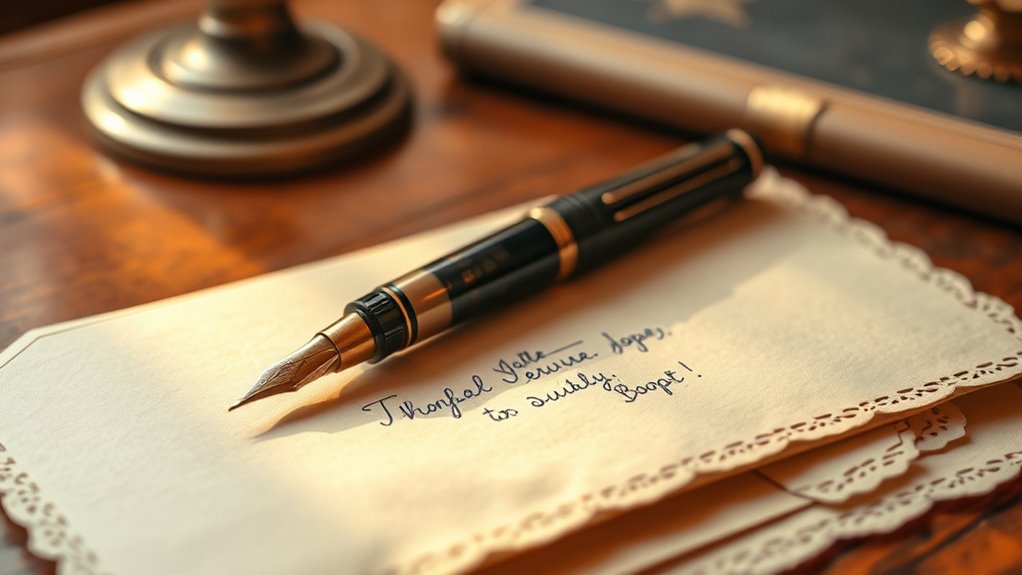
Have you ever considered how a simple letter can strengthen your connections with others? In a world dominated by instant messaging and fleeting social media updates, taking the time to write a handwritten note can feel like a rejuvenating change. It’s more than just putting words on paper; it’s an act of personal expression that reveals your thoughts, feelings, and personality in a way that digital communication often can’t match. When you sit down to craft a handwritten letter, you’re engaging in a deliberate process that allows you to share your emotions authentically. This personal touch creates a deeper emotional impact, making the recipient feel truly valued and appreciated.
Writing a letter gives you the chance to articulate your feelings more thoughtfully. Unlike quick texts or emails, which can sometimes seem impersonal or rushed, a handwritten note invites you to slow down and reflect. You choose each word carefully, considering how your message might be received. This intentionality enhances the emotional impact, as your sincerity shines through in your handwriting and choice of words. The recipient is likely to sense the effort you put into the letter, which can foster a stronger sense of connection and trust. It’s a tangible expression of your care, one that digital messages often lack. The act of handwriting itself adds a layer of intimacy—each stroke of the pen is a reflection of your mood and personality, making the message uniquely yours.
A handwritten note allows you to thoughtfully express your feelings, adding intimacy and genuine care that digital messages often lack.
Moreover, a handwritten letter can serve as a keepsake, something the recipient might cherish long after it’s been read. It’s a physical reminder of your relationship, one that can be revisited and treasured. This lasting quality deepens emotional bonds, especially when written during meaningful moments or life transitions. Your words carry a legacy that digital messages simply can’t replicate, making the emotional impact more enduring. Additionally, the contrast ratio of the paper and ink can influence how the message is perceived, adding to the overall emotional depth of the correspondence. When you choose to write by hand, you’re not just communicating information; you’re building a bridge of understanding and warmth that can withstand the test of time.
In essence, handwritten letters are powerful tools for personal expression and emotional connection. They require your time, thought, and effort—elements that convey your genuine interest in the other person’s well-being. As you put pen to paper, remember that your words can evoke feelings of nostalgia, comfort, and belonging. It’s a timeless gesture that reminds someone they matter, forging a bond that’s both personal and profoundly meaningful.

DJI Mini 4K Camera Drone Combo, Drone with 4K UHD Camera for Adults, Under 249 g, 3-Axis Gimbal Stabilization, 10km Video Transmission, Auto Return, 2 Batteries for 62-Min Max Flight Time, QuickShots
No Registration Needed - Under 249 g, this drone with camera for adults 4K does not require FAA...
As an affiliate, we earn on qualifying purchases.
Frequently Asked Questions
How Has Digital Communication Impacted Handwritten Letter Writing?
Digital communication has made handwritten letter writing less common, impacting its personal touch. You might find yourself more focused on digital etiquette, like quick replies and emojis, versus the thoughtful effort of a handwritten note. Compared to email, handwritten letters show more genuine care and connection, making each message special. Though digital tools are convenient, they can’t fully replace the intimacy and authenticity that handwritten notes offer, strengthening bonds in a unique way.
What Are Common Mistakes to Avoid in Letter Writing?
You should avoid making your letter too casual or informal, even if you’re close to the recipient. A formal tone adds respect, while an emotional tone creates genuine connection—striking the right balance is key. Don’t forget to proofread; errors can diminish your message’s impact. Steer clear of lengthy, confusing sentences, and make certain your handwriting is clear. These mistakes can undermine your intent, leaving your heartfelt message lost in translation.
How Can I Start Writing Letters if I Feel Shy?
If you’re feeling shy, start overcoming shyness by focusing on what you want to share rather than on yourself. Begin writing confidently with a simple greeting or a sincere compliment, and remember it’s okay to be imperfect. Practice makes perfect, so write regularly and don’t worry about mistakes. Over time, you’ll find it easier to express yourself, turning your letter into a genuine connection and boosting your confidence.
What Are Some Unique Materials for Personalized Stationery?
Imagine your words dancing on a canvas of textured paper, each stroke made special by eco-friendly inks that breathe life into your message. You can craft personalized stationery from natural fibers, hand-dyed fabrics, or recycled materials. Using textured paper adds depth, while eco-friendly inks guarantee your message’s spirit remains pure. These unique materials turn your letters into treasured keepsakes, making every note a heartfelt work of art.
How Long Does It Typically Take for a Handwritten Letter to Arrive?
It usually takes about 3 to 7 business days for a handwritten letter to arrive domestically, but postal delays and international shipping can extend this timeframe. If you’re sending abroad, expect it to take anywhere from one to three weeks, depending on the destination and customs processing. To guarantee timely delivery, consider tracking options and choose reliable postal services, especially for important or time-sensitive messages.
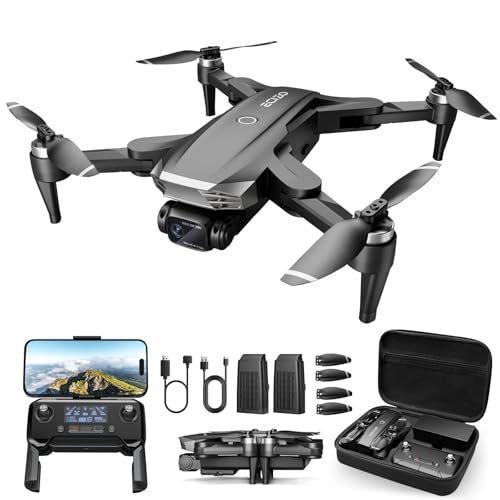
LAKSAKI GPS Drone with Camera for Adults 4K, Auto Return Home, Brushless Motor, Follow Me, 5G FPV Transmission, Smart RC Quadcopter Drones for Beginners Kids, Long Flight and Distance, Under 250G
4K UHD 5G FPV Camera : Built-in 4K camera ensures shooting 3840 x 2160 high resolution images and...
As an affiliate, we earn on qualifying purchases.
Conclusion
So, next time you pick up a pen, remember you’re not just writing words—you’re weaving bonds that time can’t unravel. Handwritten notes hold the power to turn a simple message into a timeless echo of thoughtfulness. Like seeds planted in trust, they grow into connections that linger long after the ink dries. Don’t let this lost art fade away; embrace it, and watch your relationships blossom like flowers in spring.

DJI Mini 4K Fly More Combo, Drone with 4K UHD Camera for Adults, Under 249 g, 3-Axis Gimbal Stabilization, 10km Video Transmission, Auto Return, 3 Batteries for 93-Min Max Flight Time, QuickShots
No Registration Needed - Under 249 g, this drone with camera for adults 4K does not require FAA...
As an affiliate, we earn on qualifying purchases.

2650 ft Long Range Super Endurance Foldable Drone with Camera for Beginners–84 min Flight Time, WiFi FPV Quadcopter with 4K HD Camera, Brushless Motor, Auto Hover, Follow Me (3 Batteries)
【Ultra-Long Control Range】With an astonishing control distance of 2,650 feet, it far surpasses other drones that only offer...
As an affiliate, we earn on qualifying purchases.