

Revenge bedtime procrastination is when you stay up late, sacrificing sleep to regain some personal control after busy or stressful days. You might binge social media or watch shows, thinking it’s your only escape. But this pattern leads to sleep deprivation, making you feel tired, irritable, and less focused during the day. If you keep ignoring these signs, your health and mood can suffer. Stay with us to discover how to break this cycle and improve your sleep habits.

Get the little things that make your day delivered free with Prime
- Fast, free delivery on millions of items
- Prime Video, Amazon Music and more included
- Member-only deals all year
Key Takeaways
- Revenge bedtime procrastination involves staying up late to reclaim personal leisure time despite feeling tired.
- It often results from stress, burnout, or poor work-life balance, leading to sleep deprivation.
- Recognizing this pattern as self-sabotage helps in implementing healthier sleep habits.
- Limiting screen time and establishing a consistent bedtime can reduce the tendency to delay sleep.
- Prioritizing relaxation and managing caffeine intake support better sleep quality and overall well-being.
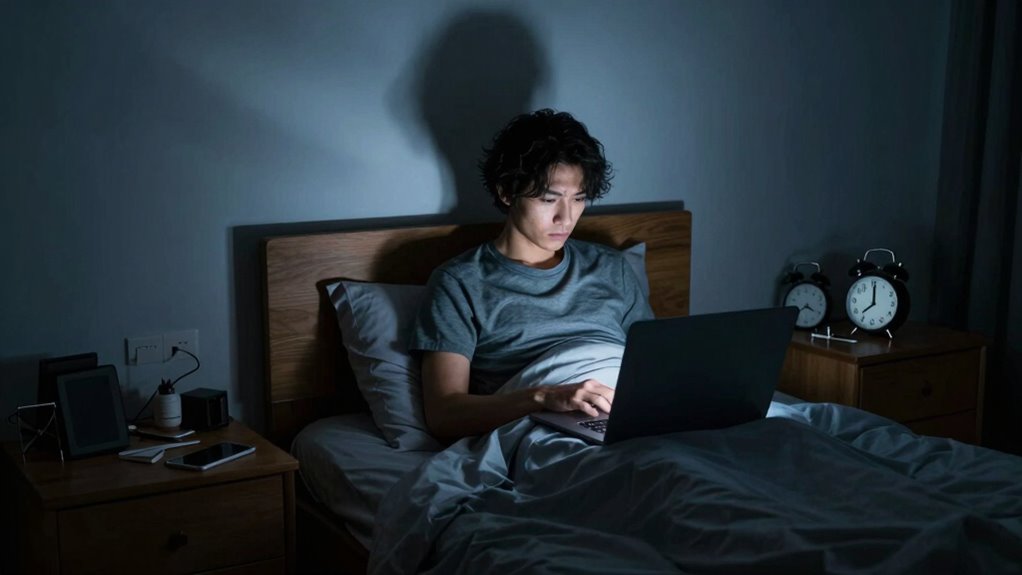
If you find yourself staying up late despite feeling exhausted, you’re not alone. This pattern, often called revenge bedtime procrastination, is a common response to a sense of leisure imbalance in your life. You might work hard during the day, feeling pressed for time and overwhelmed, only to find yourself sacrificing sleep at night as a form of reclaiming personal space and control. It’s as if, after a busy day, you’re trying to squeeze in some leisure or relaxation, but it ends up costing you precious sleep. Over time, this creates a cycle of sleep deprivation that damages your health and mood, leaving you more tired and stressed.
Many stay up late, sacrificing sleep to reclaim personal time after busy, overwhelming days.
The core of revenge bedtime procrastination is your desire to regain some sense of leisure and autonomy that your daytime schedule might deny you. You may think, “I deserve this time,” but what you’re actually doing is delaying sleep to indulge in activities like scrolling social media, binge-watching shows, or simply avoiding responsibilities. This creates an imbalance—your leisure time feels like the only moment you truly control, so you cling to it even if it cuts into your sleep. The result is a pattern of sleep deprivation that can leave you feeling groggy, irritable, and less able to focus during the day. Over time, chronic sleep deprivation can increase your risk of health issues like weakened immunity, weight gain, or mental health struggles.
What’s tricky about revenge bedtime procrastination is that it often feels justified; you think you’re just taking a well-earned break. But in reality, you’re sabotaging your sleep and, consequently, your overall well-being. Your desire for leisure might be masking deeper issues—stress, burnout, or a lack of work-life balance—that make it harder to wind down at night. Recognizing this pattern is the first step. Once you see how it feeds into your sleep deprivation, you can start making small changes, like setting a consistent bedtime, limiting screen time before sleep, or carving out dedicated relaxation periods during the day. Developing healthy sleep habits can help you establish a more balanced routine and improve your overall sleep quality. Understanding sleep science can also help you better comprehend how your body naturally prepares for rest and how to optimize your environment accordingly.
The goal isn’t to eliminate fun or leisure but to create a healthier balance that respects your need for restorative sleep. A better understanding of caffeine science can also help you manage your evening routines, since caffeine consumption can interfere with your ability to fall asleep. It’s important to note that caffeine metabolism varies from person to person, so being aware of how your body reacts can help you make more informed choices about your consumption. The goal is to develop habits that promote a healthier relationship with your evenings and prioritize your sleep needs. When you prioritize sleep, you’re investing in your physical and mental health, so you can face each day feeling more energized and less overwhelmed.
blue light blocking glasses for sleep
As an affiliate, we earn on qualifying purchases.
As an affiliate, we earn on qualifying purchases.
Frequently Asked Questions
Can Revenge Bedtime Procrastination Affect Mental Health Long-Term?
Yes, revenge bedtime procrastination can affect your long-term mental health. By sacrificing sleep, you create sleep deprivation, which hampers your emotional regulation and increases stress levels. Over time, this pattern can lead to anxiety, depression, and difficulty managing daily emotions. You might find yourself more irritable or overwhelmed, making it essential to prioritize proper sleep to protect your mental well-being and maintain emotional stability.
What Are Common Signs of Revenge Bedtime Procrastination?
You might notice signs of revenge bedtime procrastination when you stay up late, despite feeling sleep-deprived and mentally fatigued. You often sacrifice sleep to enjoy personal time or avoid stress, leading to difficulty waking up and daytime drowsiness. This pattern causes sleep deprivation, worsens mental fatigue, and impacts your focus. You may also feel irritable and struggle with motivation, as your body fights to recover from chronic sleep loss.
How Does Stress Influence This Sleep Pattern?
Stress impacts your sleep pattern by increasing cortisol levels, which makes it harder to relax and fall asleep. When you’re stressed, your body stays alert, delaying bedtime even when you’re tired. This heightened cortisol can lead to a cycle of frustration and procrastination, as you try to reclaim some personal time at night. Over time, this pattern worsens sleep quality, leaving you more stressed and caught in a sleep disruption loop.
Are Certain Personality Types More Prone to Revenge Bedtime Procrastination?
You might be more prone to revenge bedtime procrastination if your personality traits lean toward perfectionism or impulsiveness, like a restless river refusing to settle. These traits can disrupt your sleep habits, making you chase late-night freedom or control when your mind refuses to switch off. Your personality acts as the compass, guiding your sleep habits, and some traits are more prone to this pattern than others.
What Are Quick Strategies to Break This Cycle Immediately?
To break this cycle quickly, focus on improving your sleep hygiene and practicing better time management. Set a consistent bedtime and turn off screens an hour before sleep. Prioritize relaxing activities like reading or meditation. Limit late-night screen time and create a calming pre-sleep routine. By managing your evening hours better, you’ll reduce the urge to procrastinate and help your body get the rest it needs.
white noise machine for better sleep
As an affiliate, we earn on qualifying purchases.
As an affiliate, we earn on qualifying purchases.
Conclusion
Remember, you can’t pour from an empty cup. If you keep sacrificing your sleep for late-night leisure, you’ll only drain your energy and mood. It’s like trying to fill a bucket with a hole—no matter how much you pour in, it won’t stay full. Prioritize your rest, set boundaries, and reclaim your nights. After all, “Early to bed and early to rise makes a person healthy, wealthy, and wise.” Your well-being is worth it.
relaxation and meditation apps for sleep
As an affiliate, we earn on qualifying purchases.
As an affiliate, we earn on qualifying purchases.
As an affiliate, we earn on qualifying purchases.
Halloween Picks
halloween
As an affiliate, we earn on qualifying purchases.